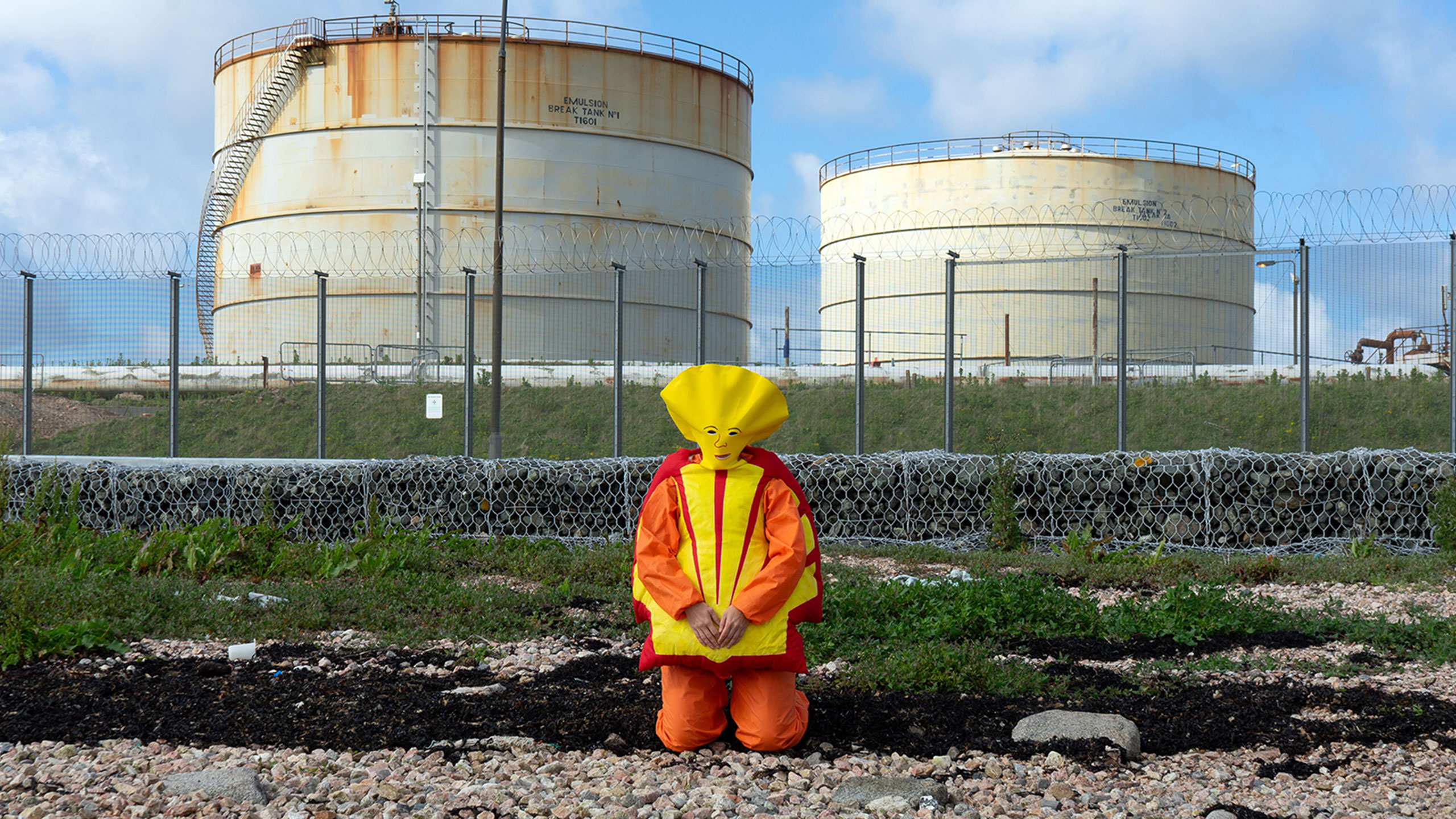
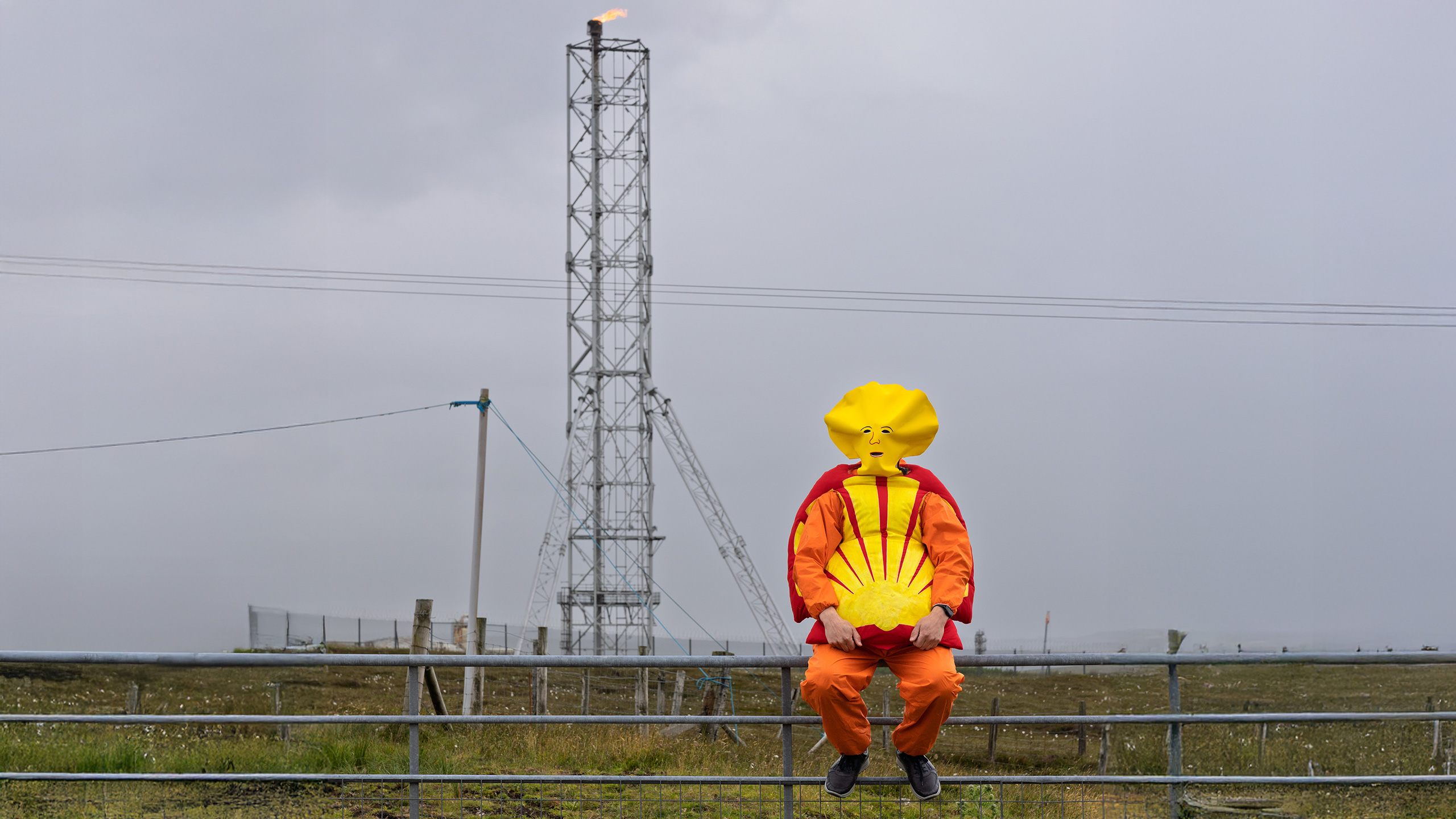
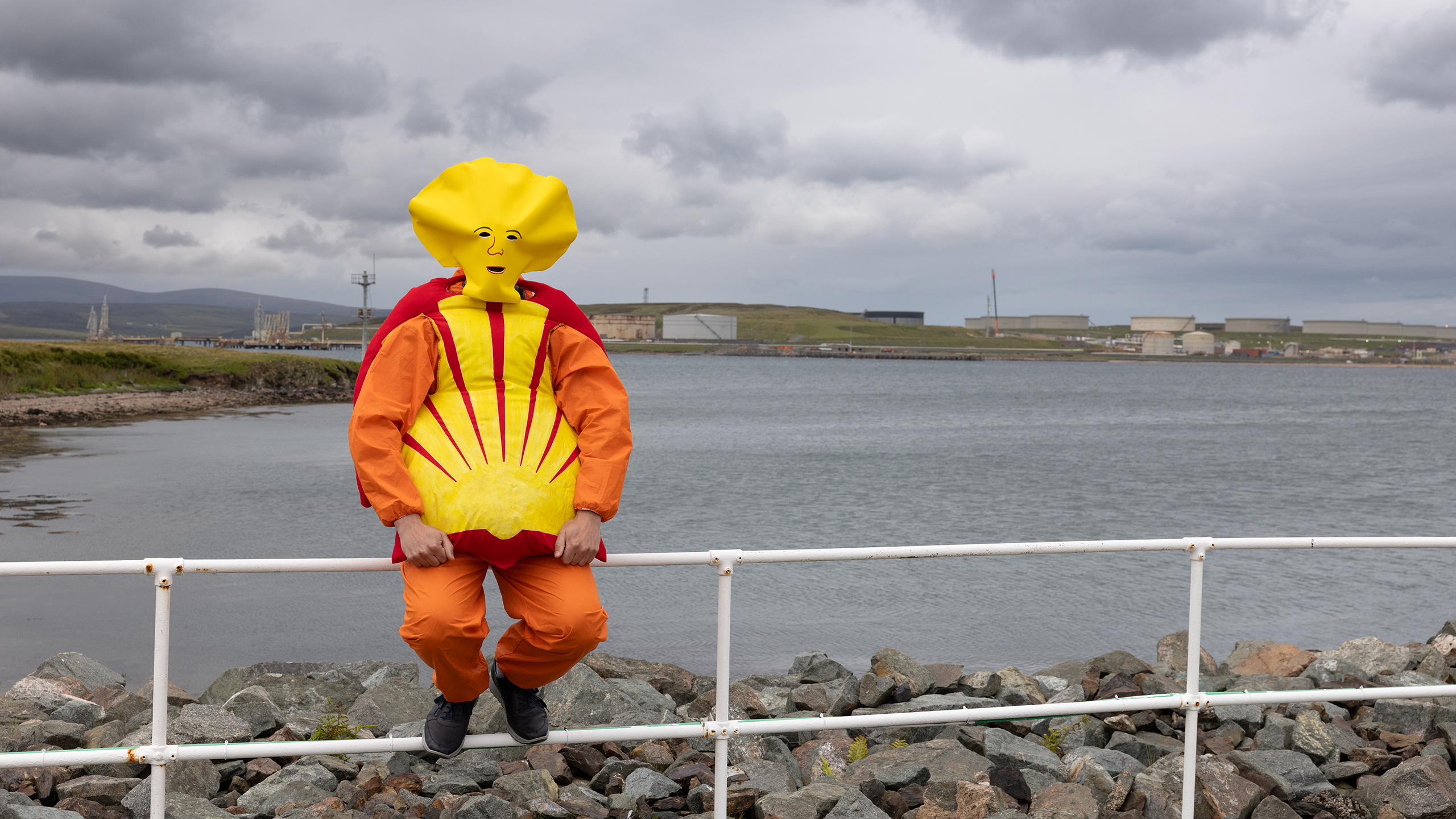
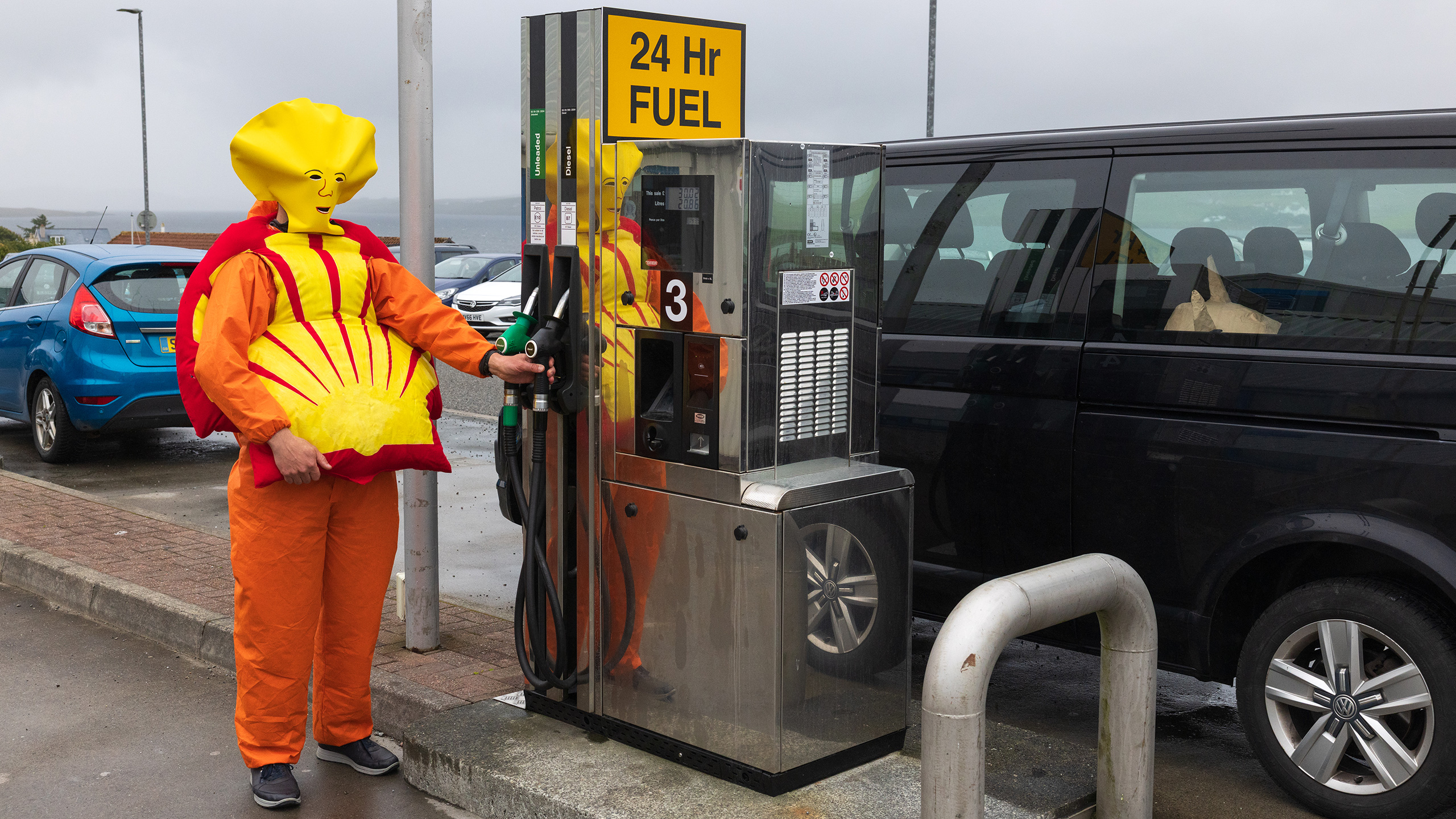
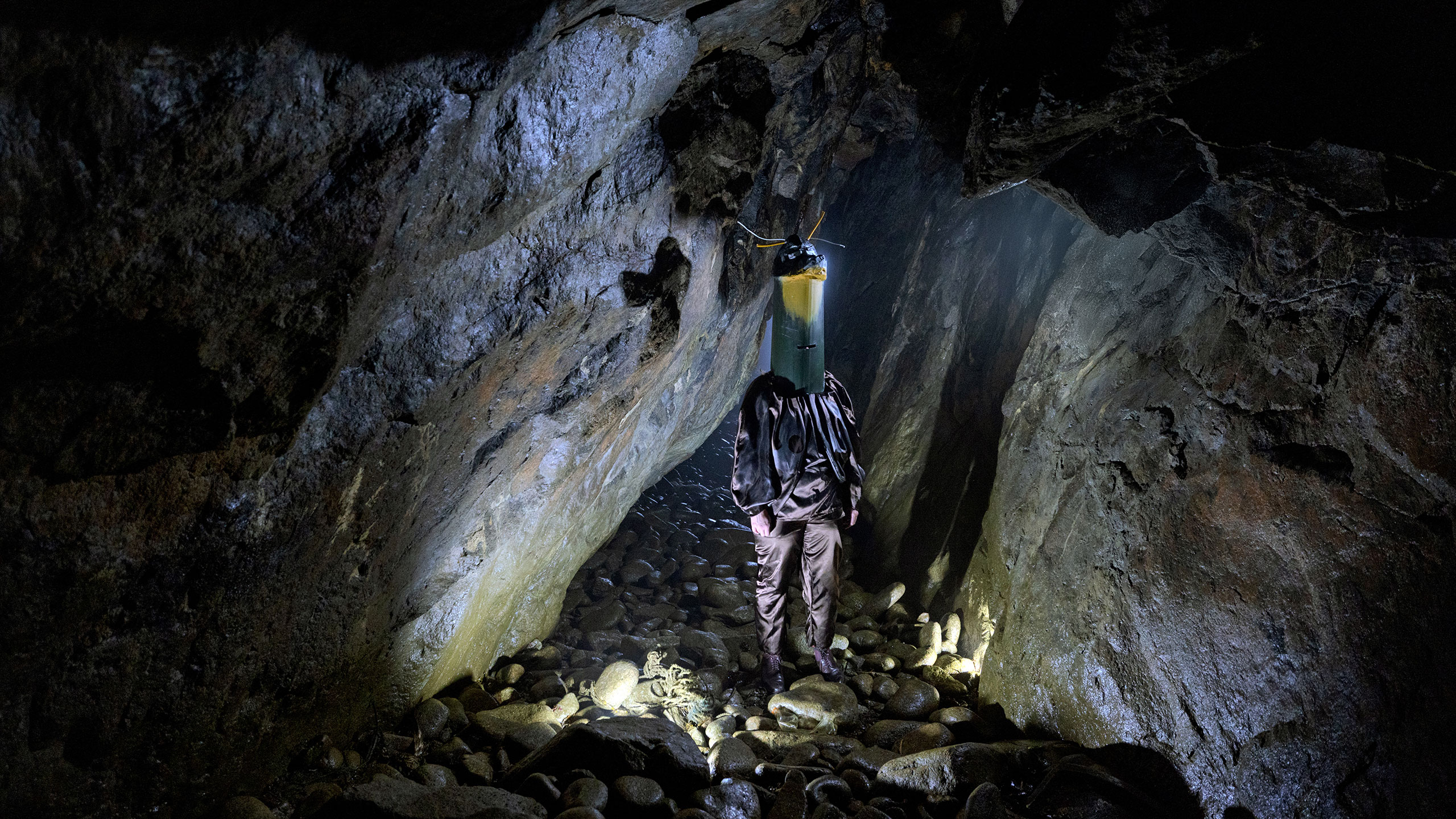
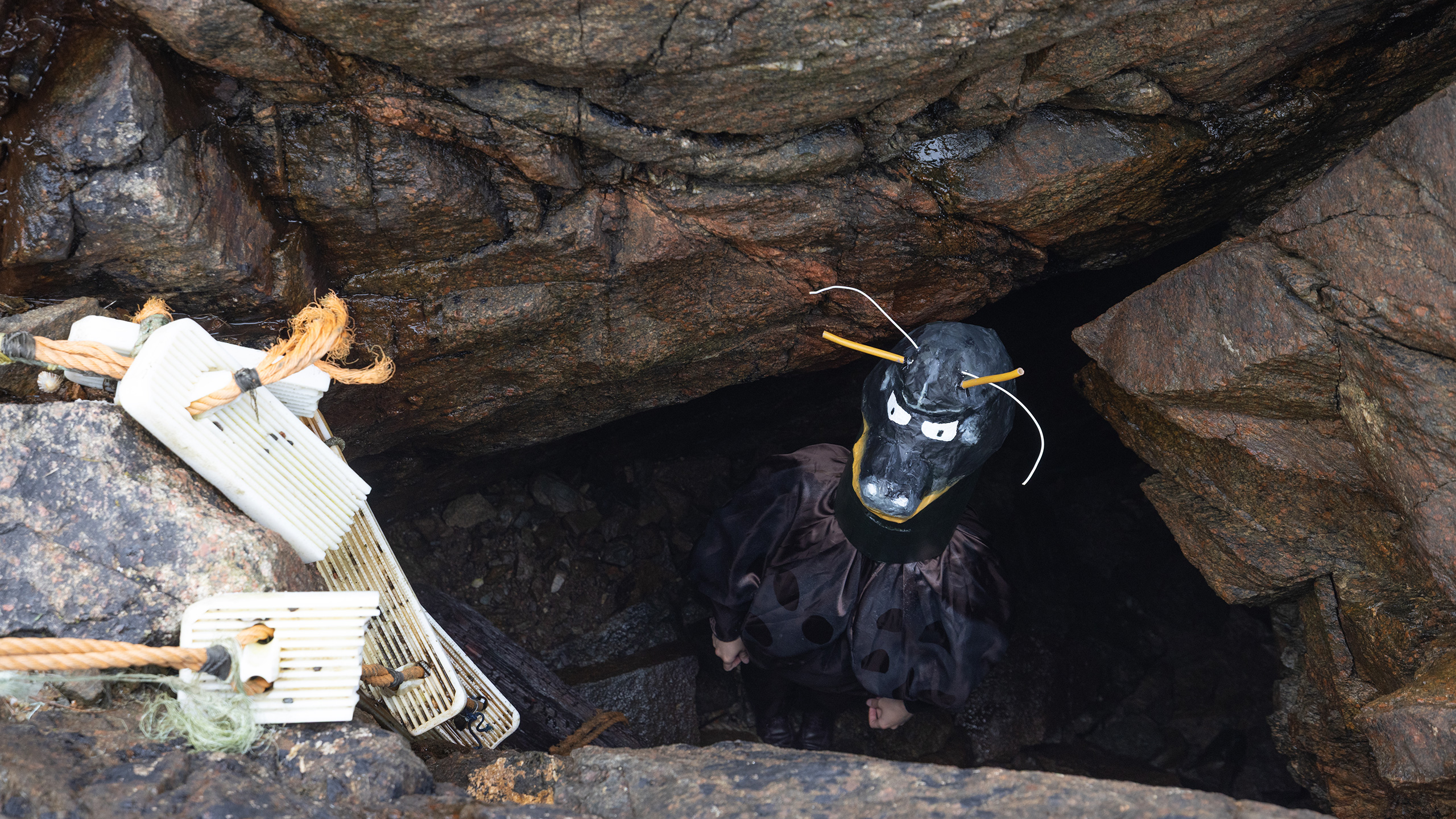
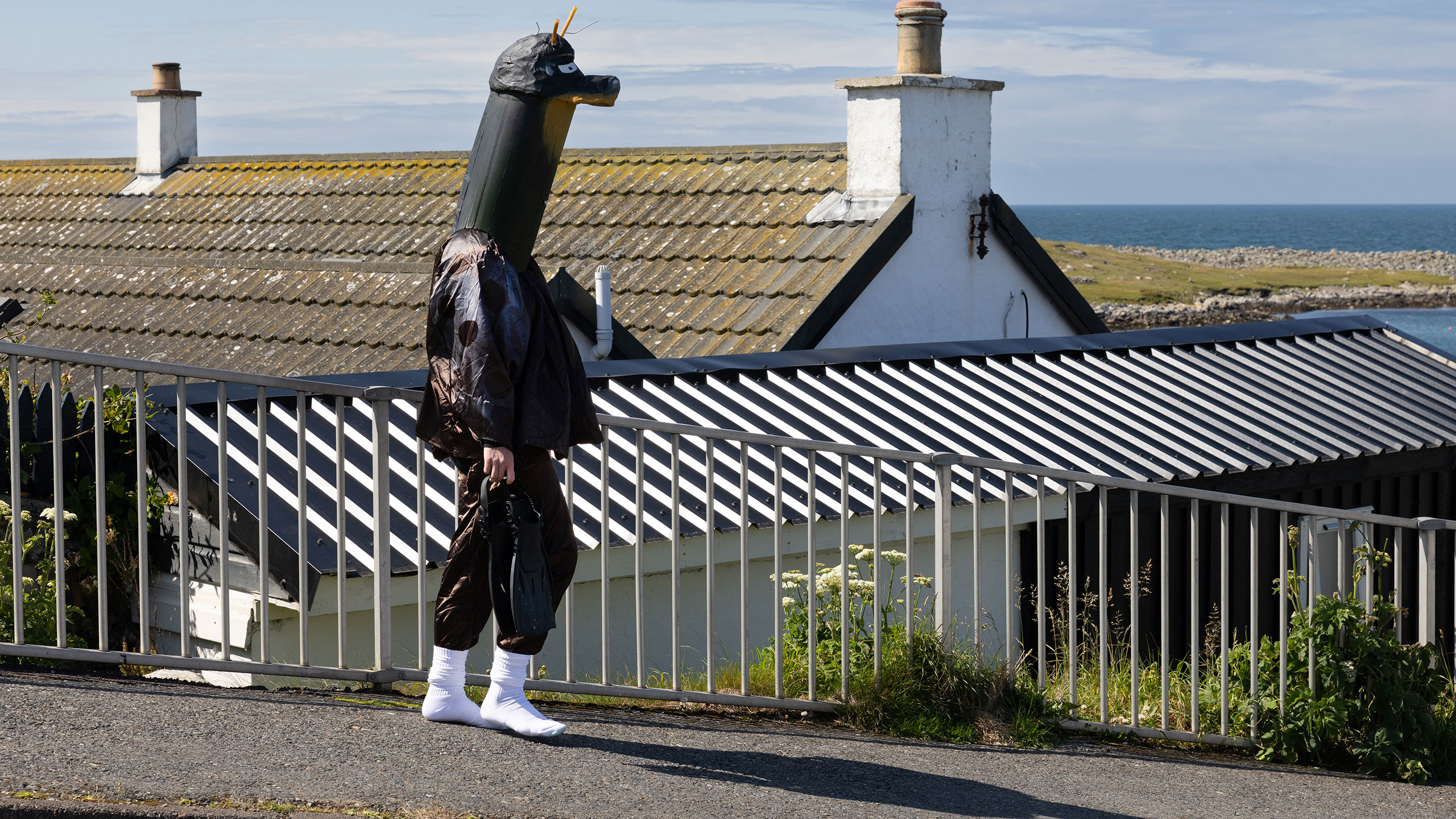
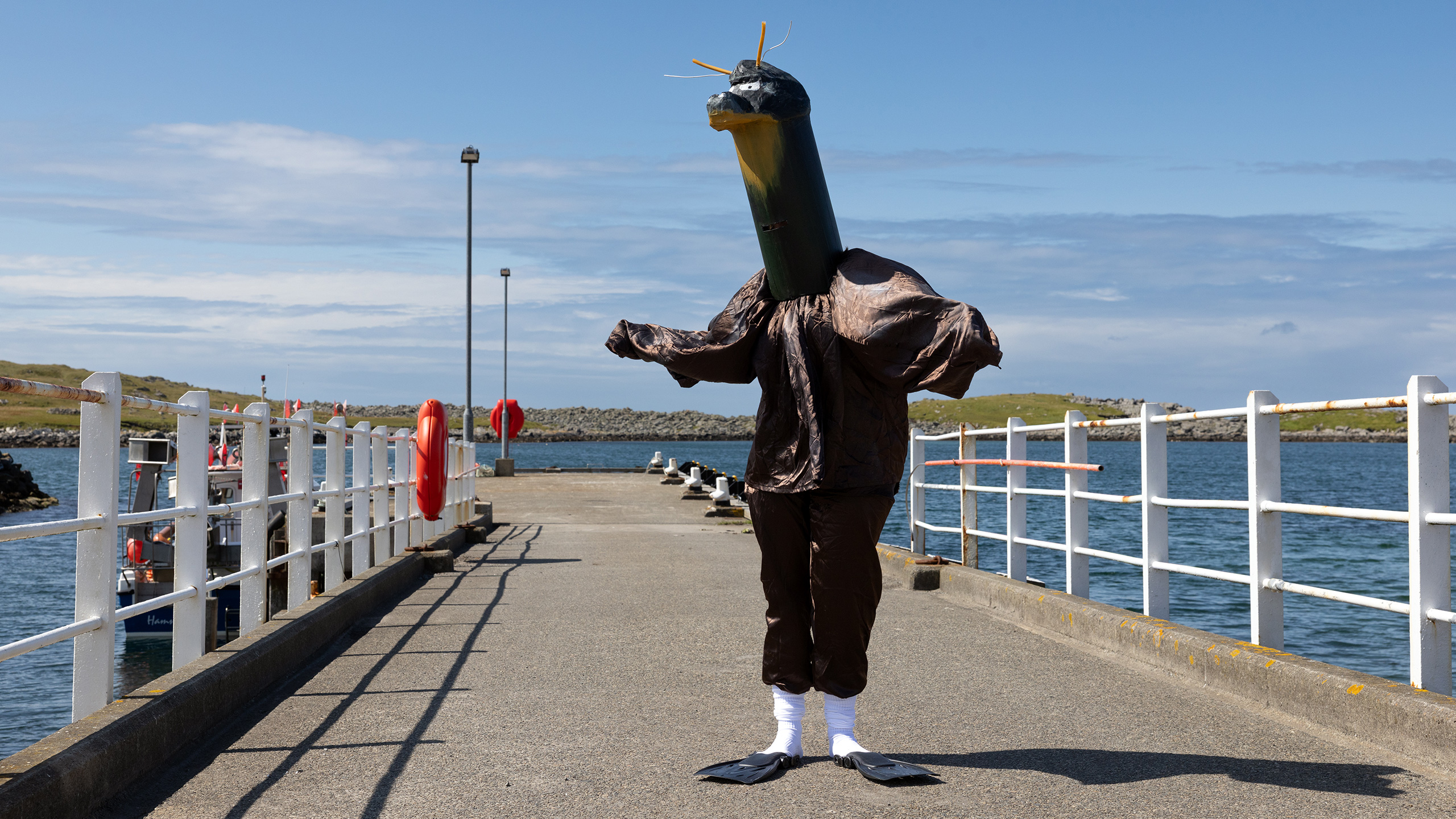
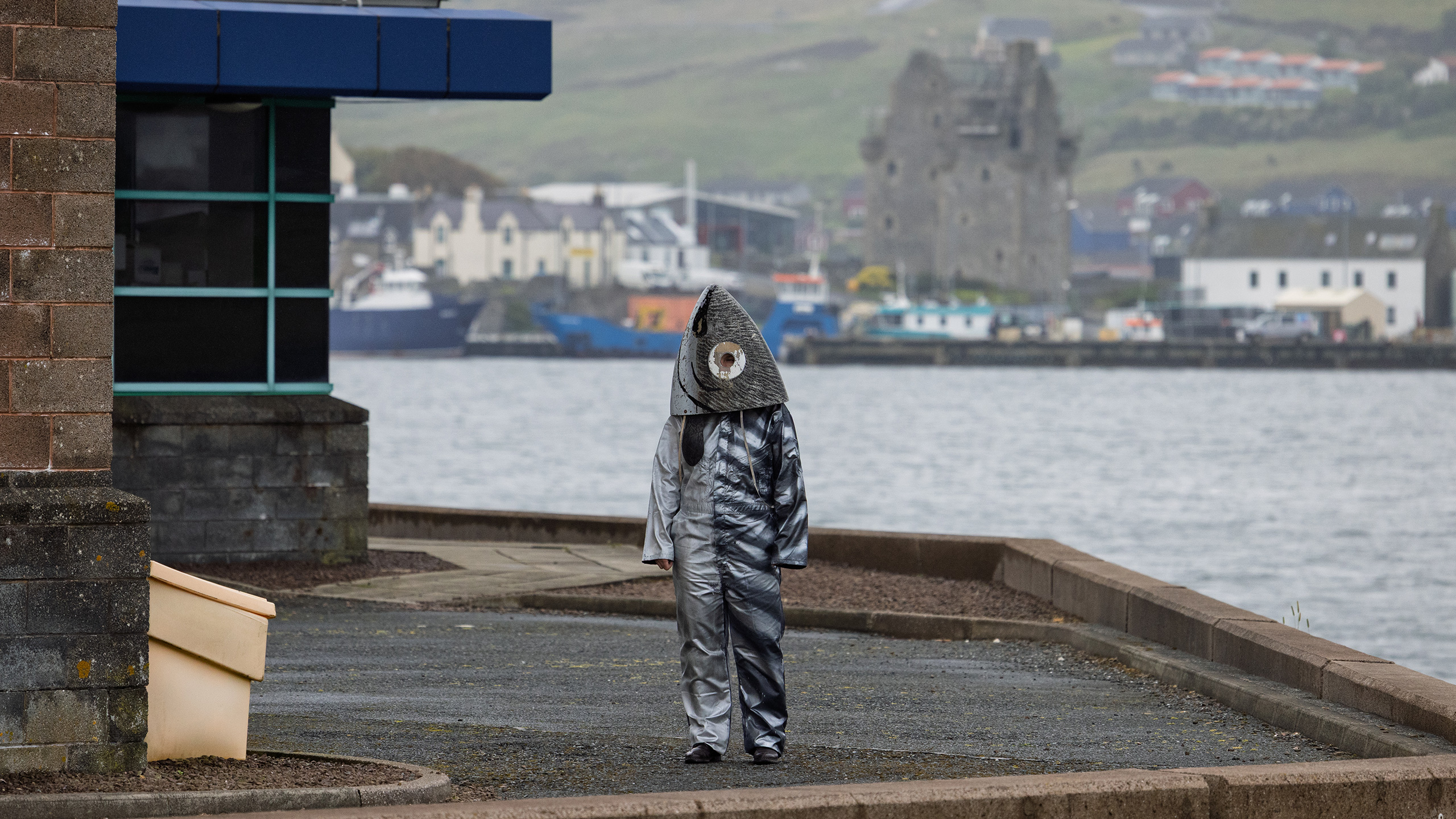
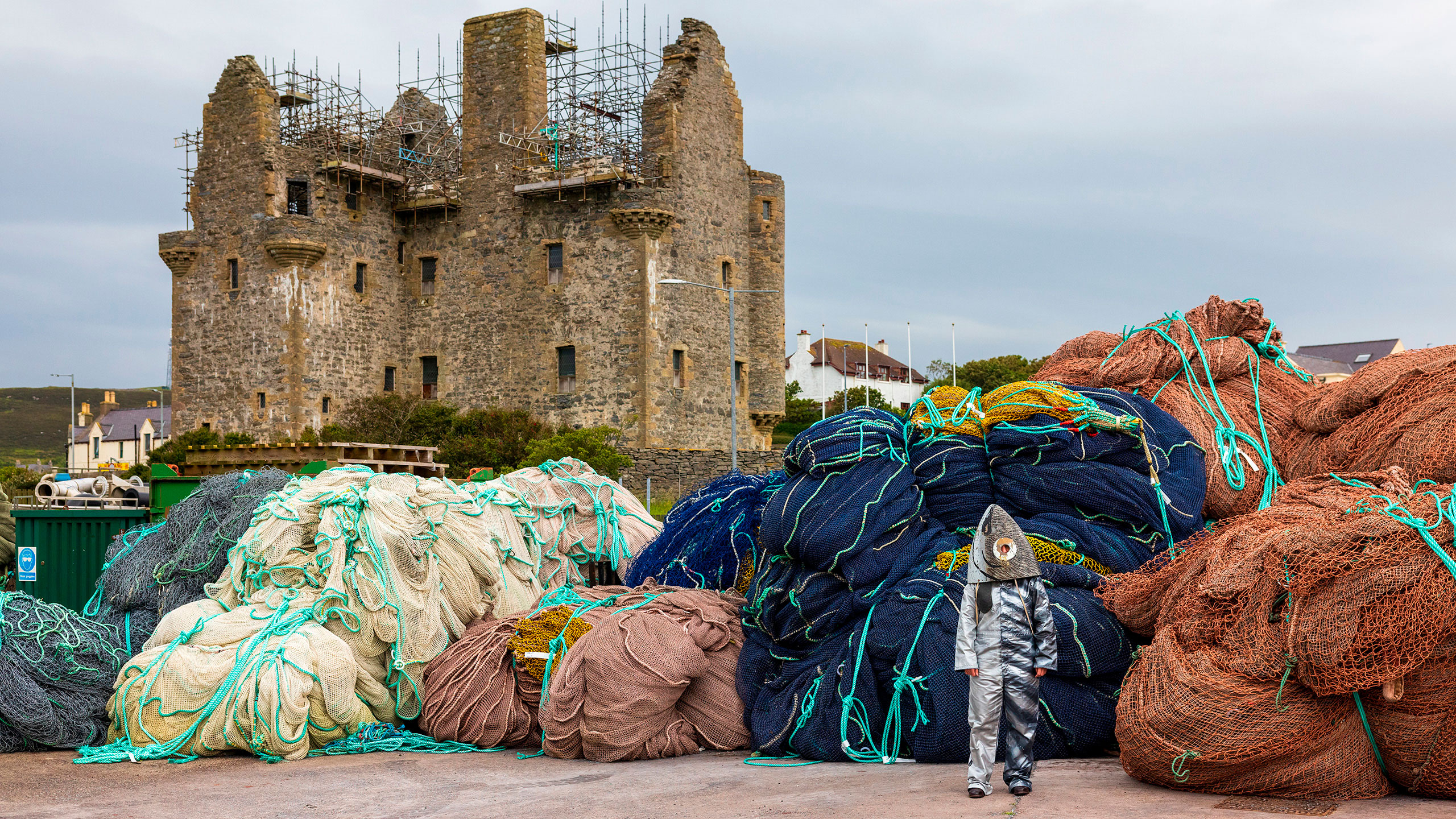
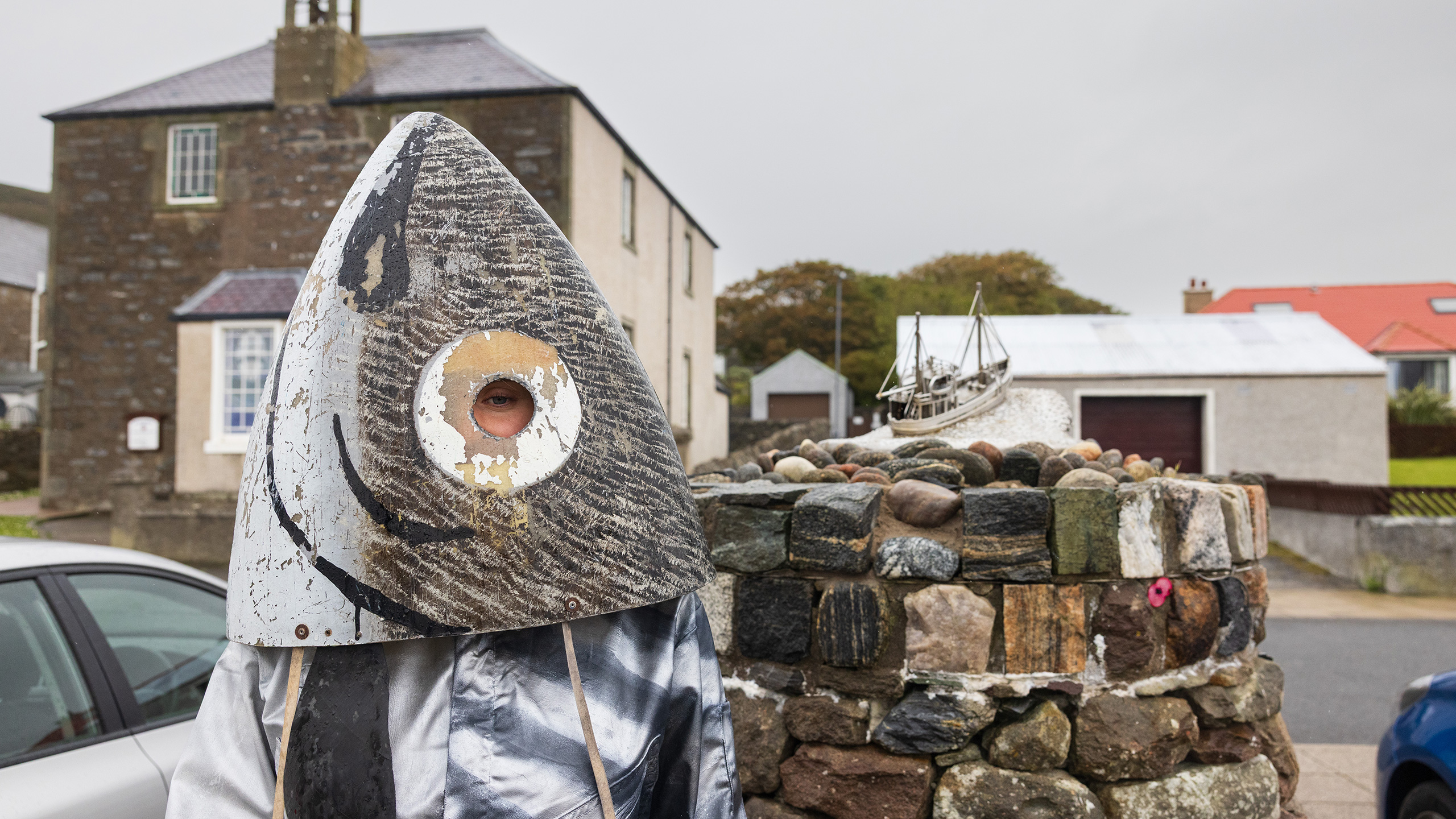
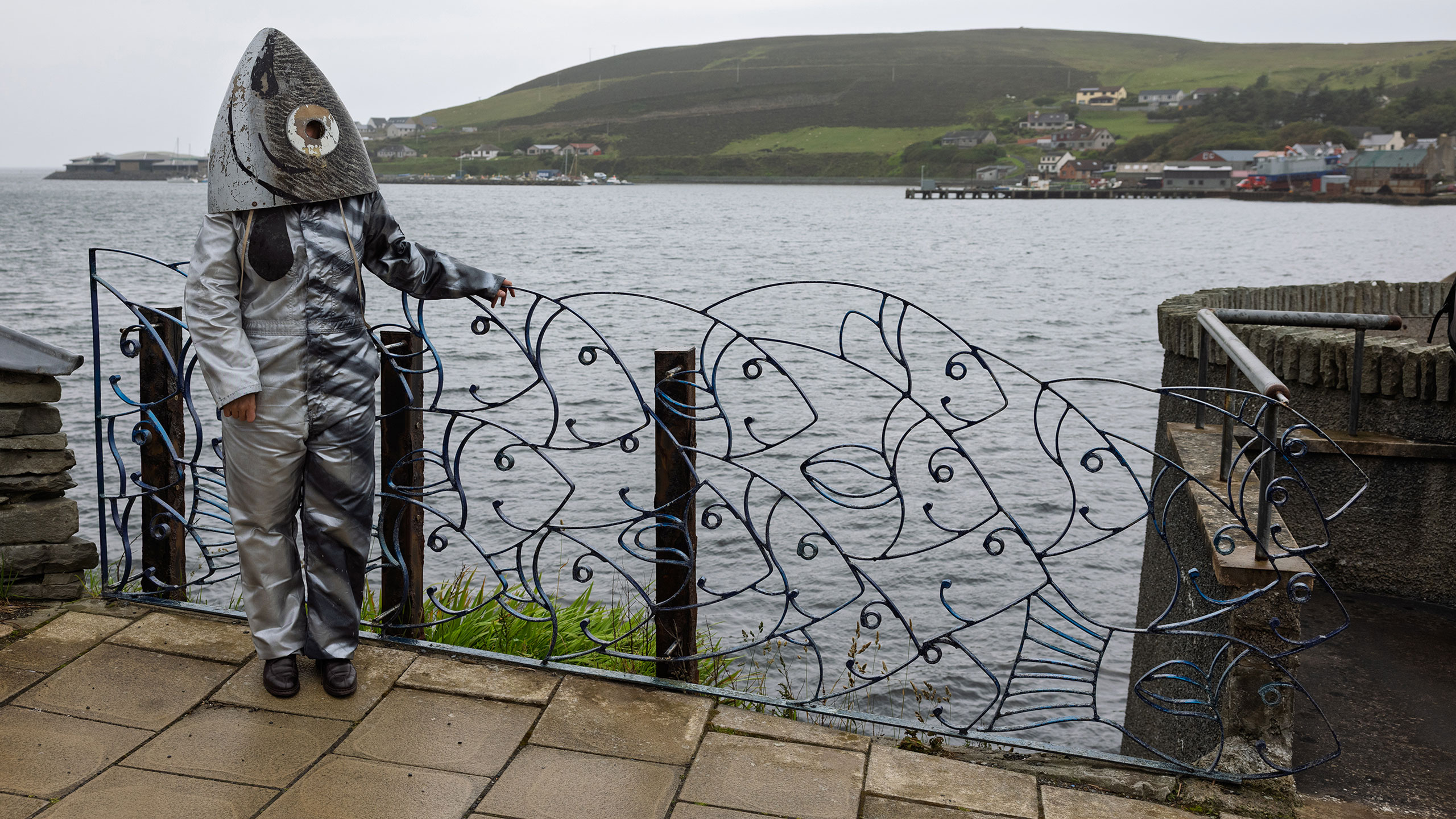
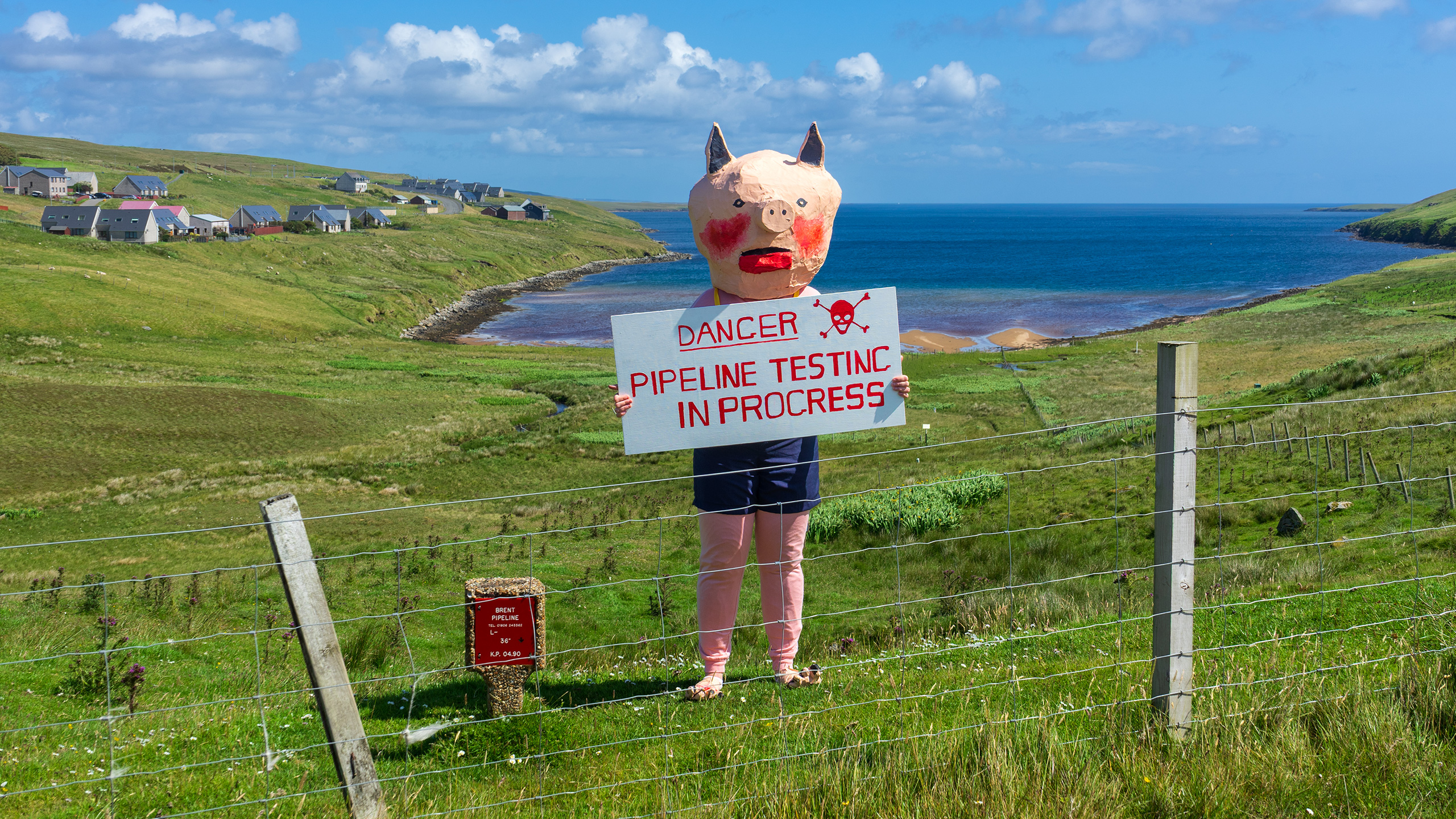
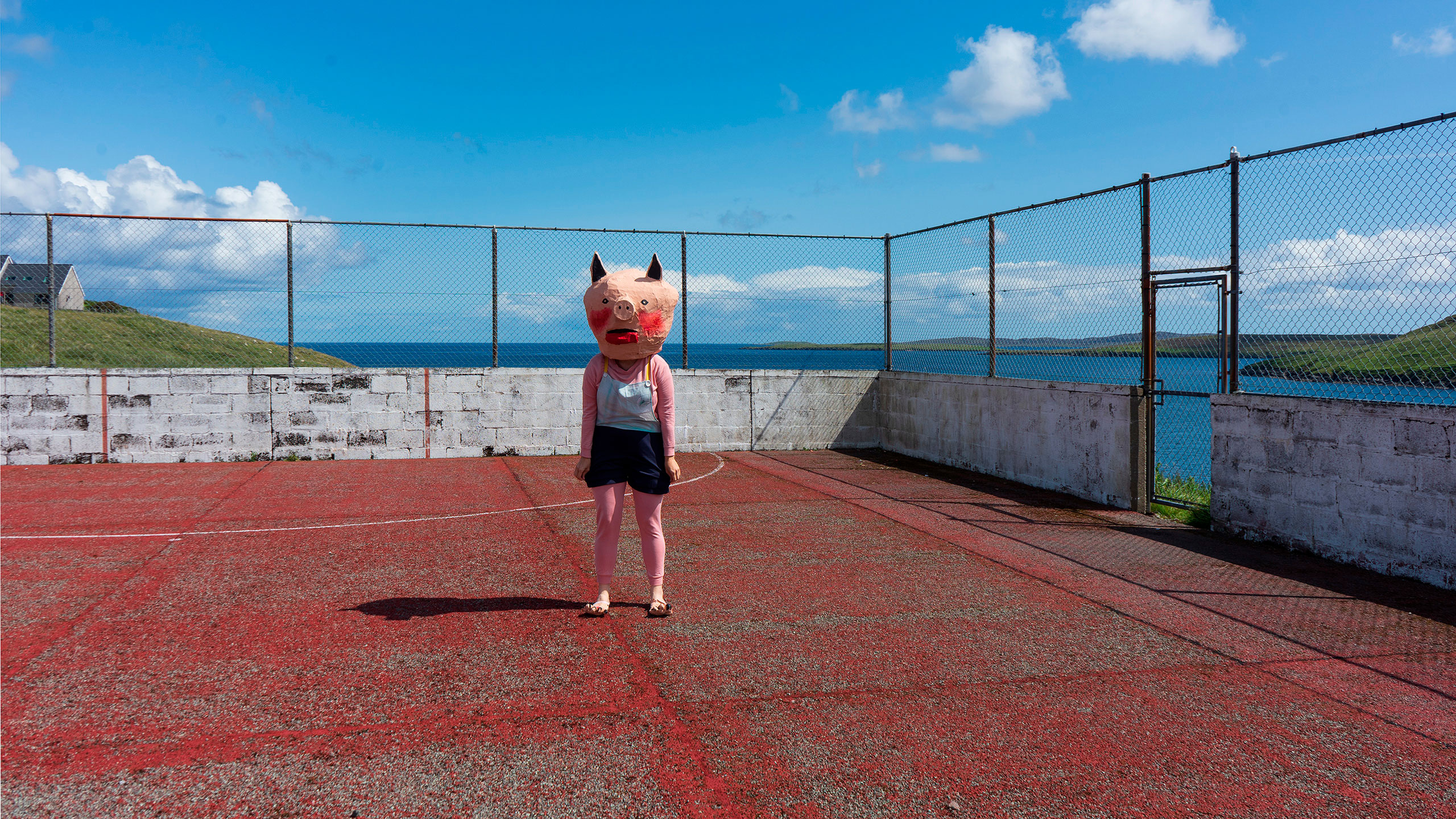
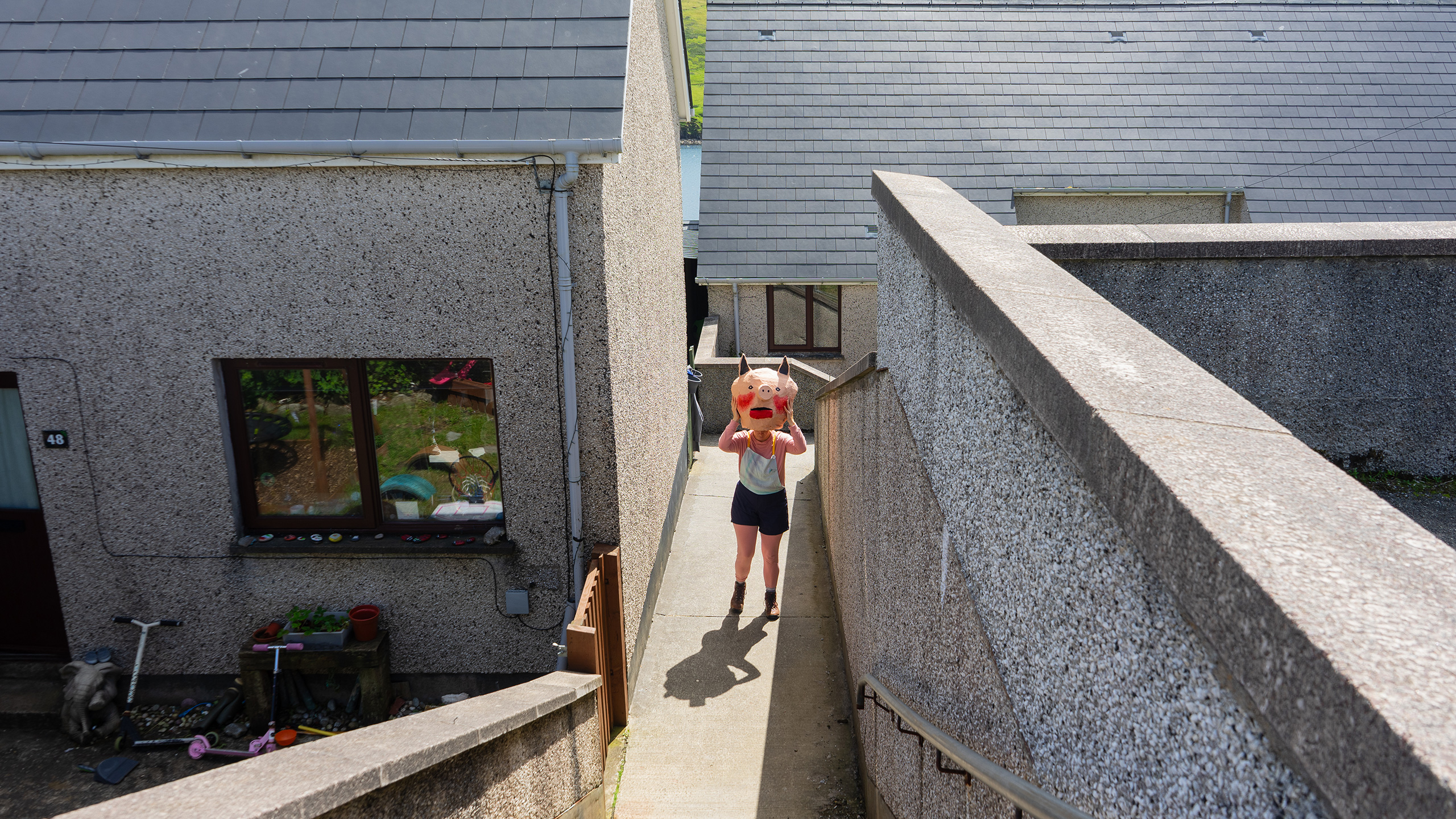
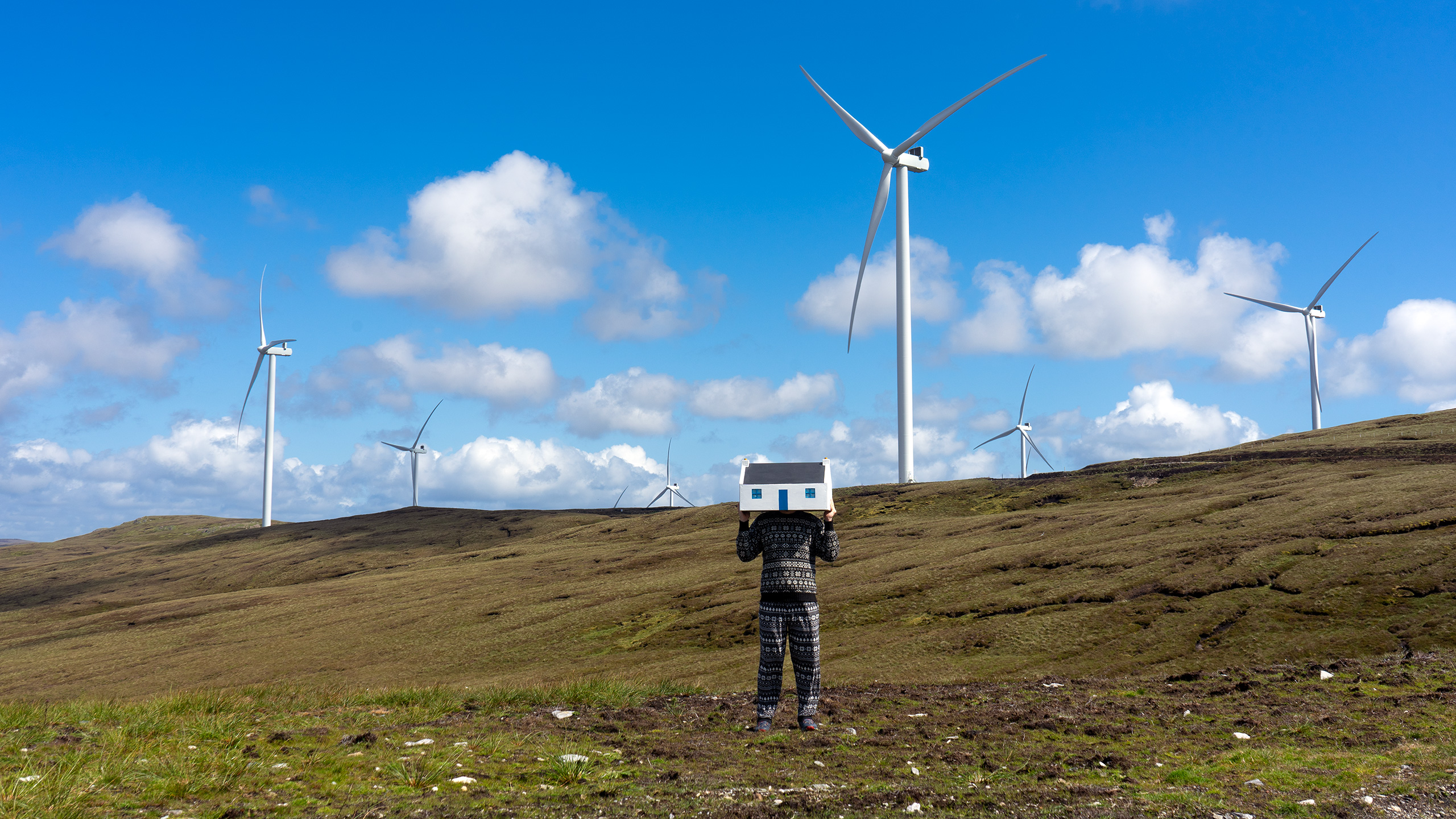
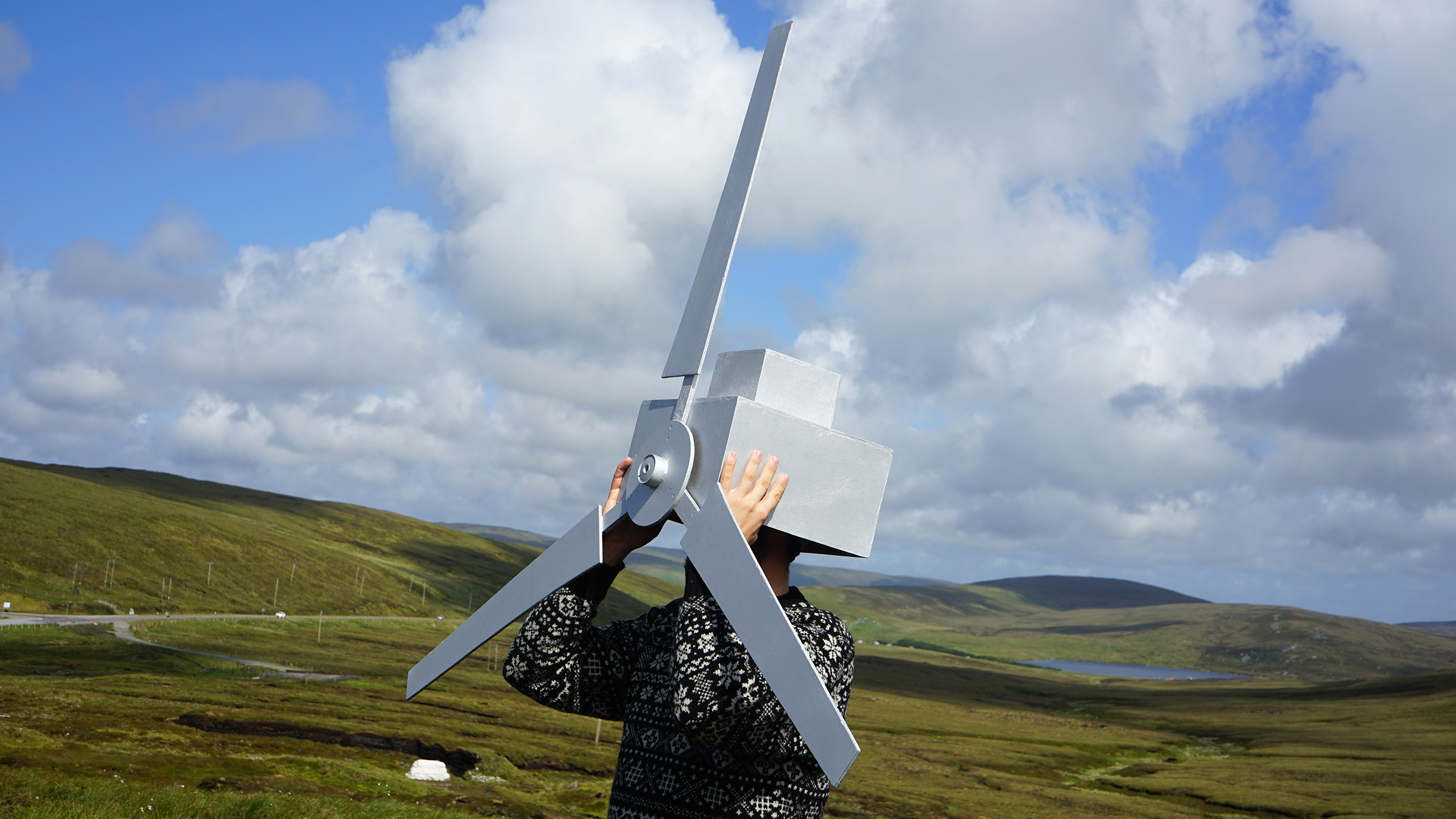
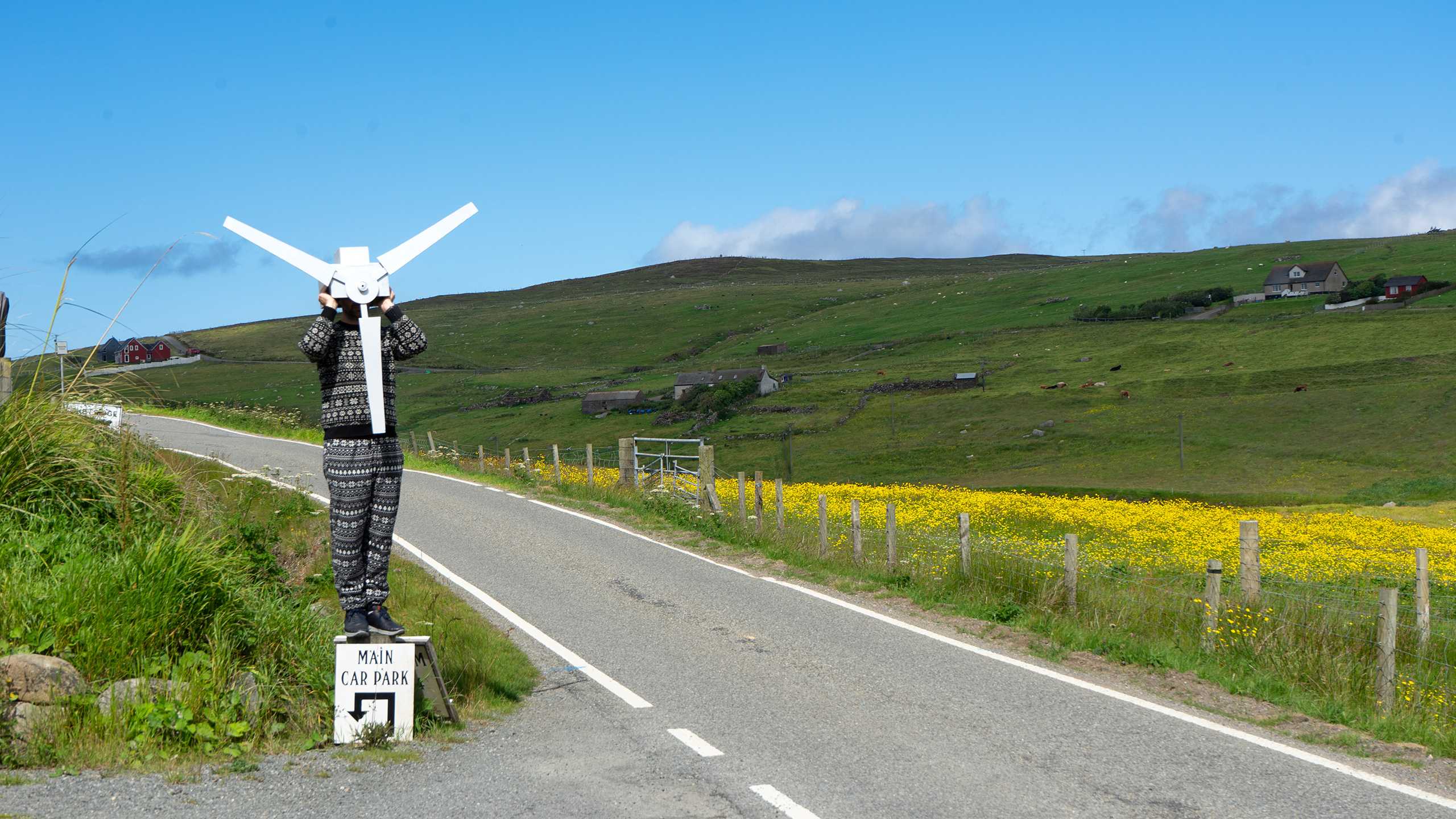
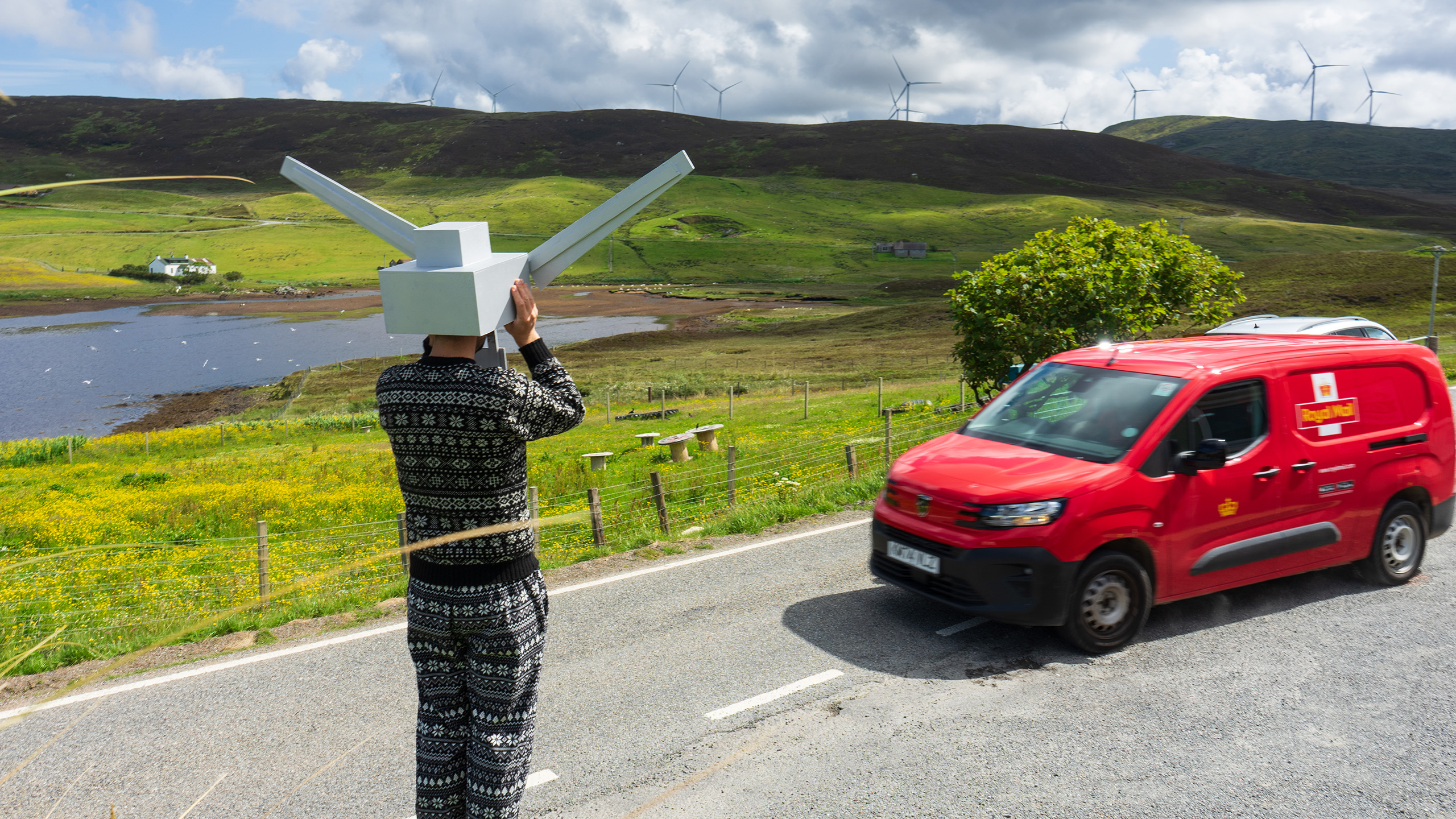
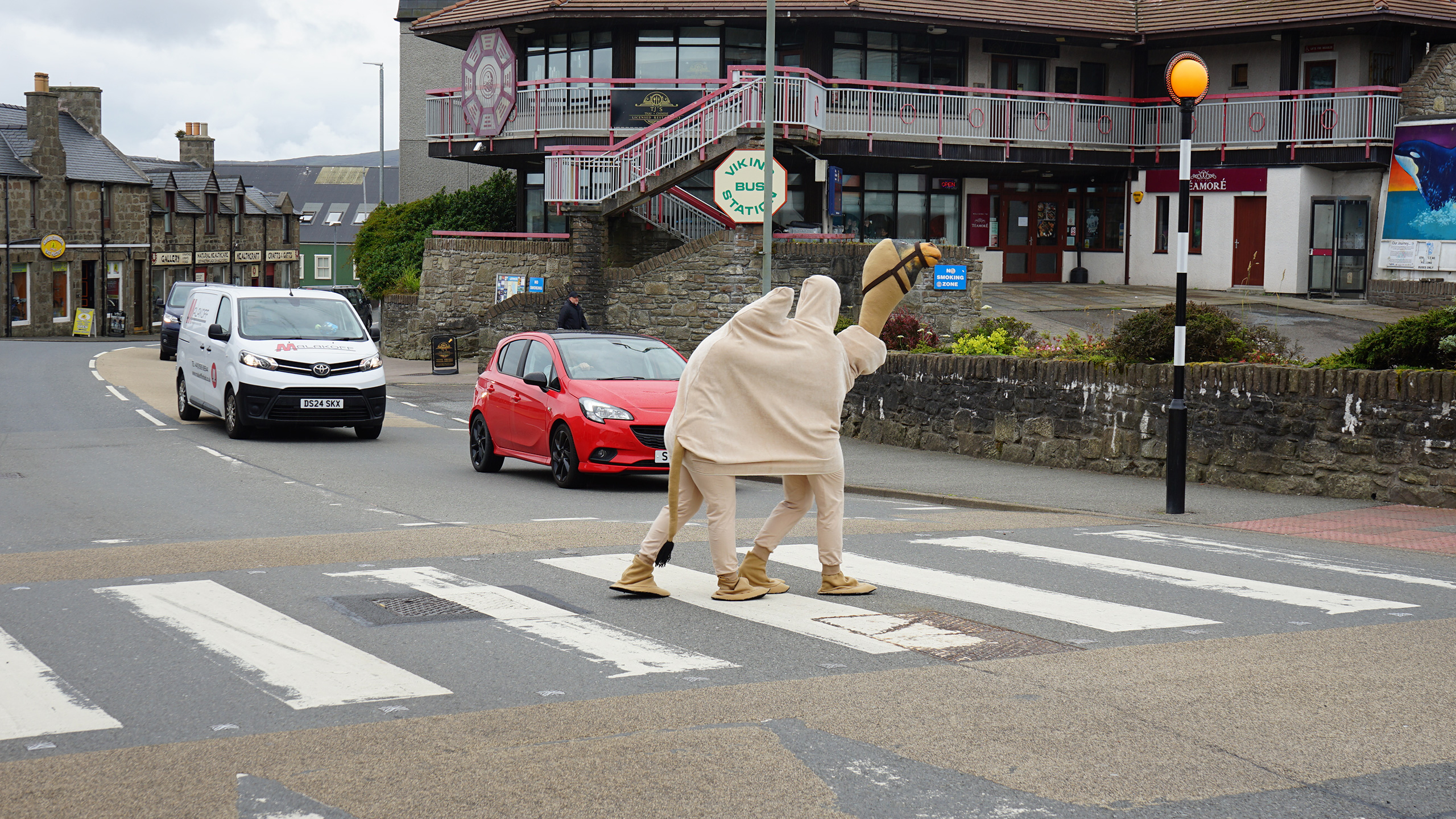
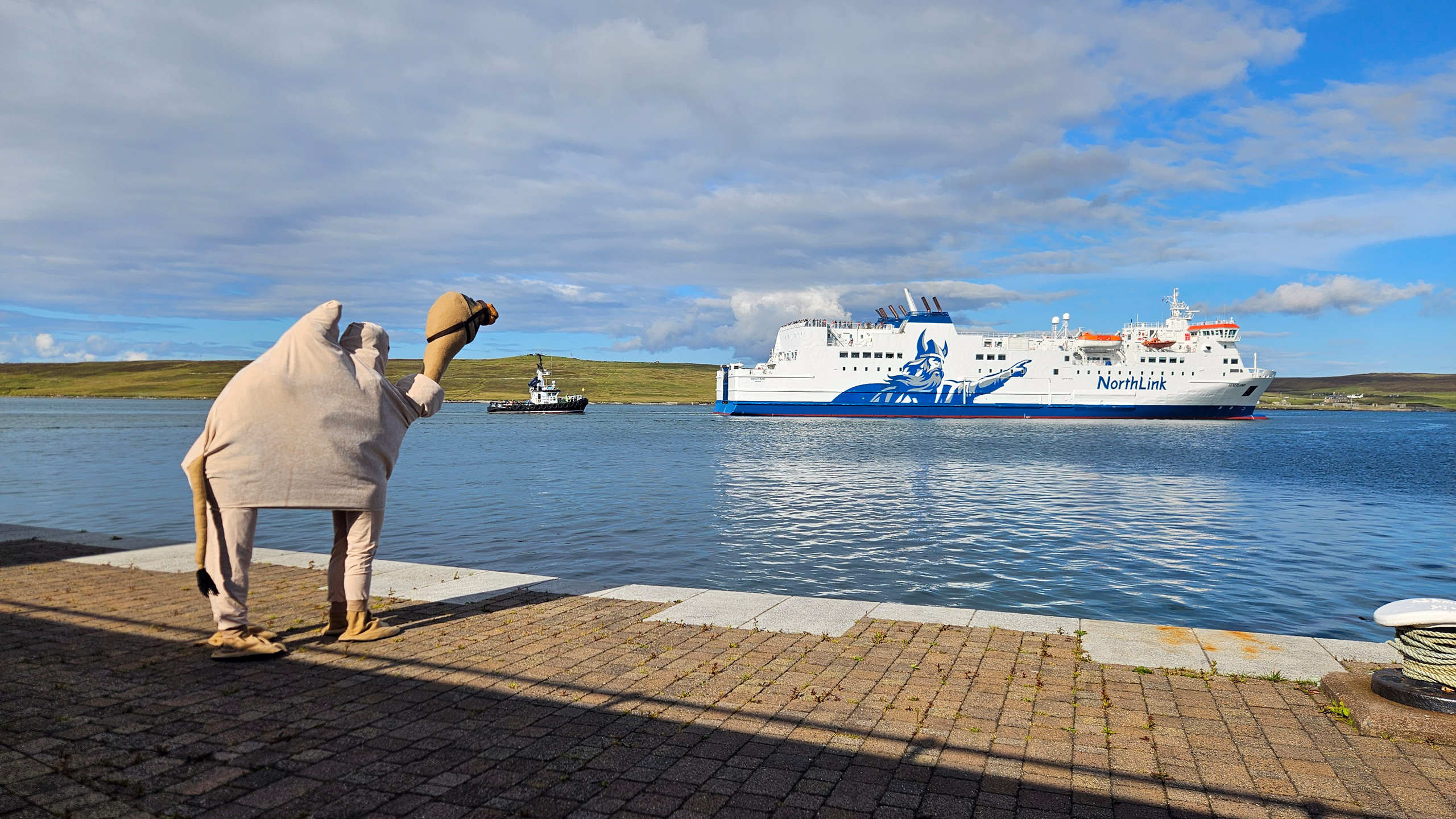
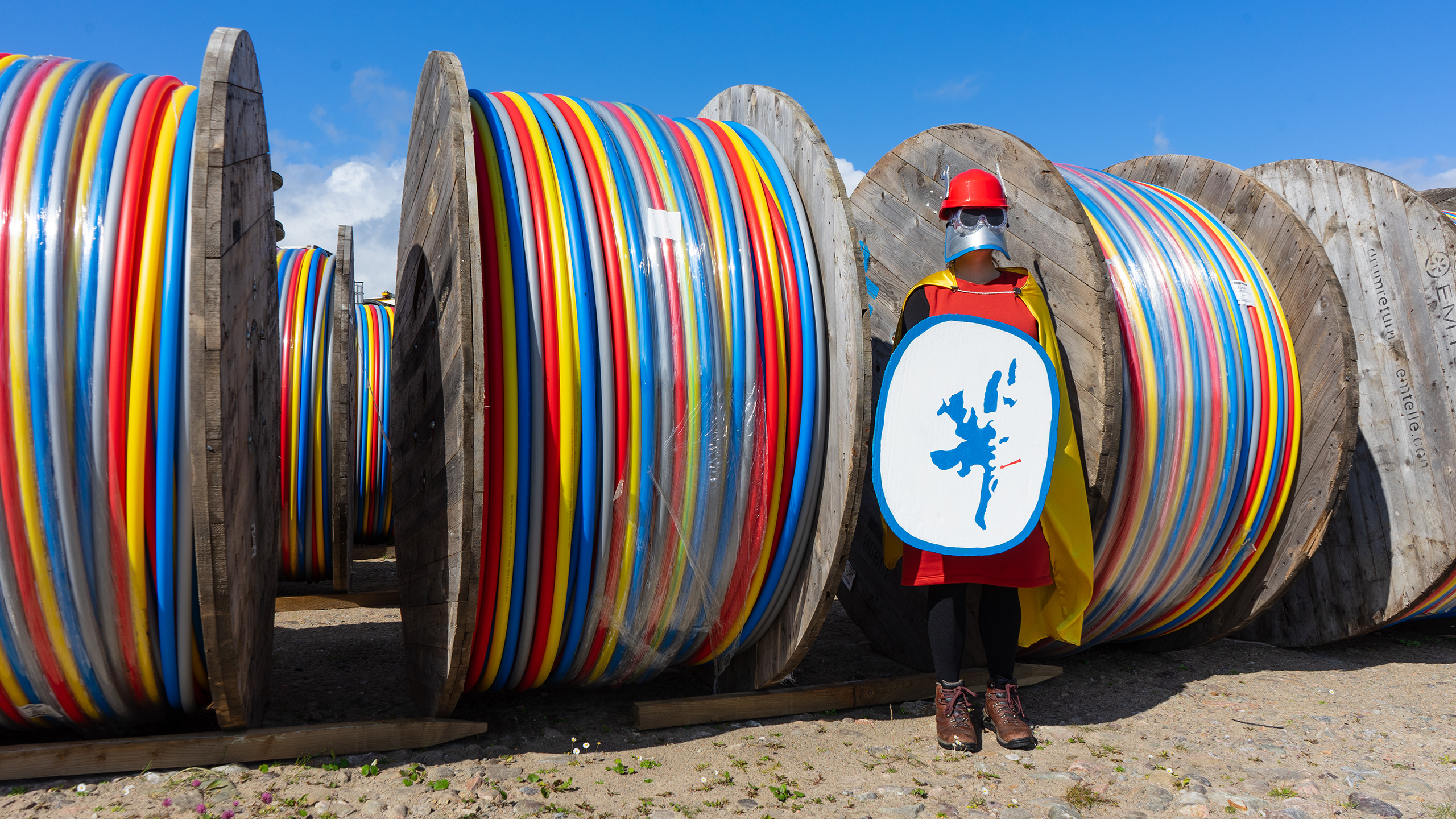
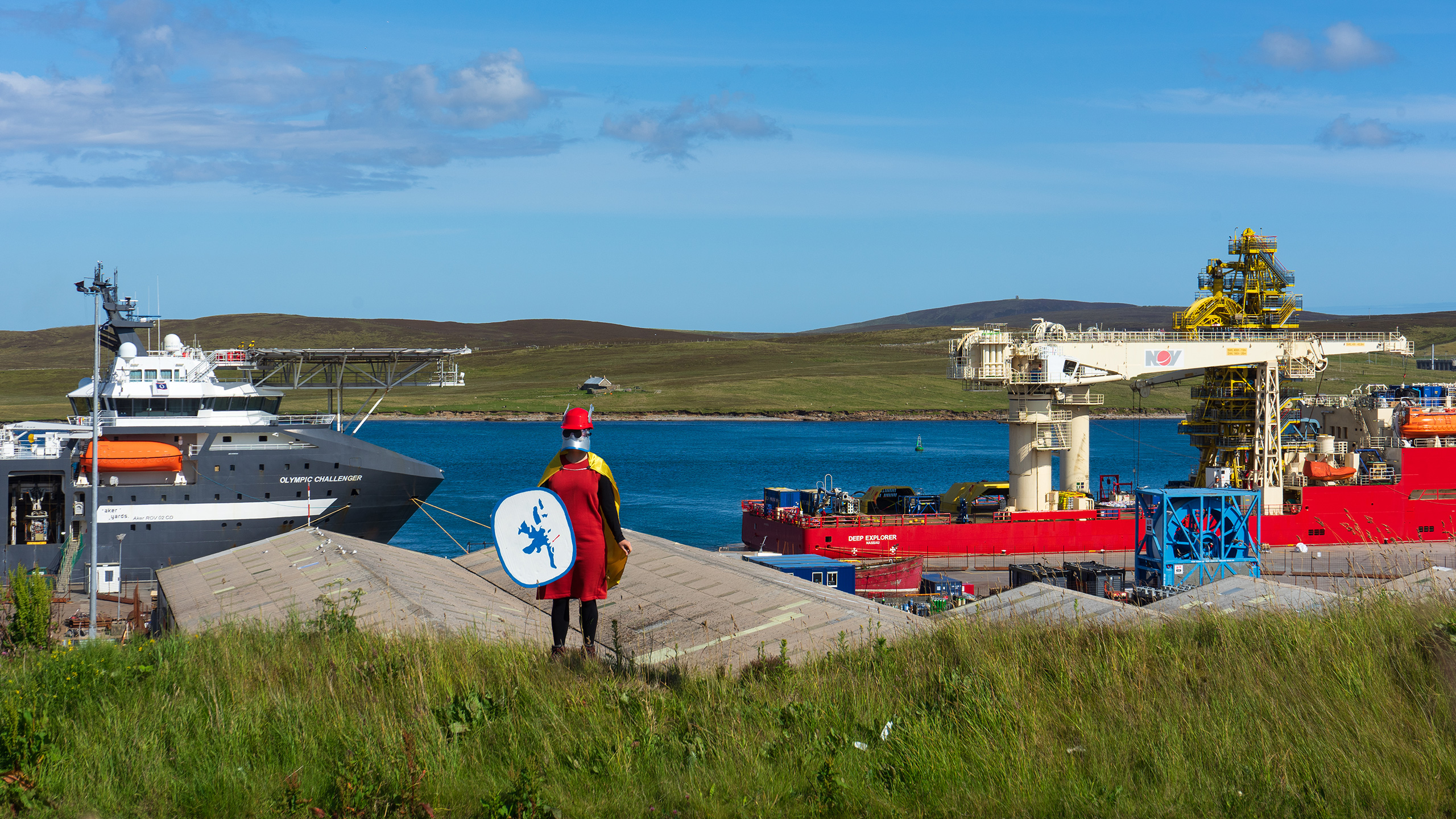
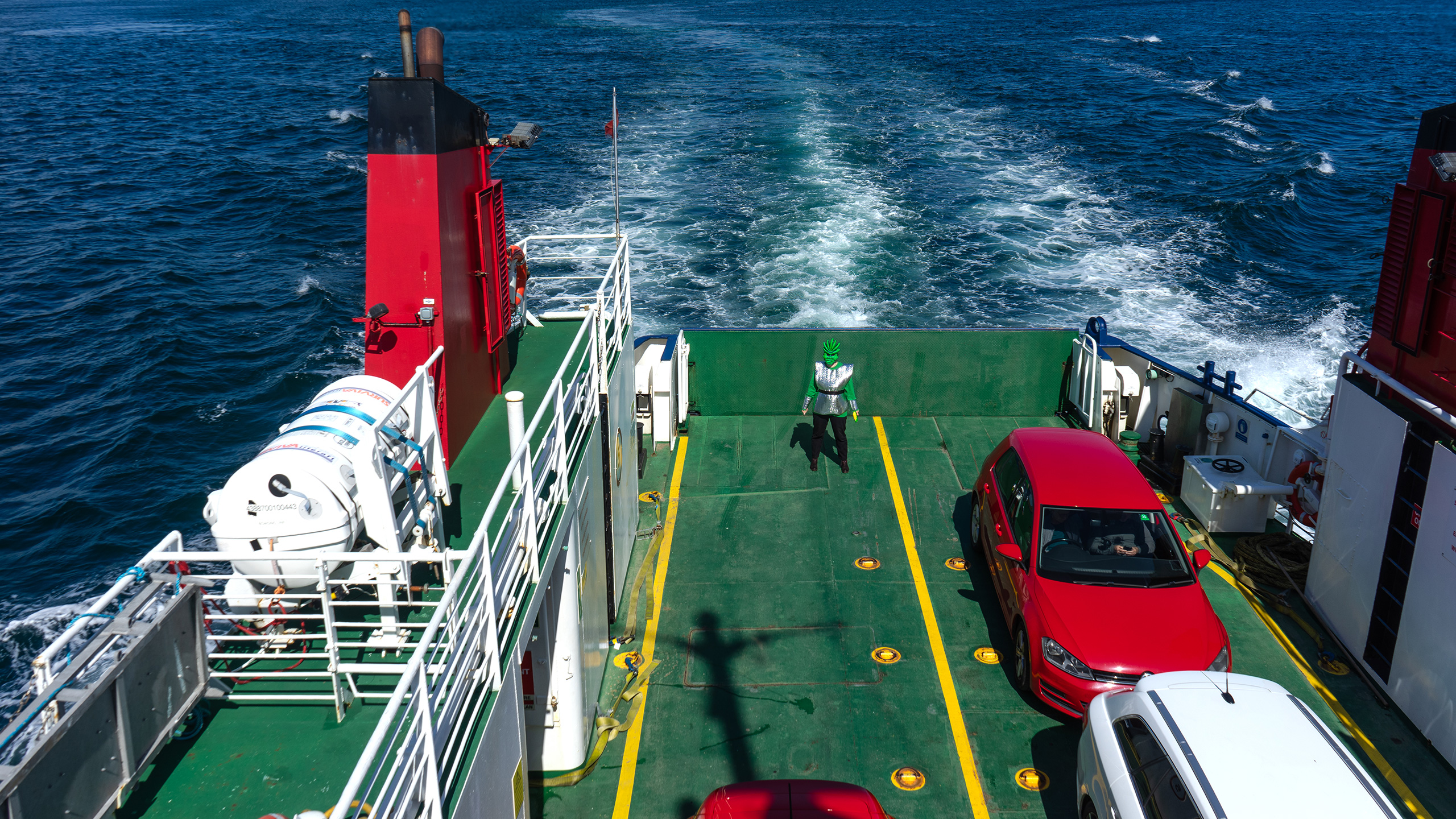
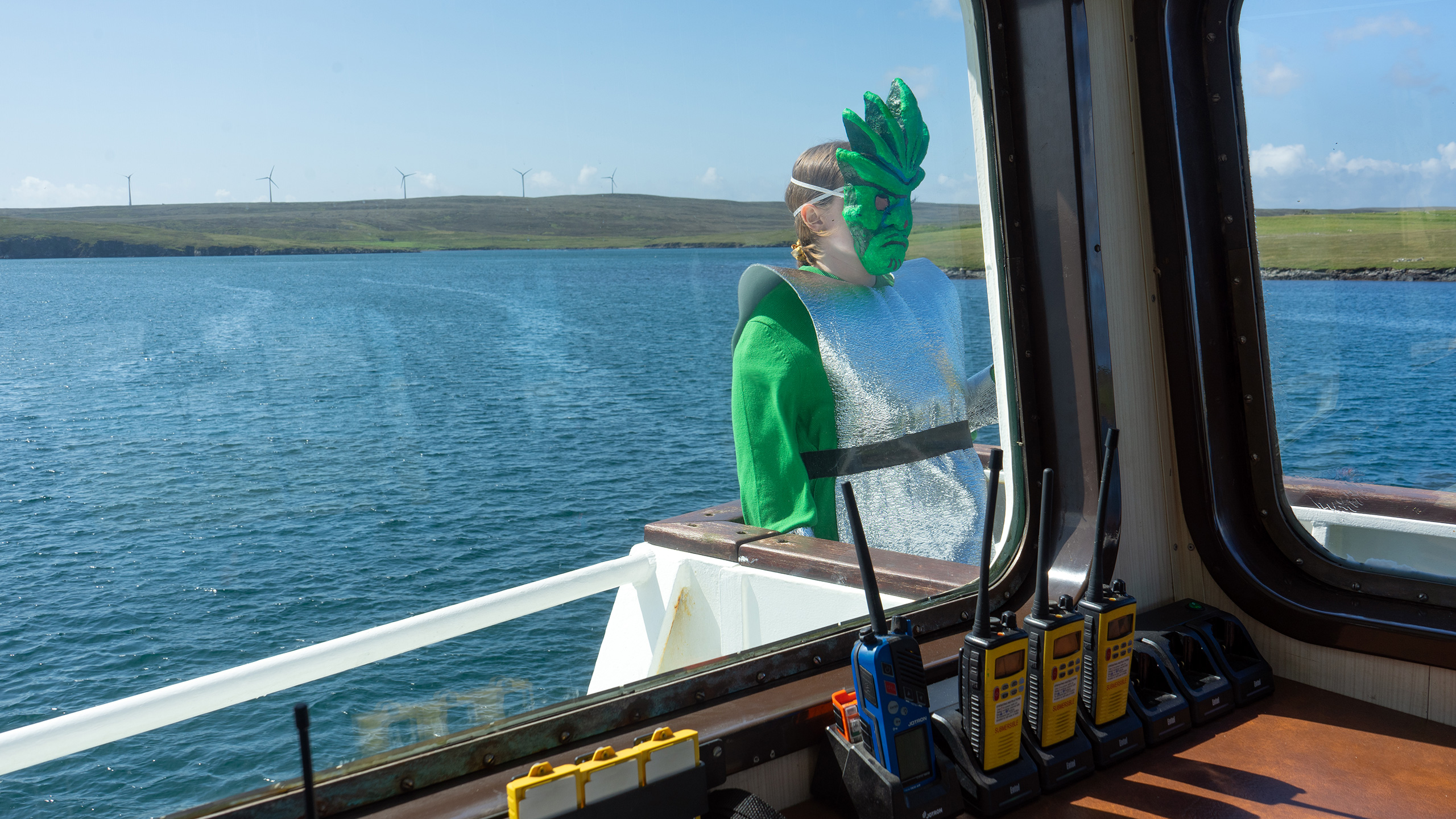
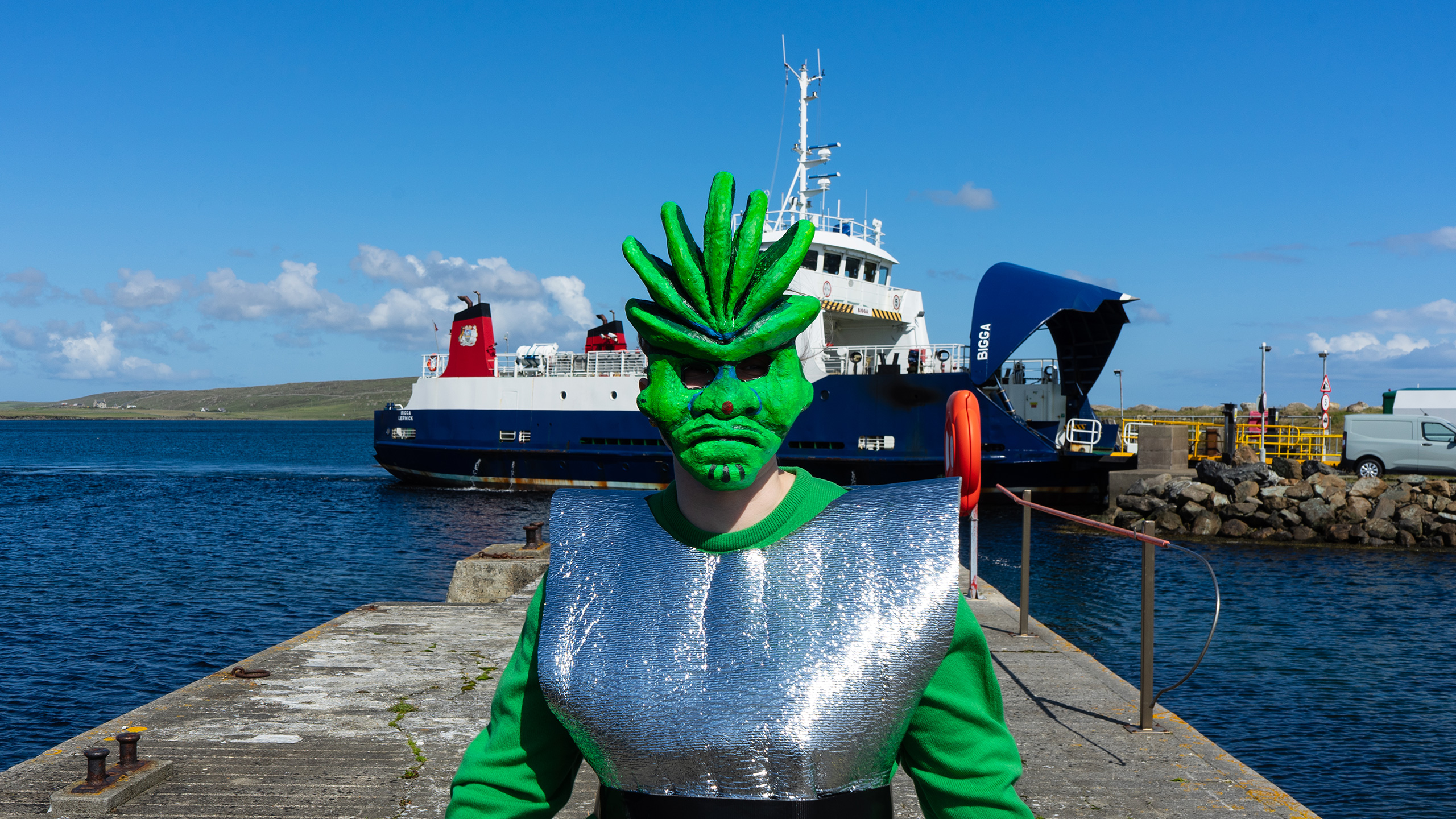
The Moving Energy Theatre consisted of several performances on the Shetland Islands. The archipelago houses ‘Sullom Voe’, one of the biggest oil and gas terminals in Europe and is also a major player in wind and tidal energy. These industrial activities have an enormous impact on island life and natural environments and are often discussed, performed, and criticized by members of the Shetland community. An example are the short theatrical acts that happen in the framework of the annual carnivalesque Up Helly Aa festival. The aim of the project was to recreate several historical acts from the last 50 years that have a clear reference to the different energy industries. For this purpose costumes and props were recreated and situated into the related industrial environments, letting interactions around them unfold spontaneously. In this way, the costumes became tools for new discussions about the roles these energy industries play in the Shetlanders’ lives and the future of the energy transition in general. The different encounters and discussions with the public are documented through writing and will be published at a later stage.
The Shetland Islands are a Scottish archipelago that lies approximately 480 kilometres north of Edinburgh and 320 kilometres west of Bergen, on the crossroads between Norway, Scotland, and the Faroe Islands. Shetland houses Sullom Voe, one of the biggest oil terminals in Europe. During peak times, up to 1.5 million barrels of oil enter the archipelago daily from the oil platforms in the North Sea to be stored in underground containers. Afterwards, they are shipped to ports worldwide. The archipelago is also a major player in wind and tidal energy.
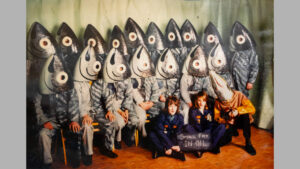
Some of the energy industry’s traces are more visible than others for the 23,000 inhabitants living there. The ways these industries have changed island life and natural environments throughout history are often discussed, performed, and criticized by members of the Shetland community. An example are the short theatre acts that happen in the framework of the carnivalesque Up Helly Aa festival. A handful of historical acts from between 1972 and 2003 found in the Shetland Archives reference the energy industry through a critical lens and a specific aesthetic, marked by costumes, props, songs, and so on.
In light of the opening of the new Rosebank oil field north-west of Shetland (planned to start operating in 2026), it is time again for these discourses to re-emerge. TMET uses re-enactment and performative intervention to bring back and revive 8 selected energy acts from the archive. For this purpose costumes and props were recreated and placed back in the industrial environments the acts discussed and critiqued, letting interactions around them unfold spontaneously. In this way, the costumes become contemporary tools for conversations around energy, that allow for discussion about what roles these industries play in the Shetlanders’ lives today.