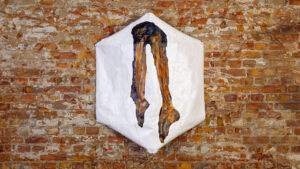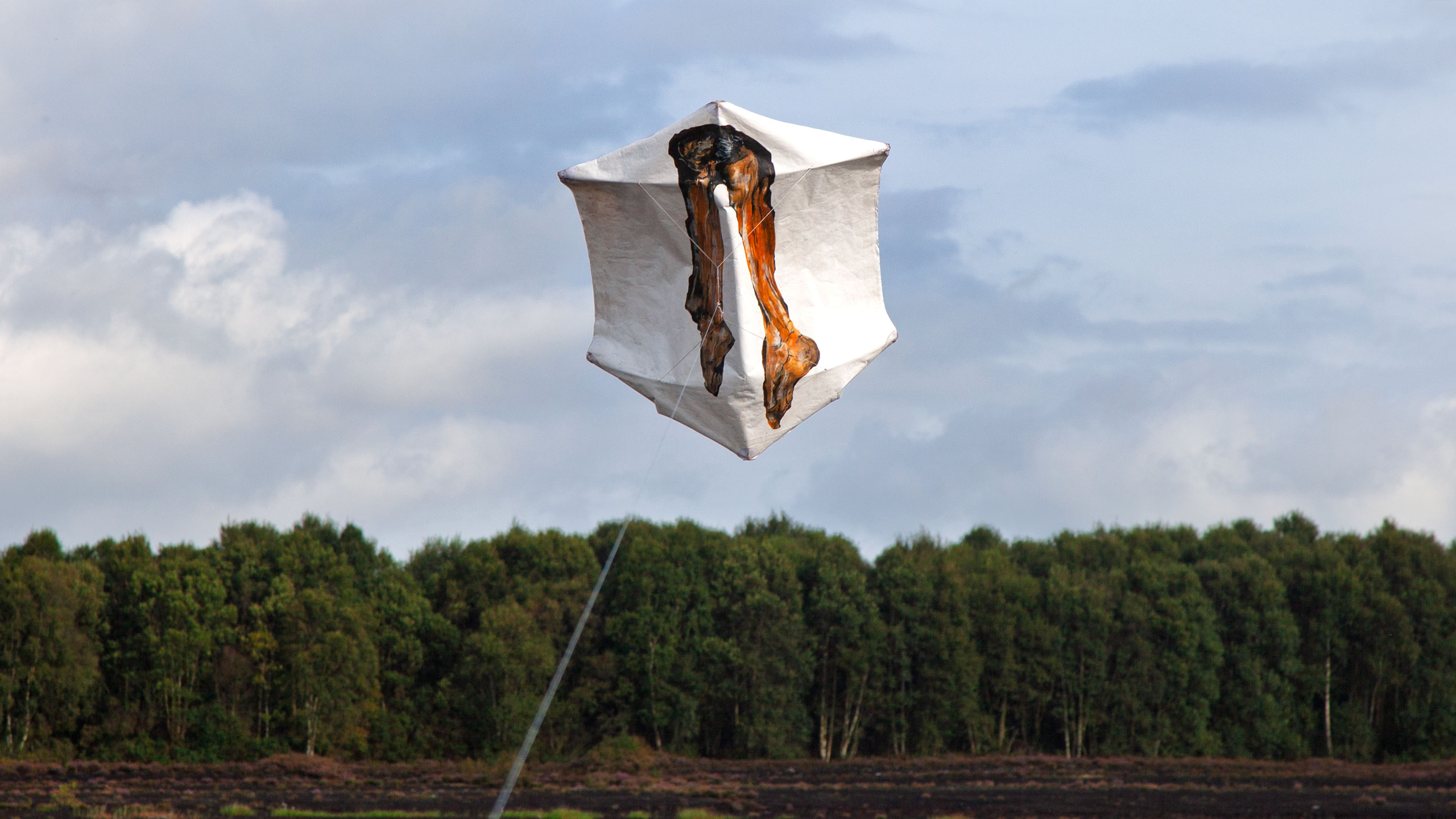
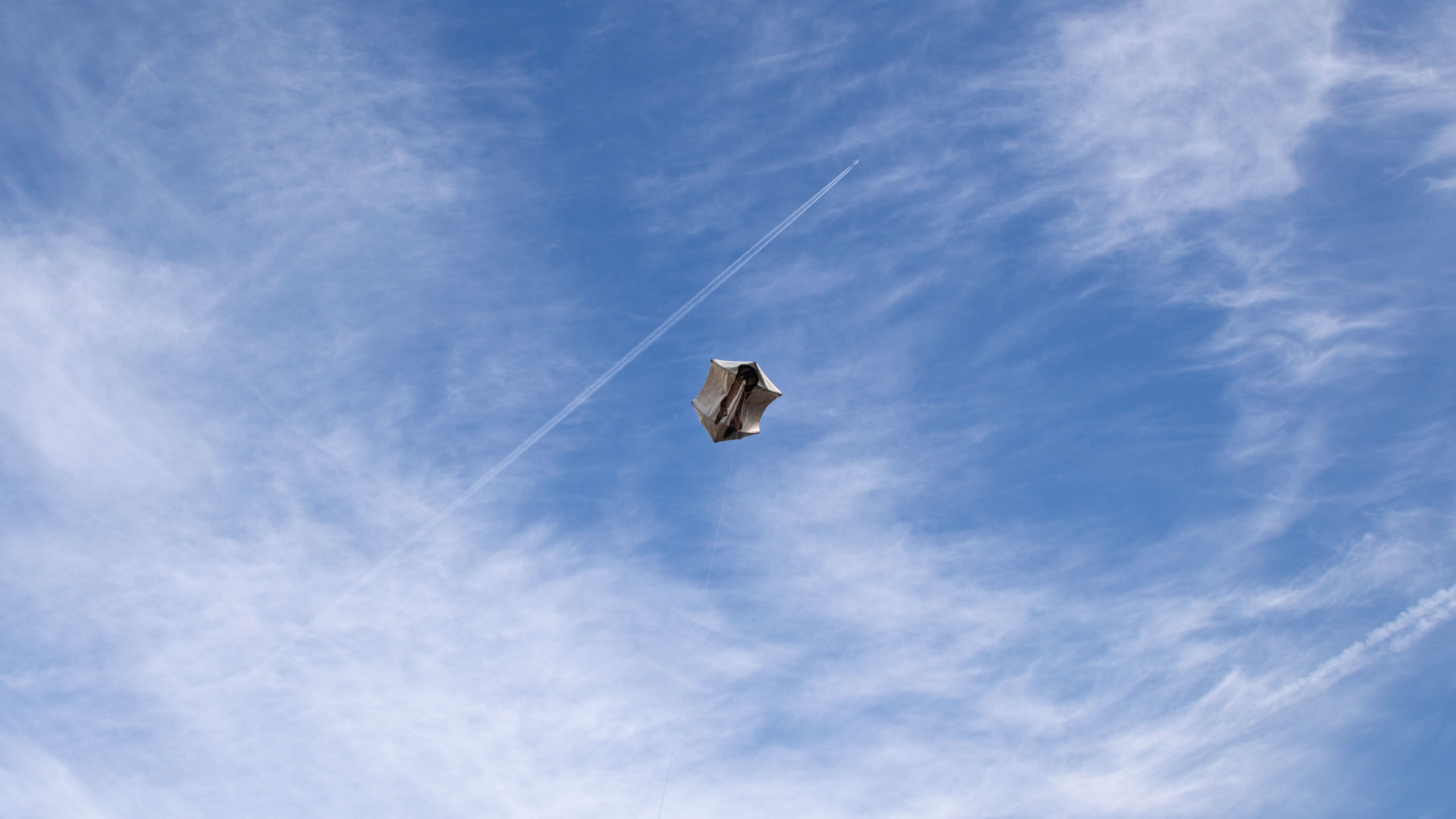
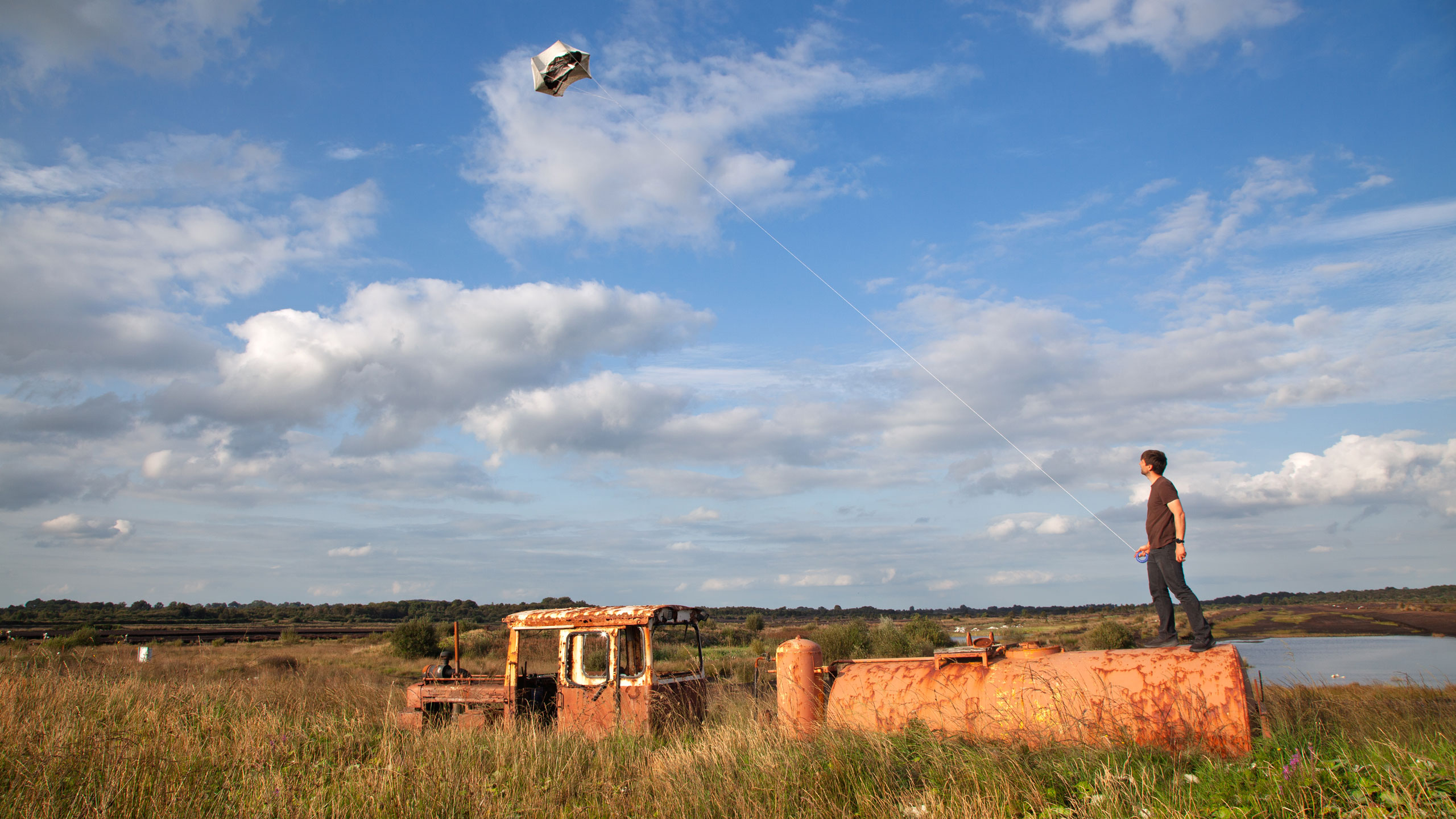
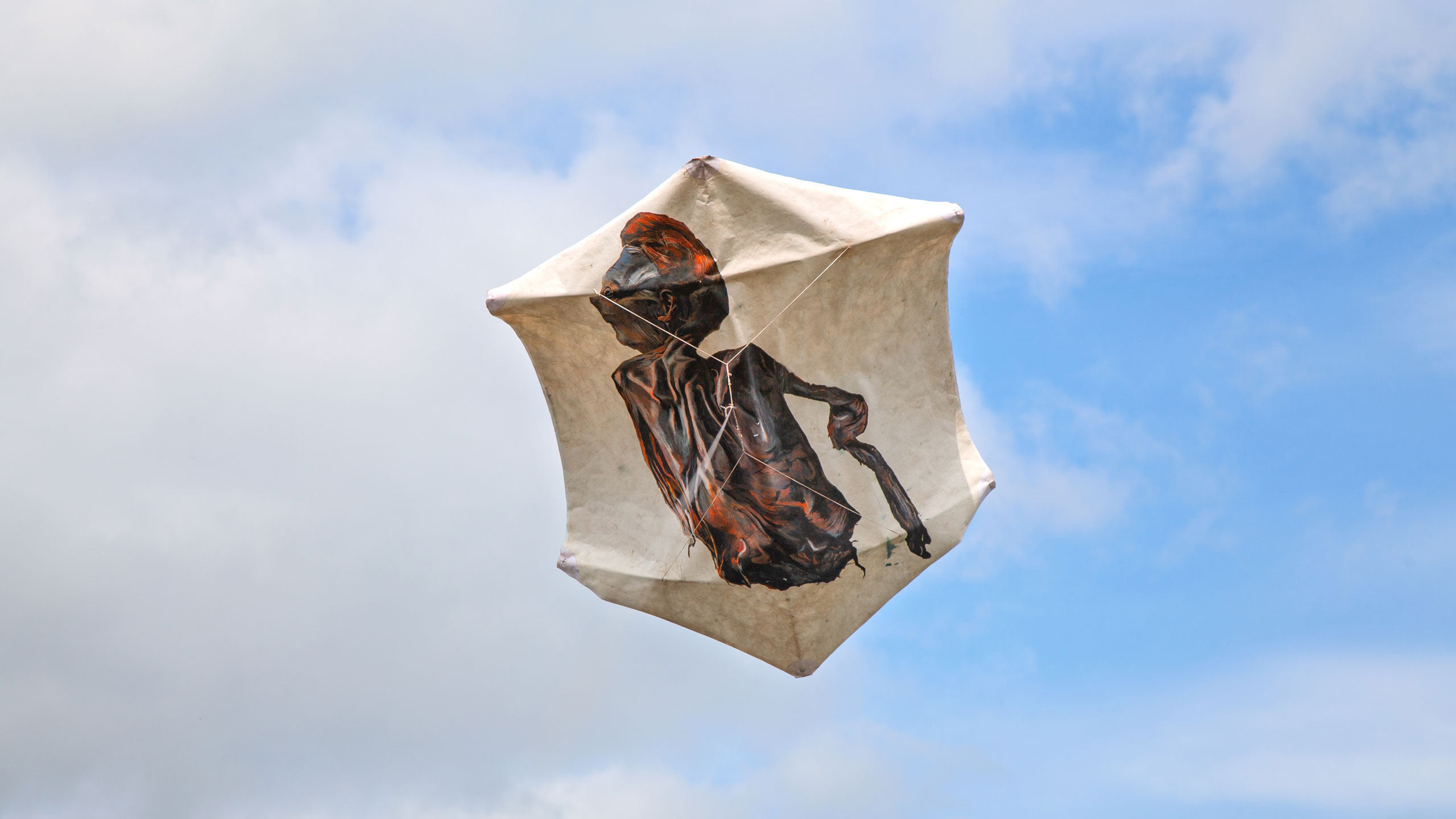
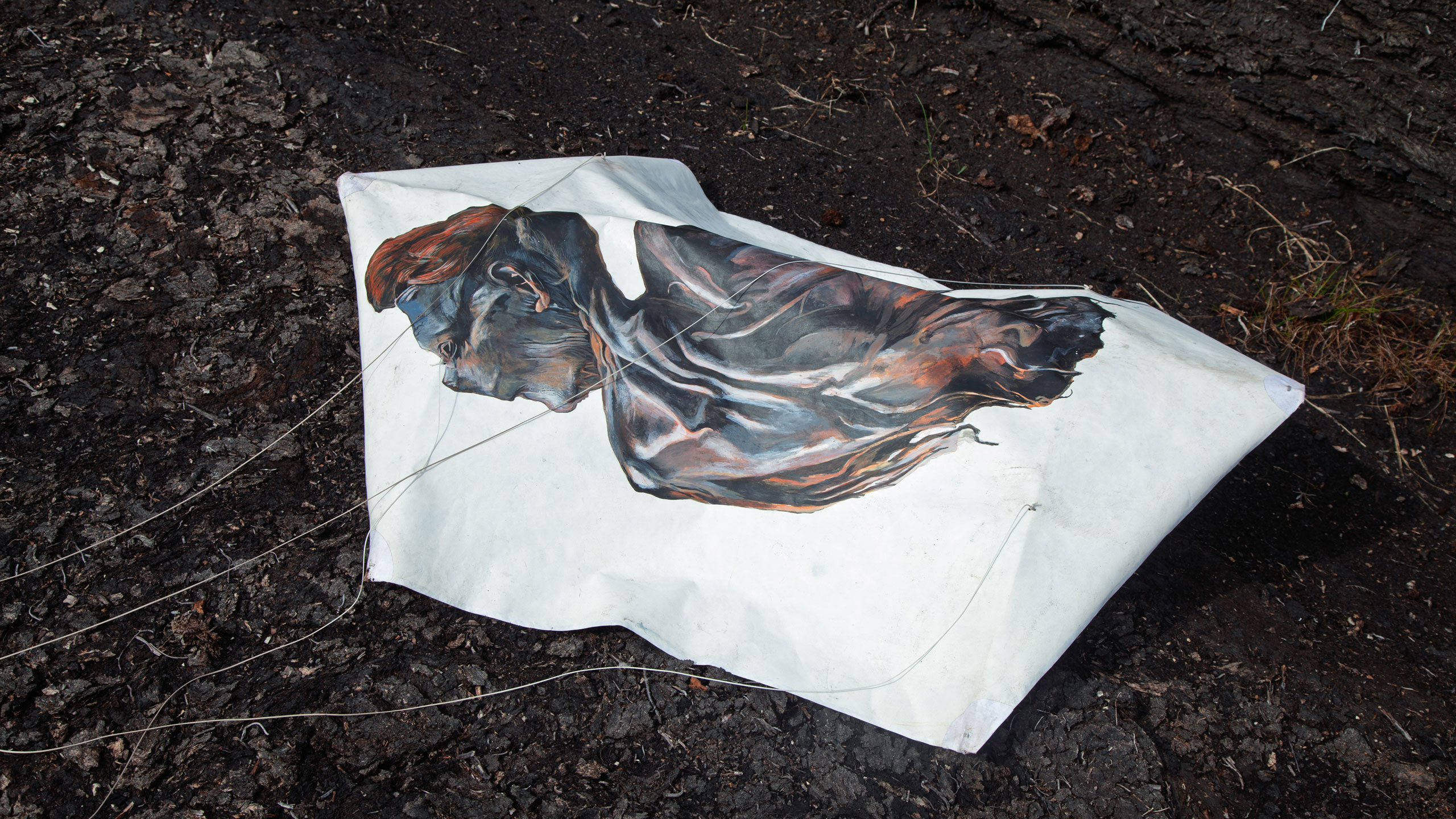
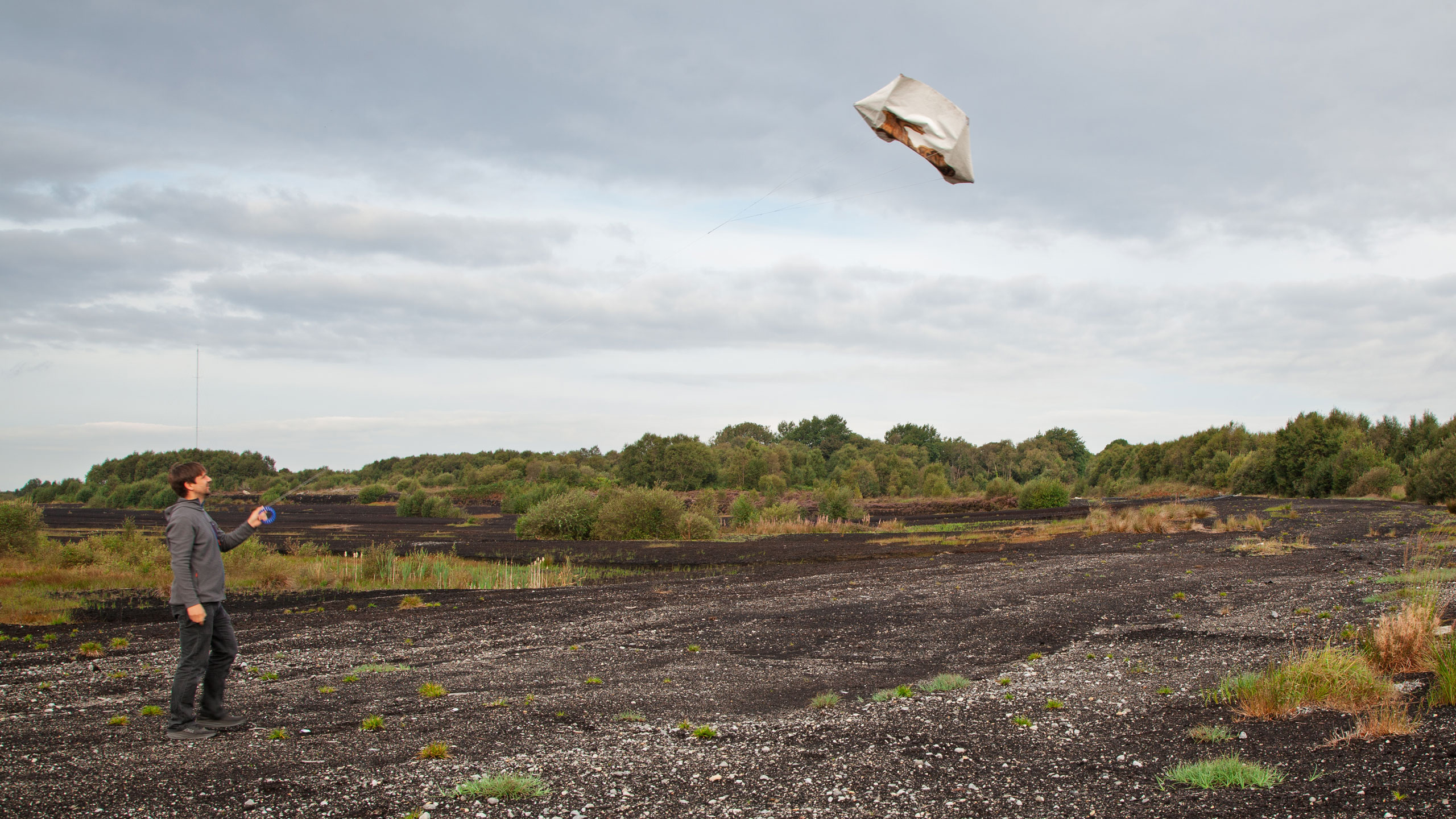
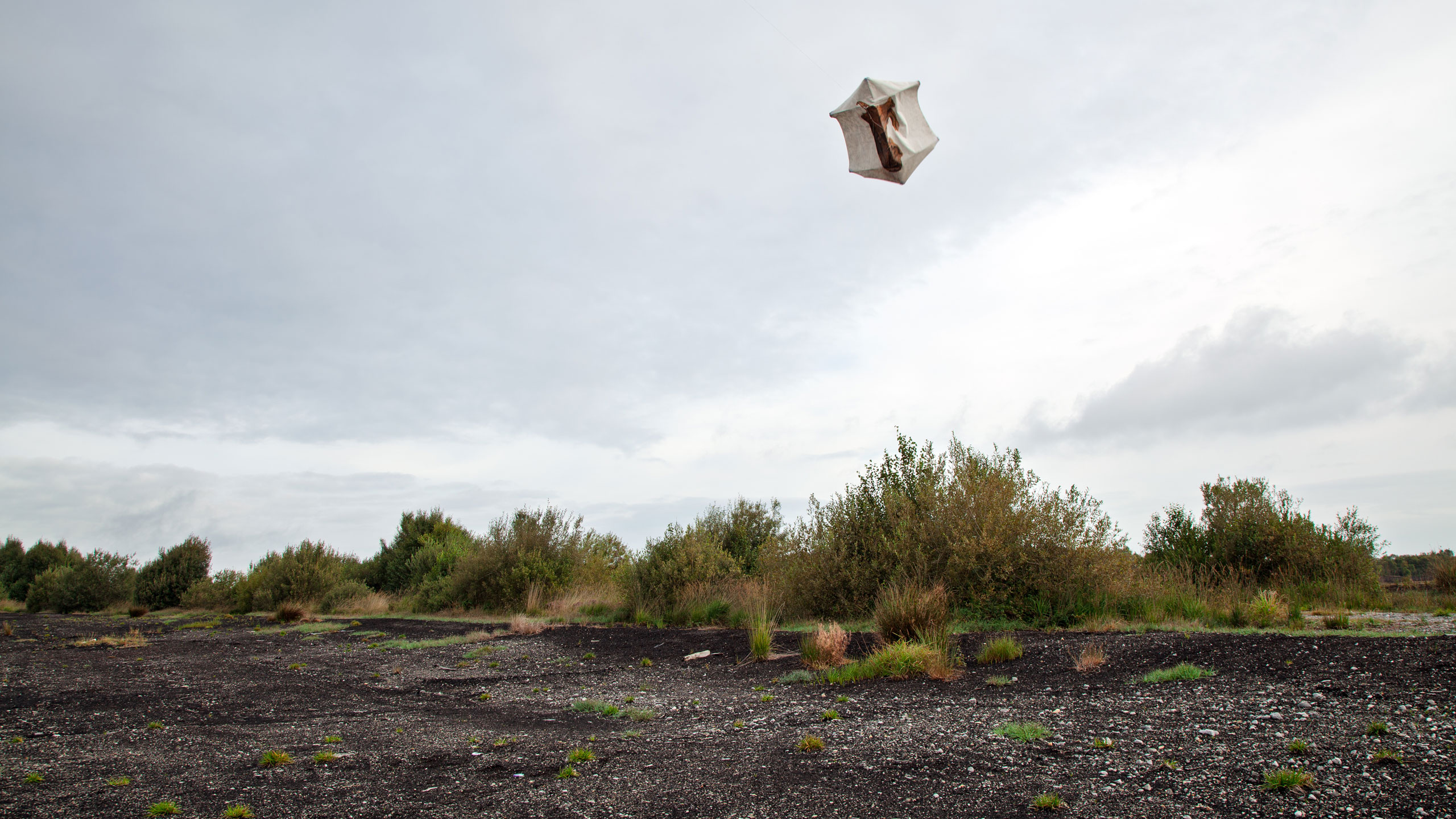
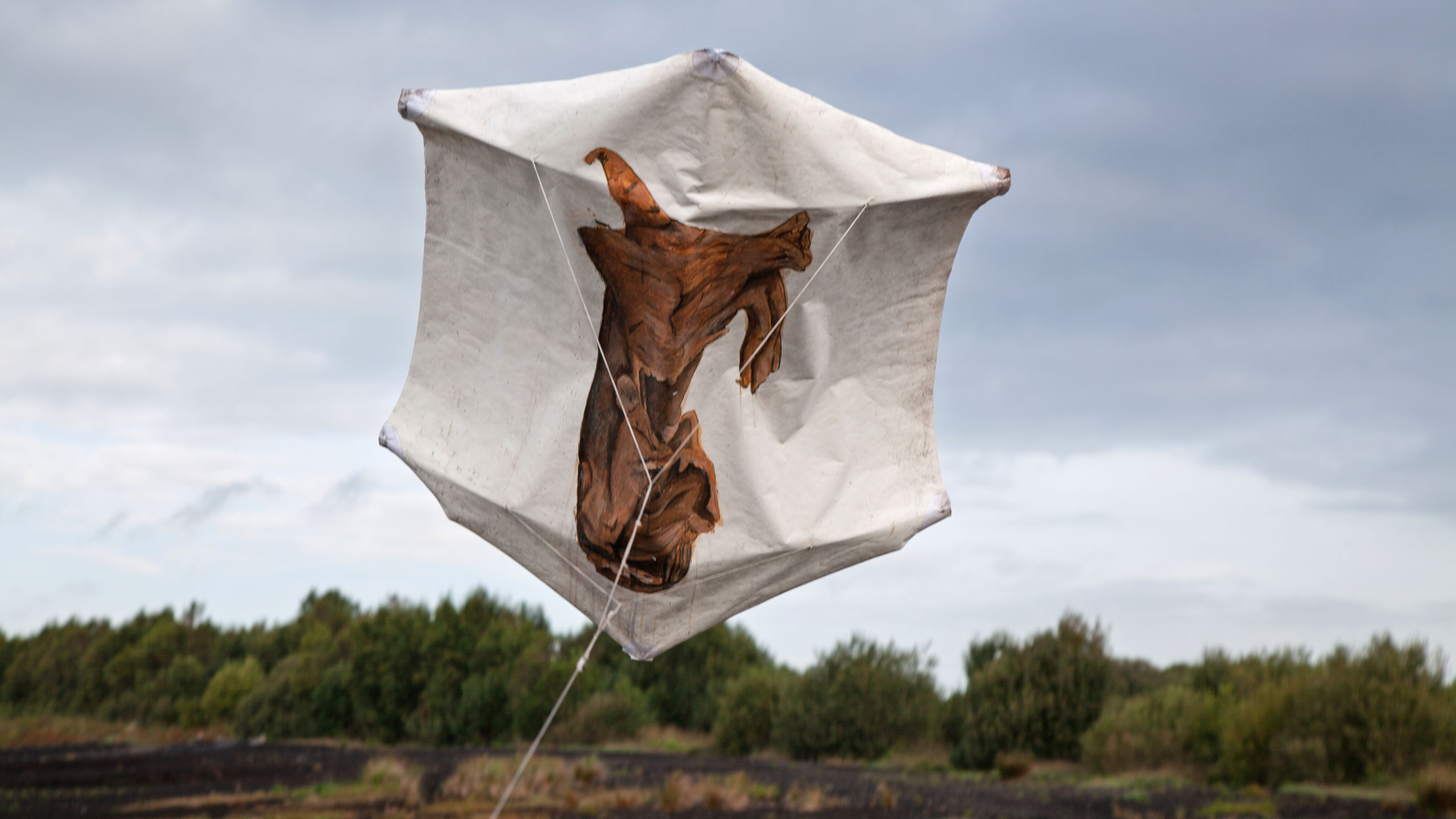
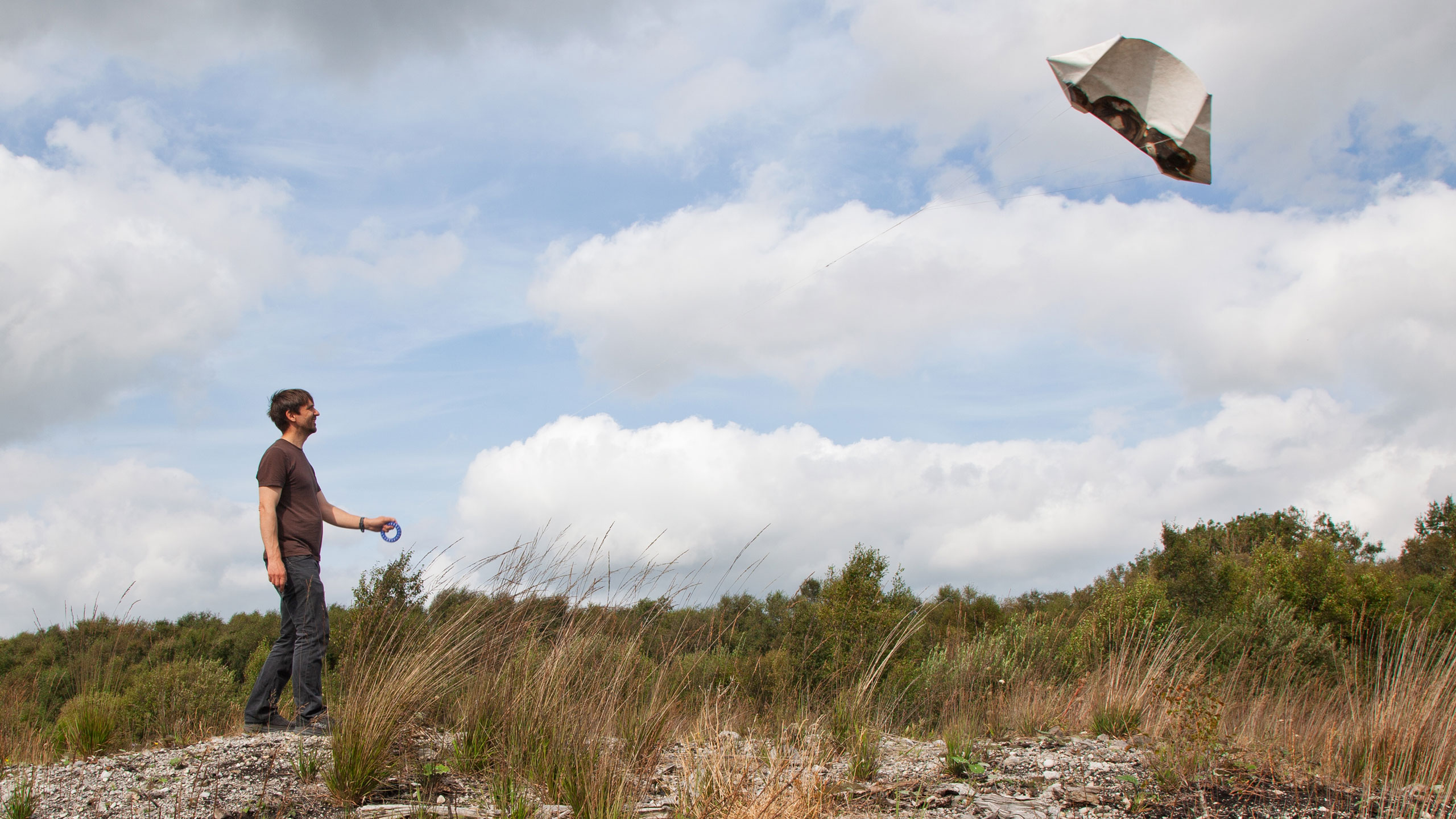
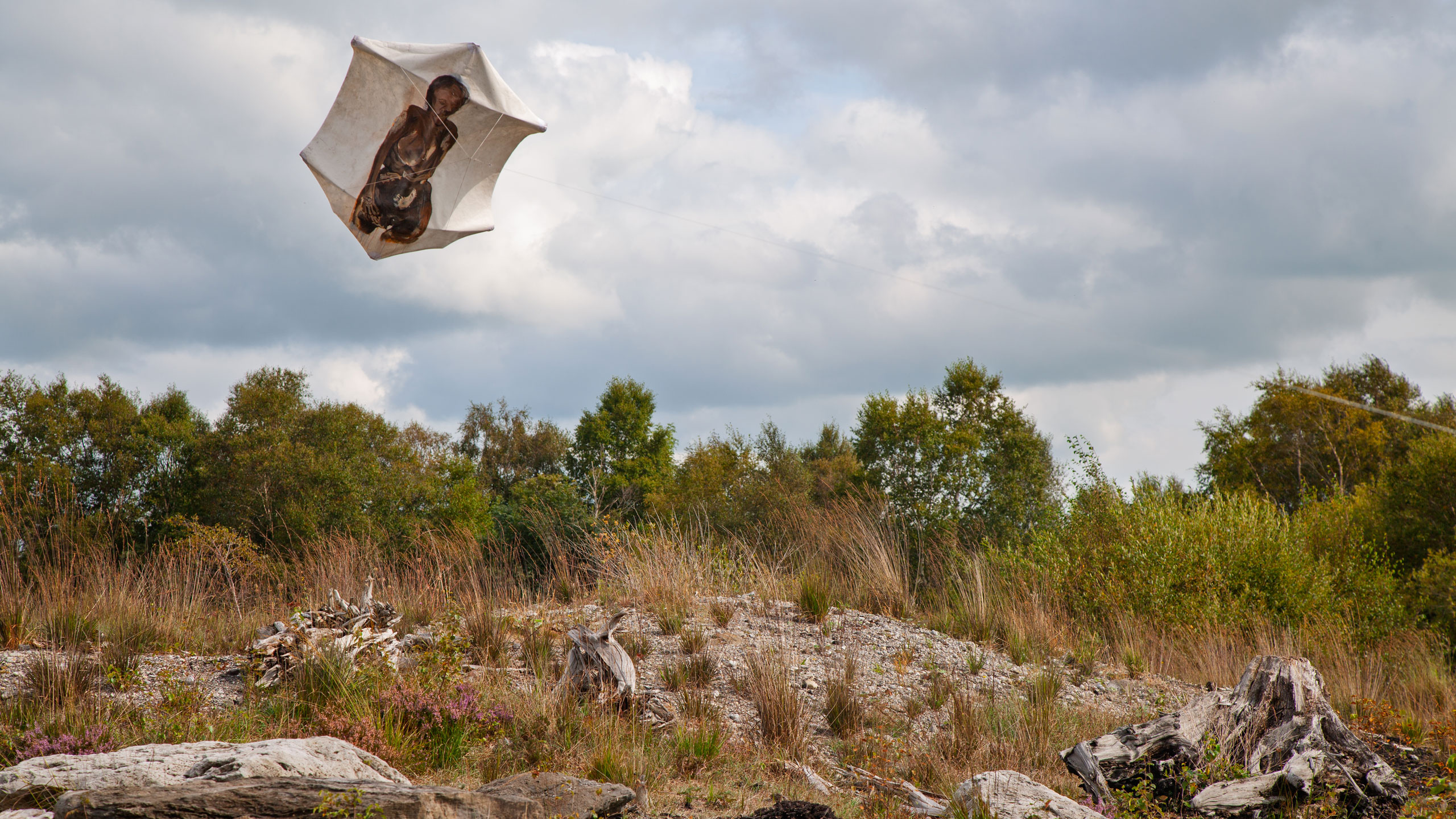
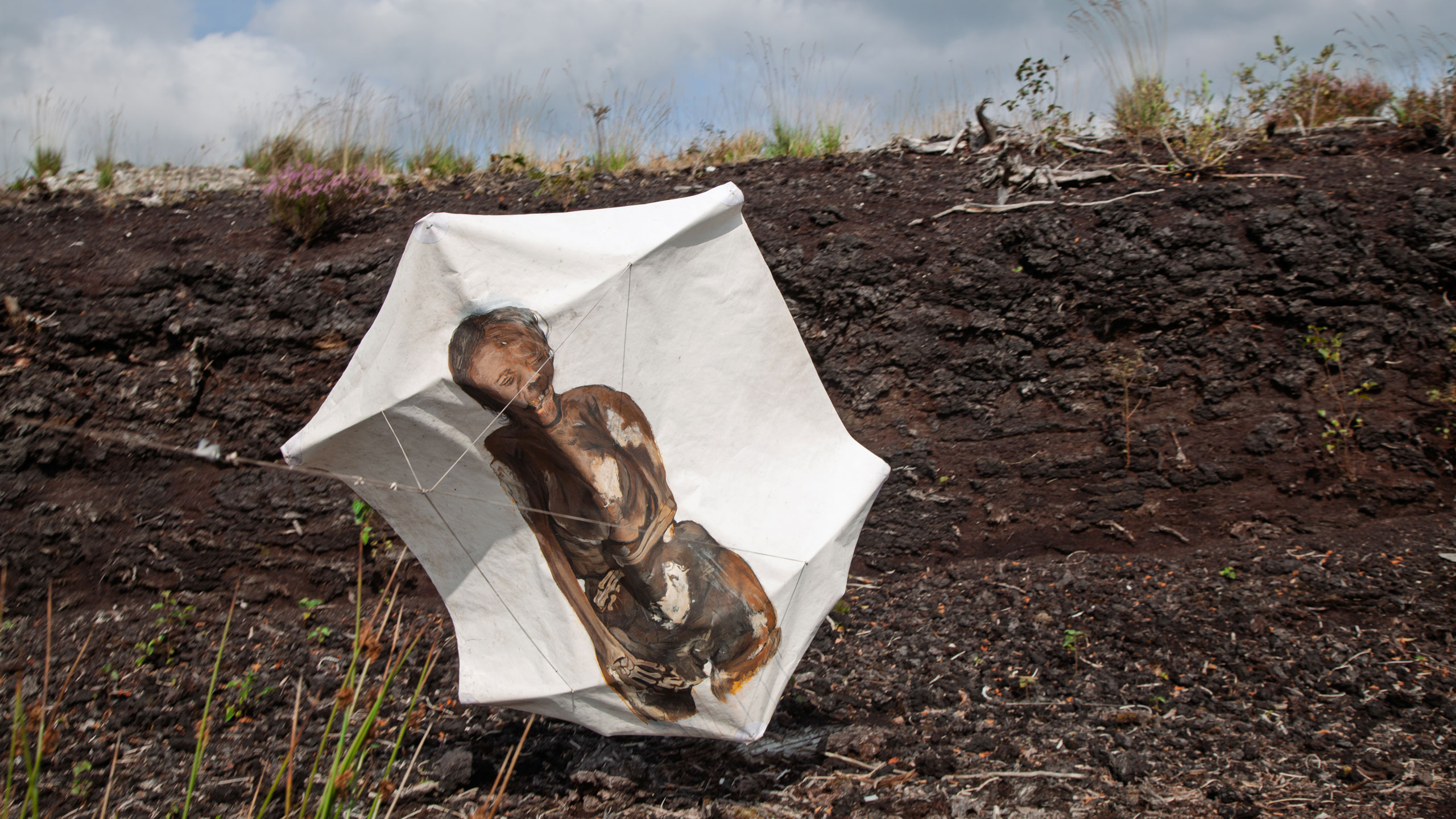
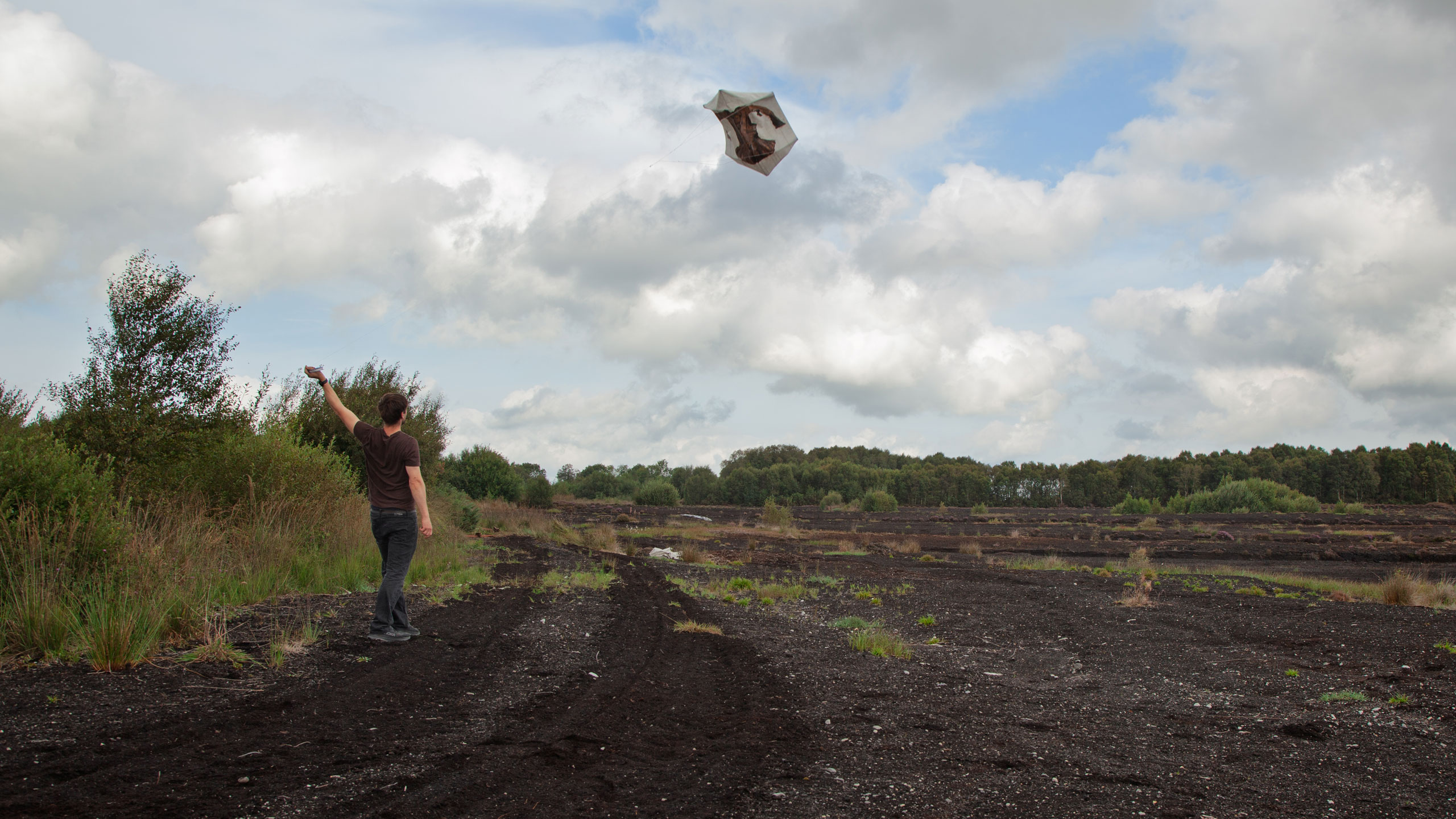
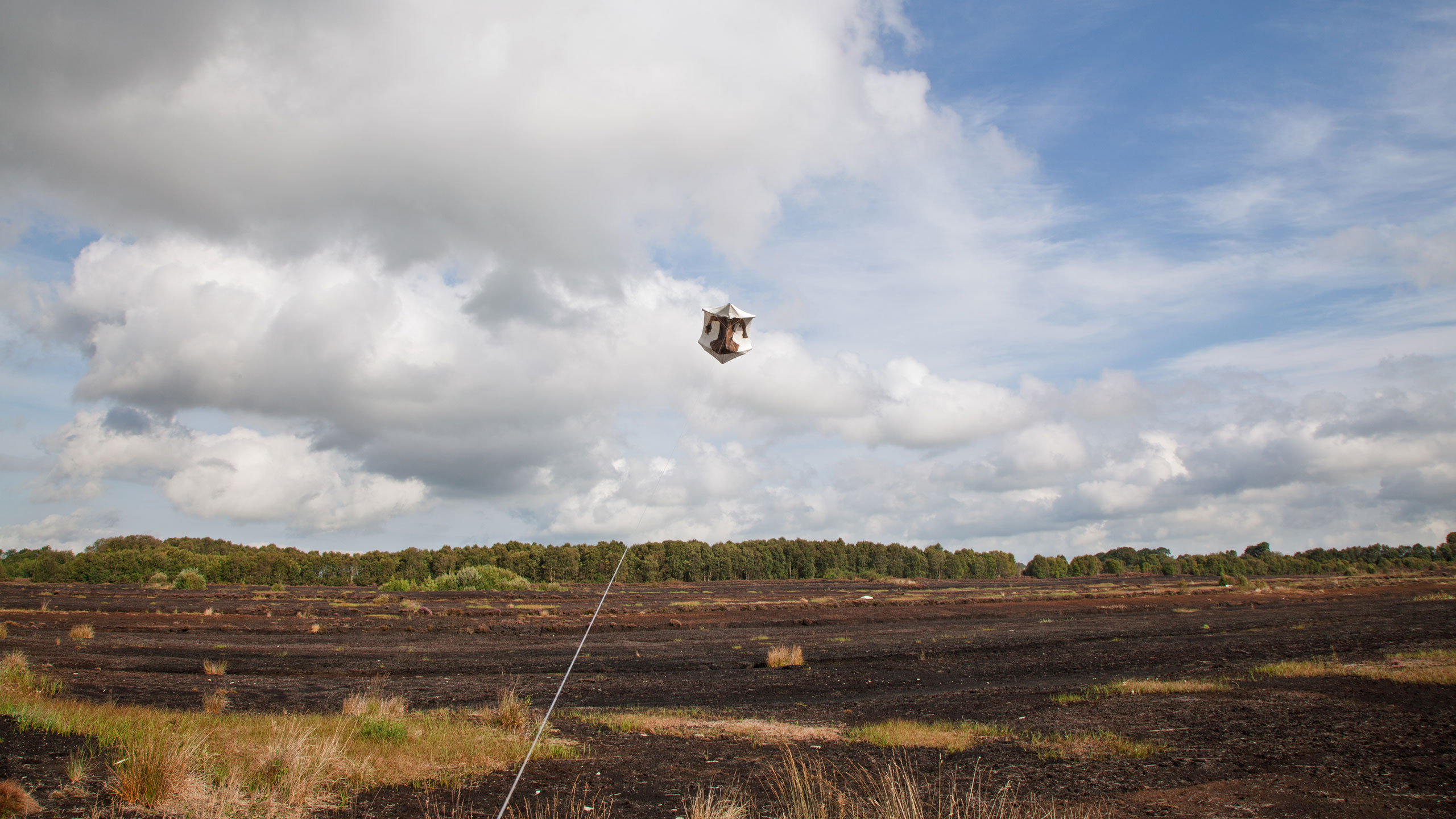
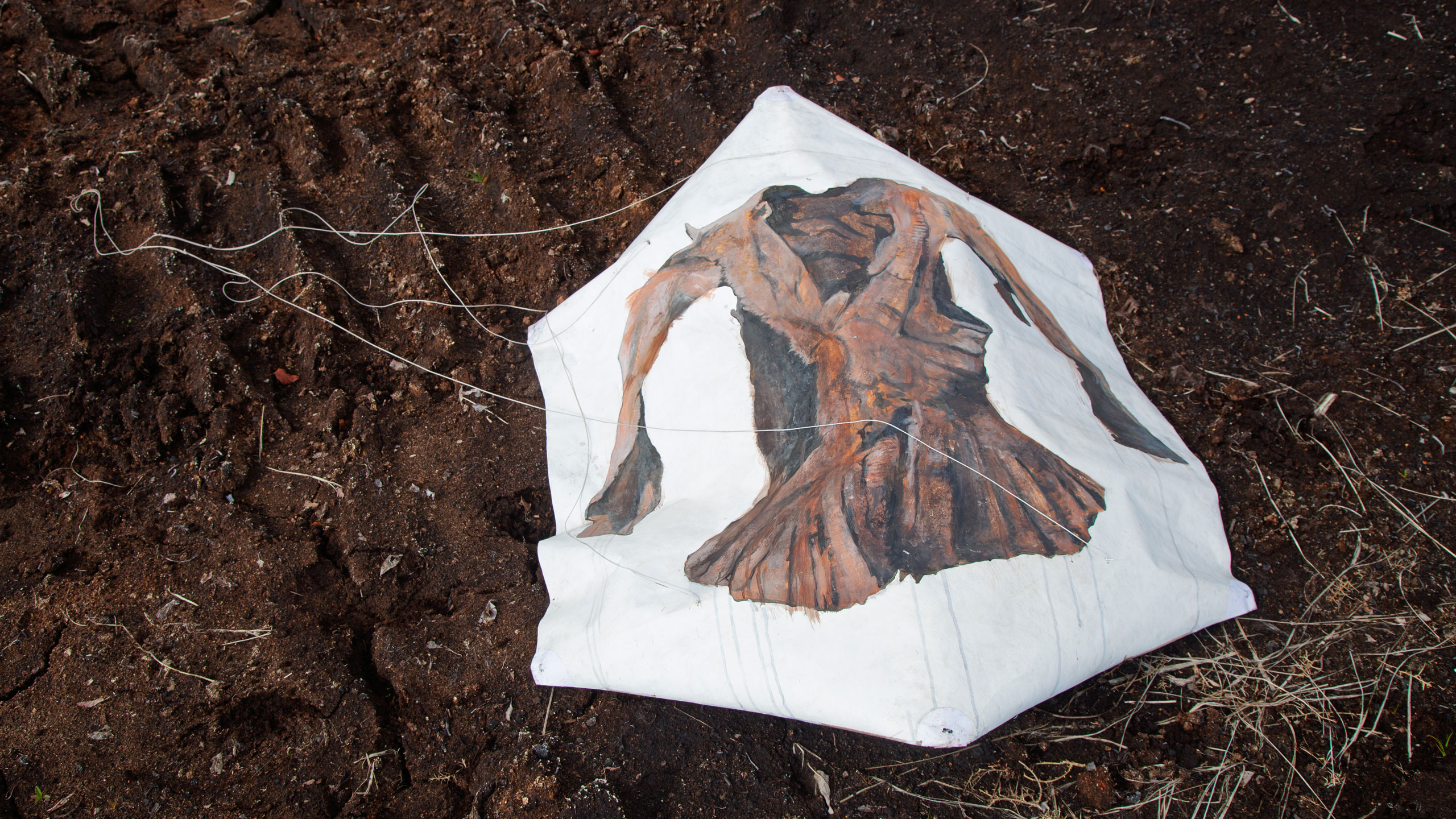
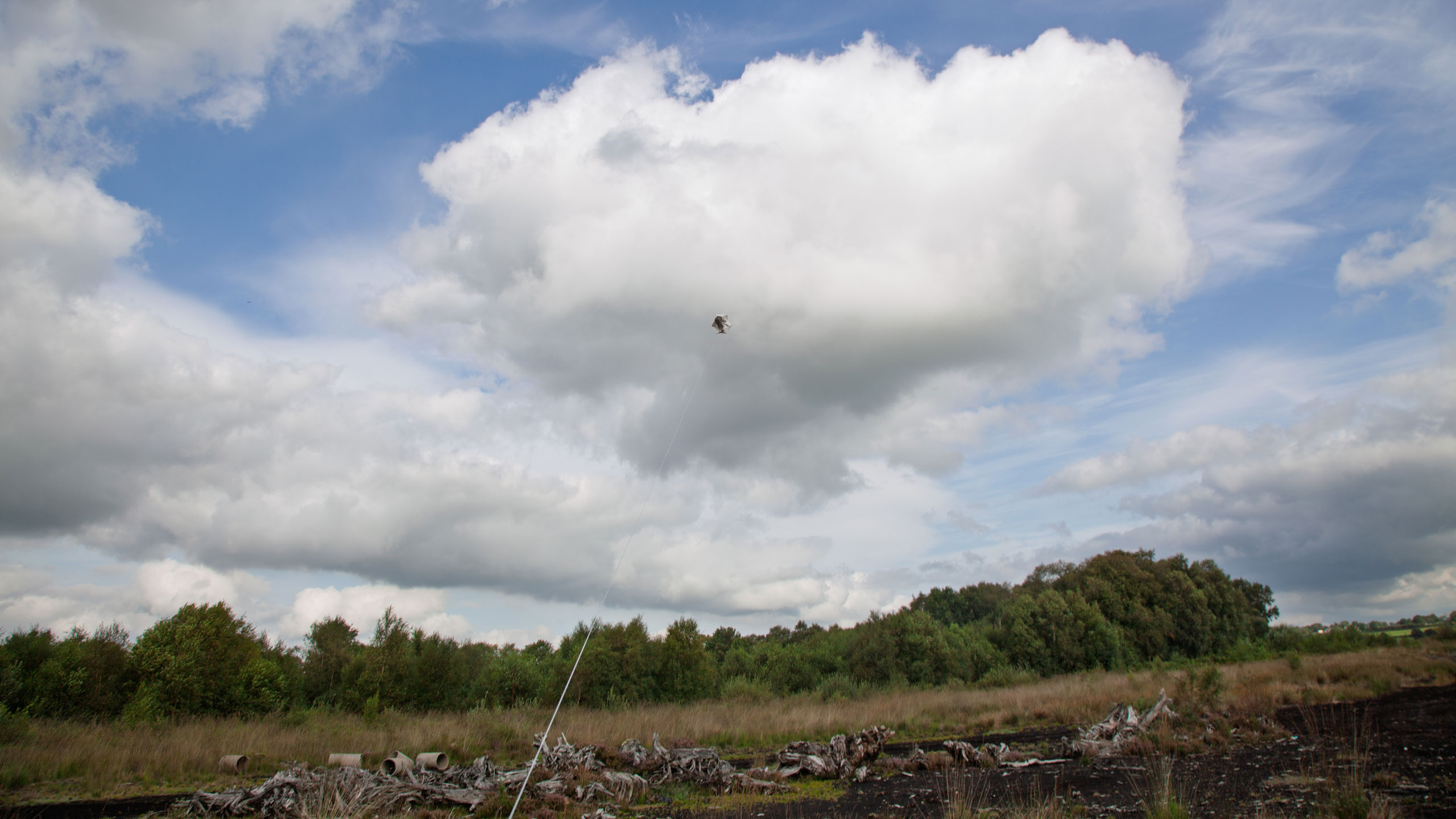
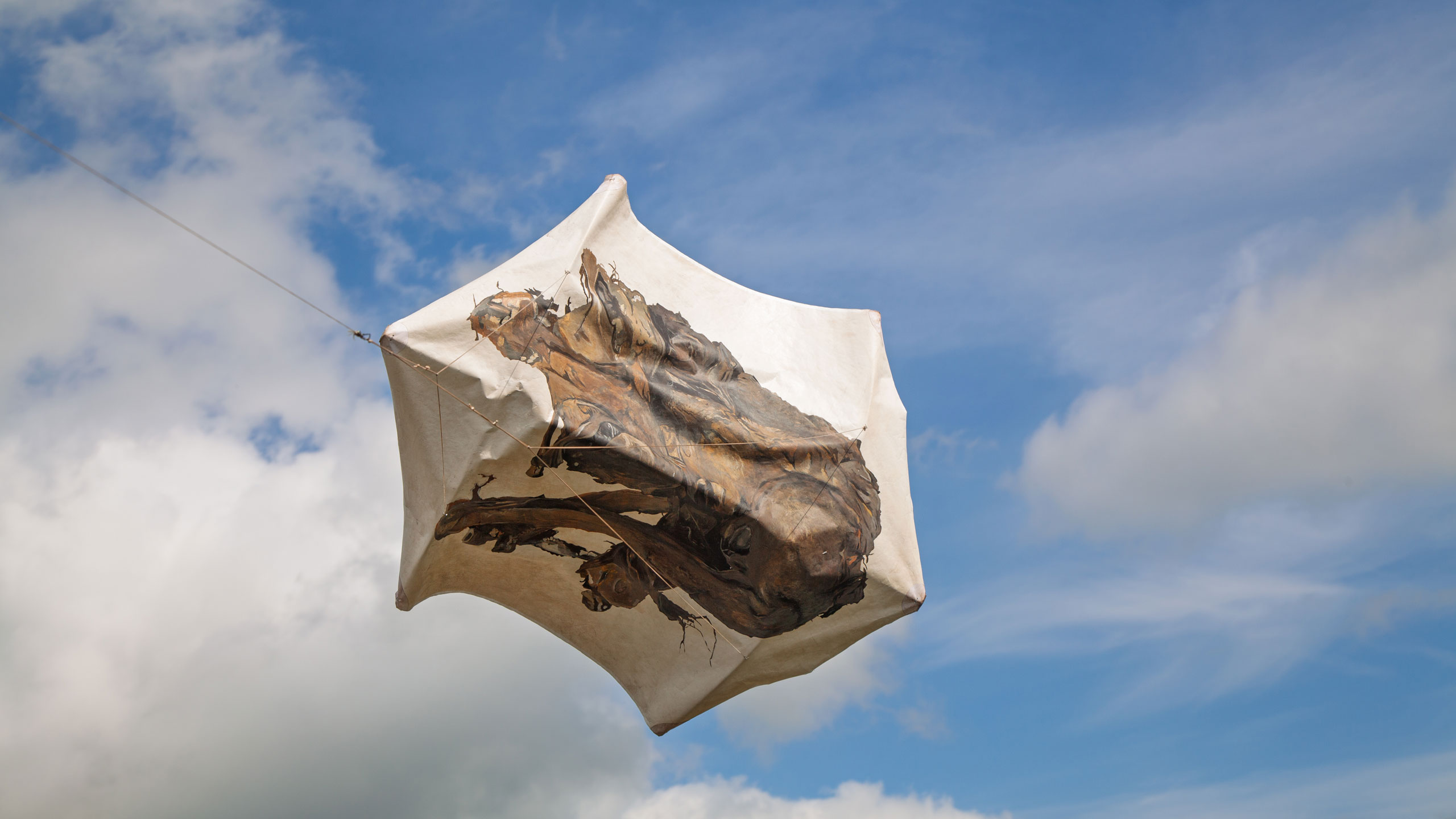
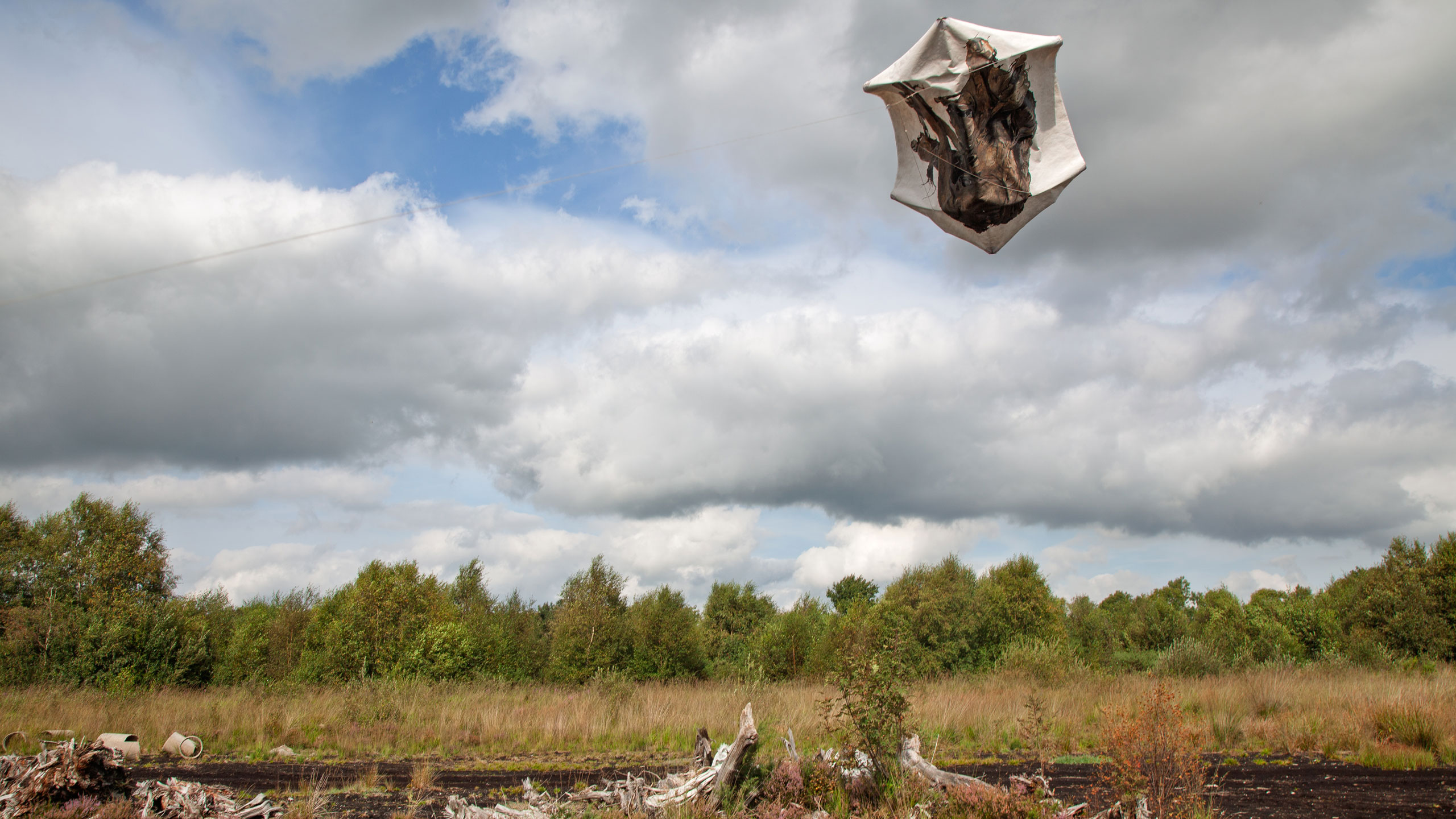
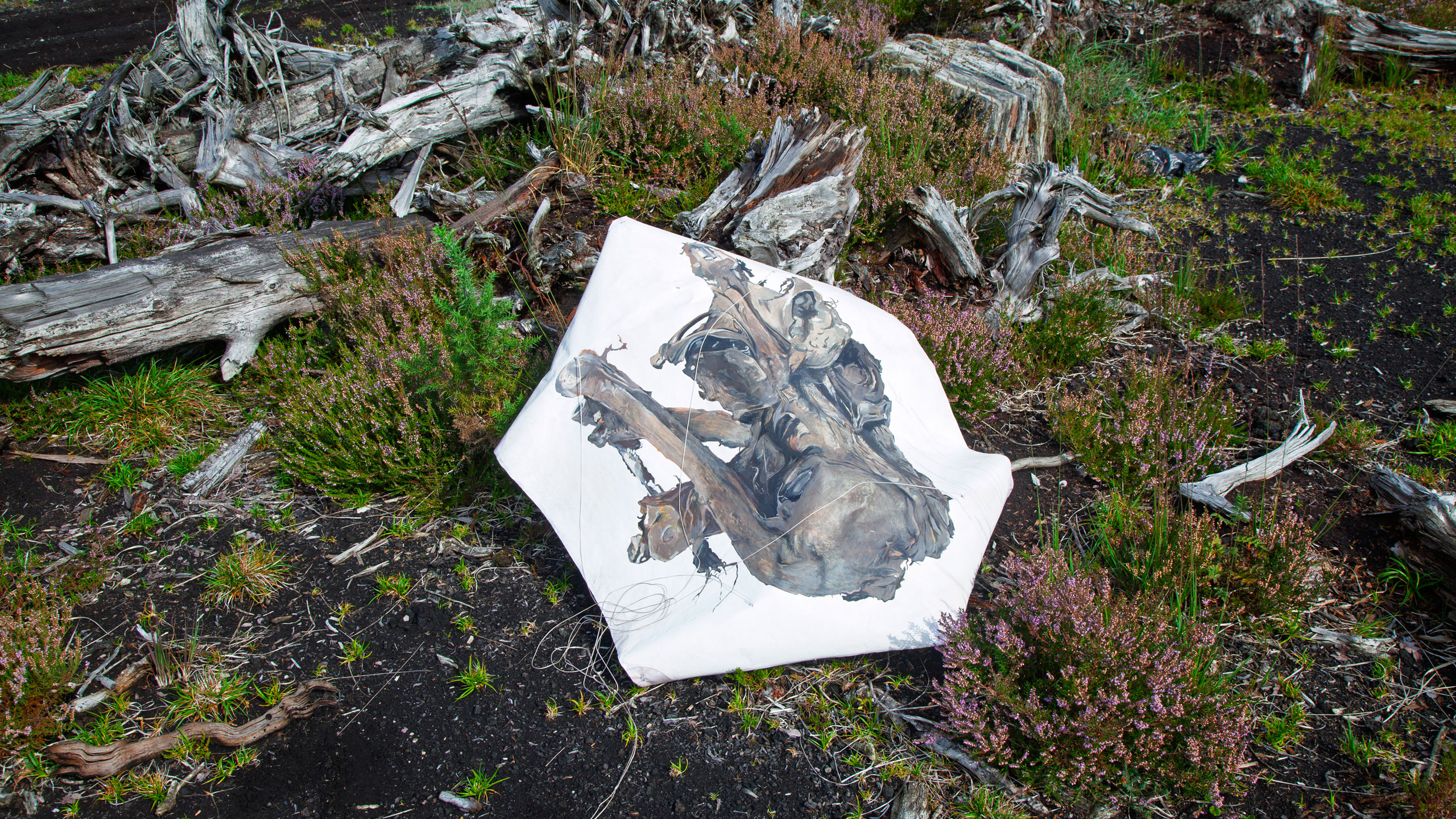
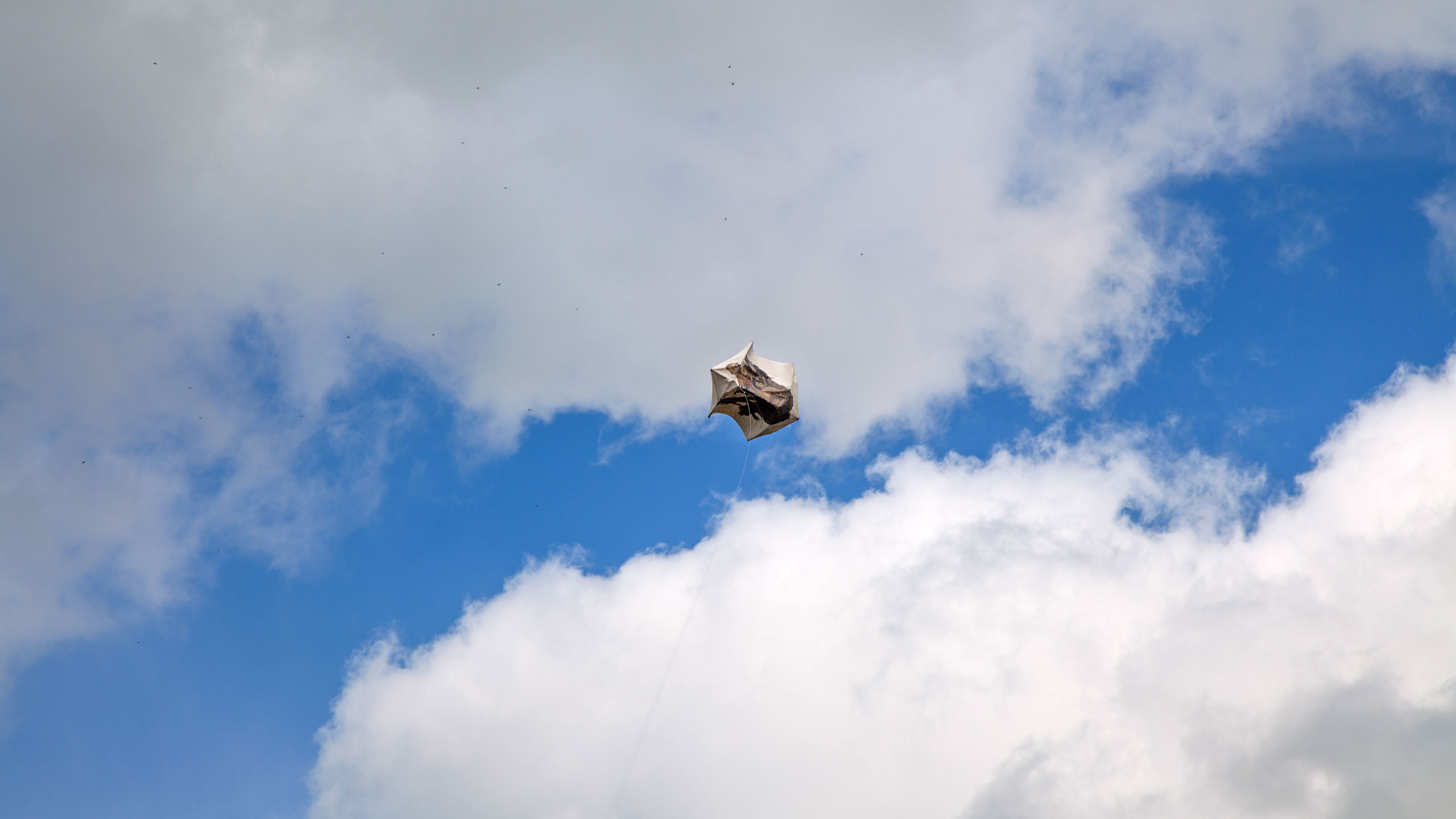
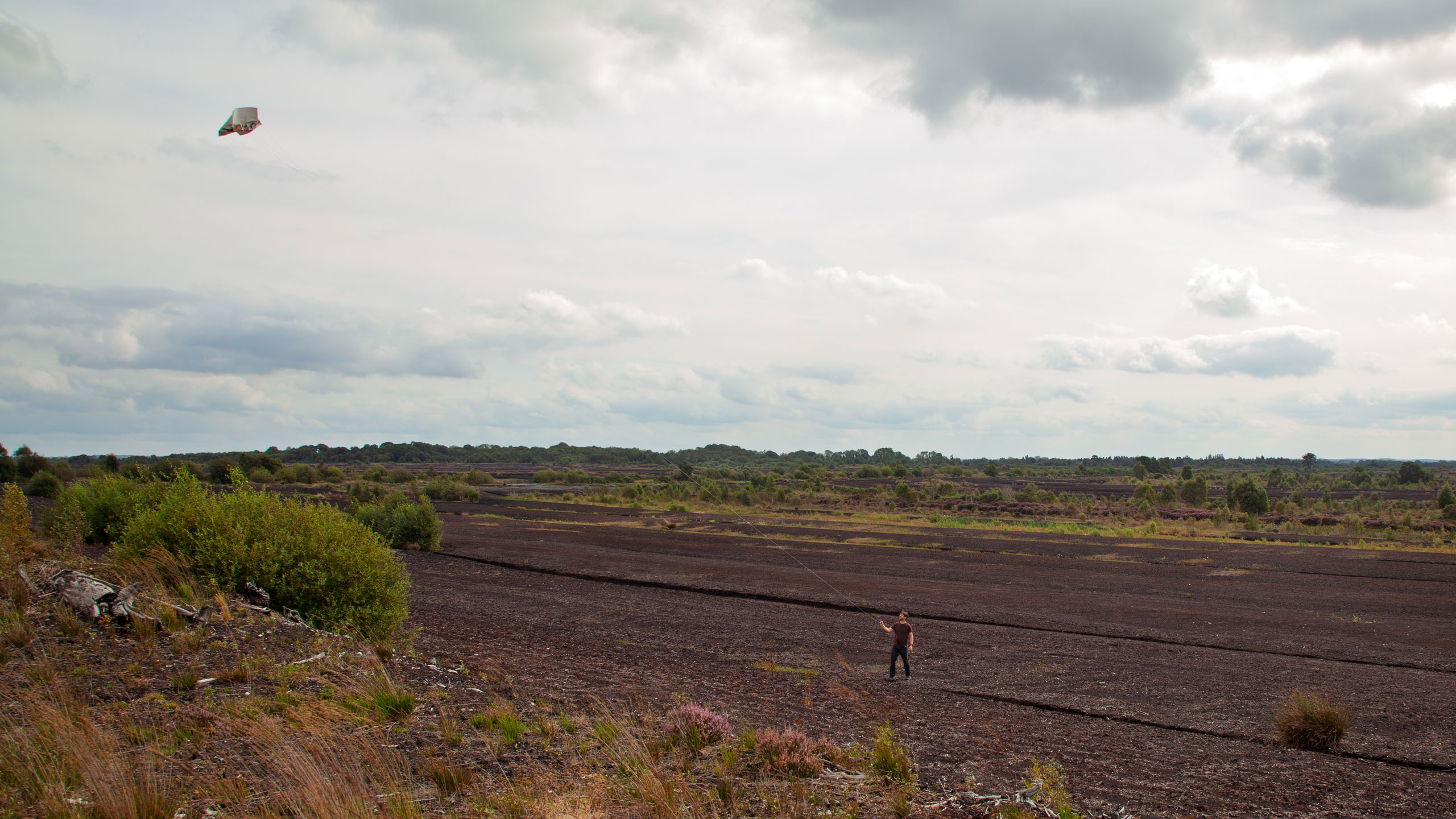
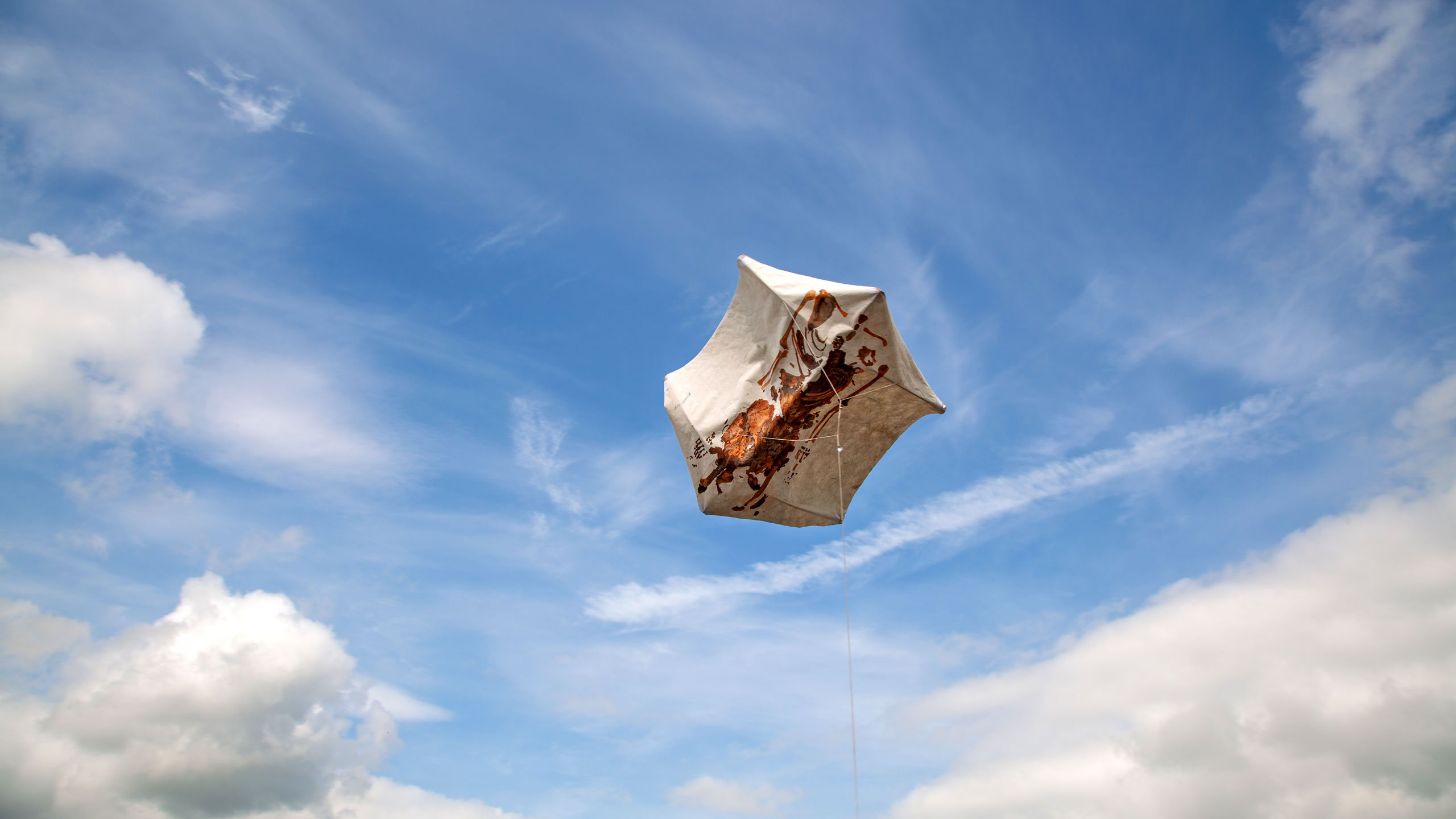
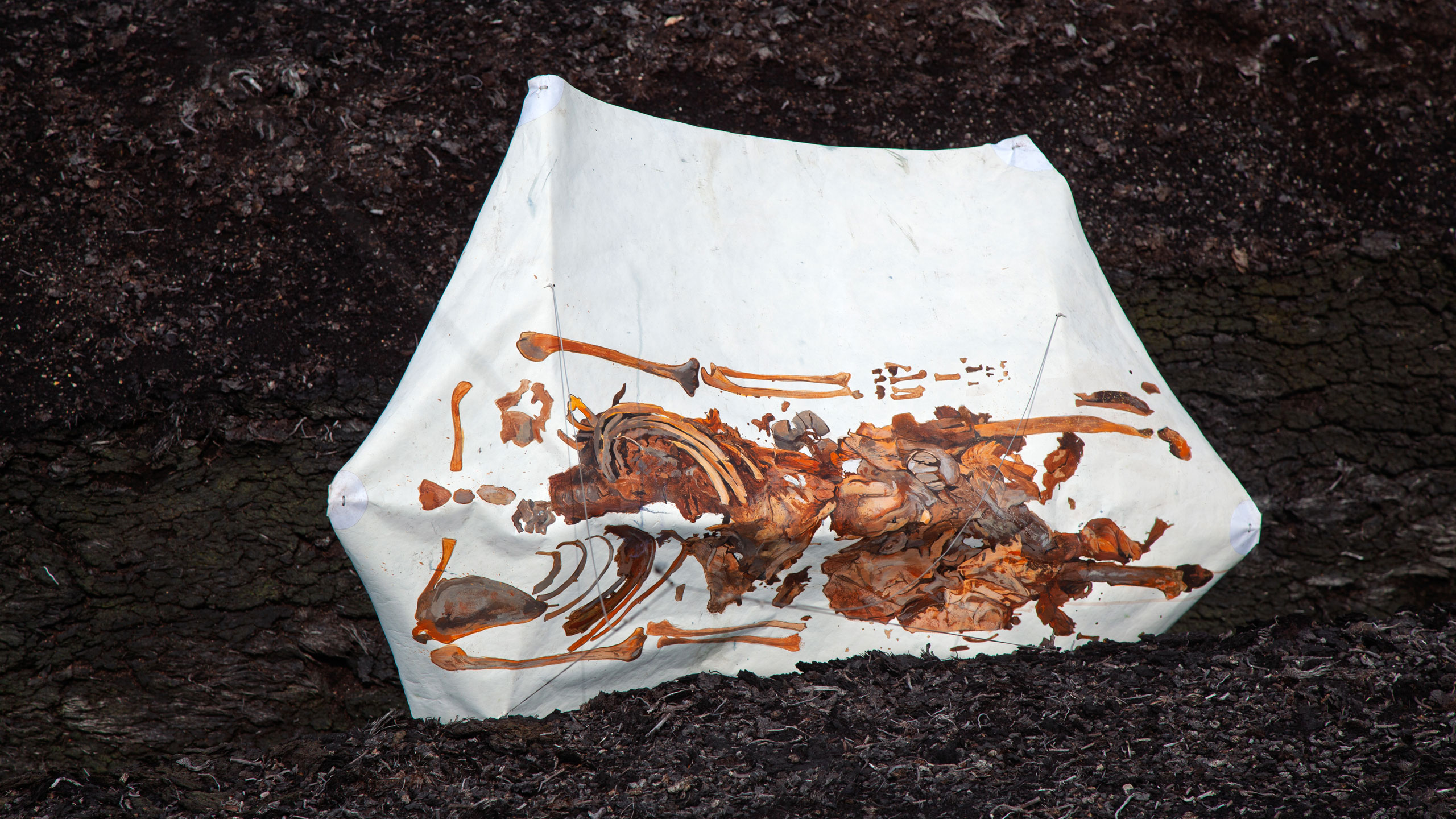
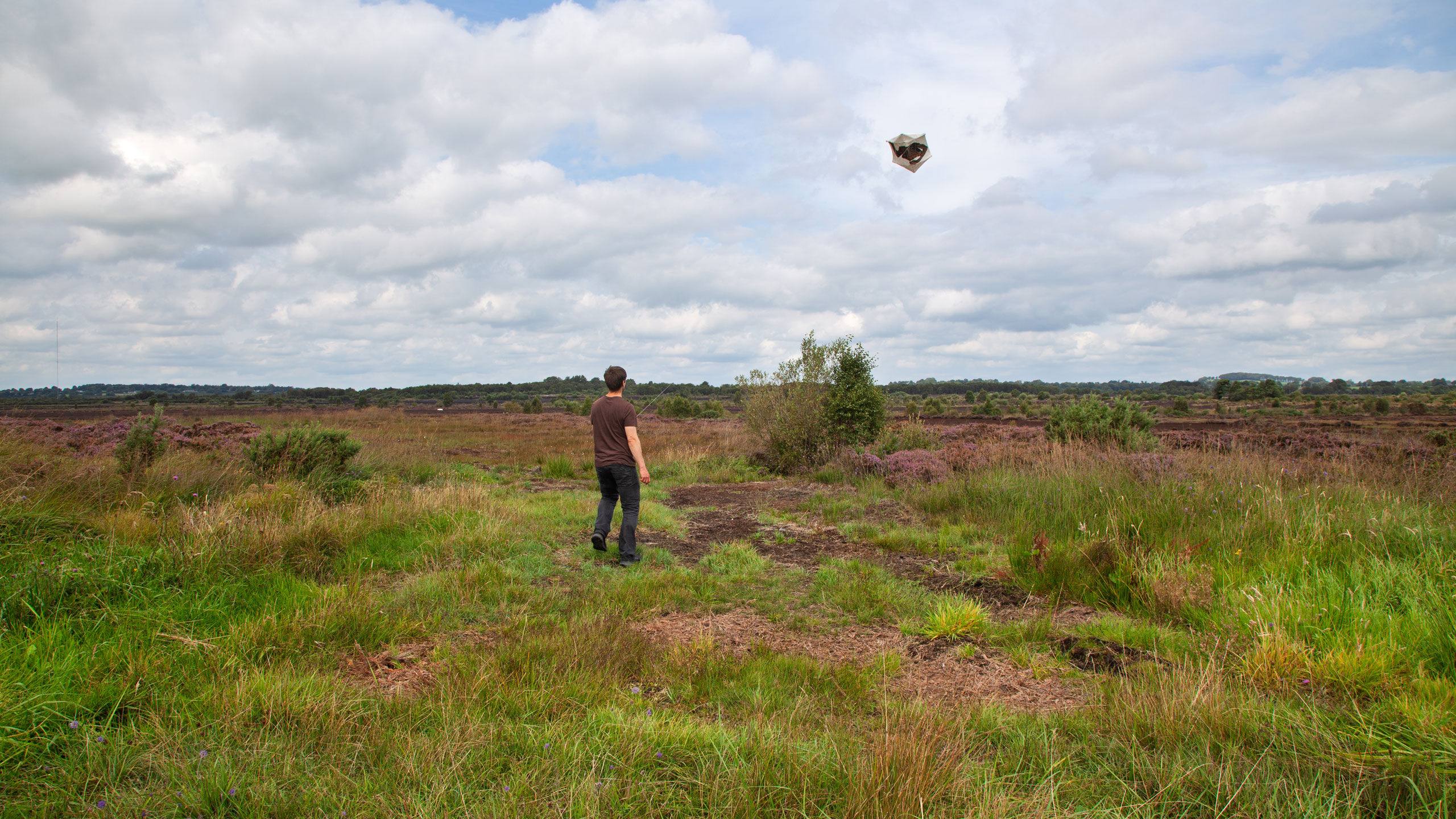
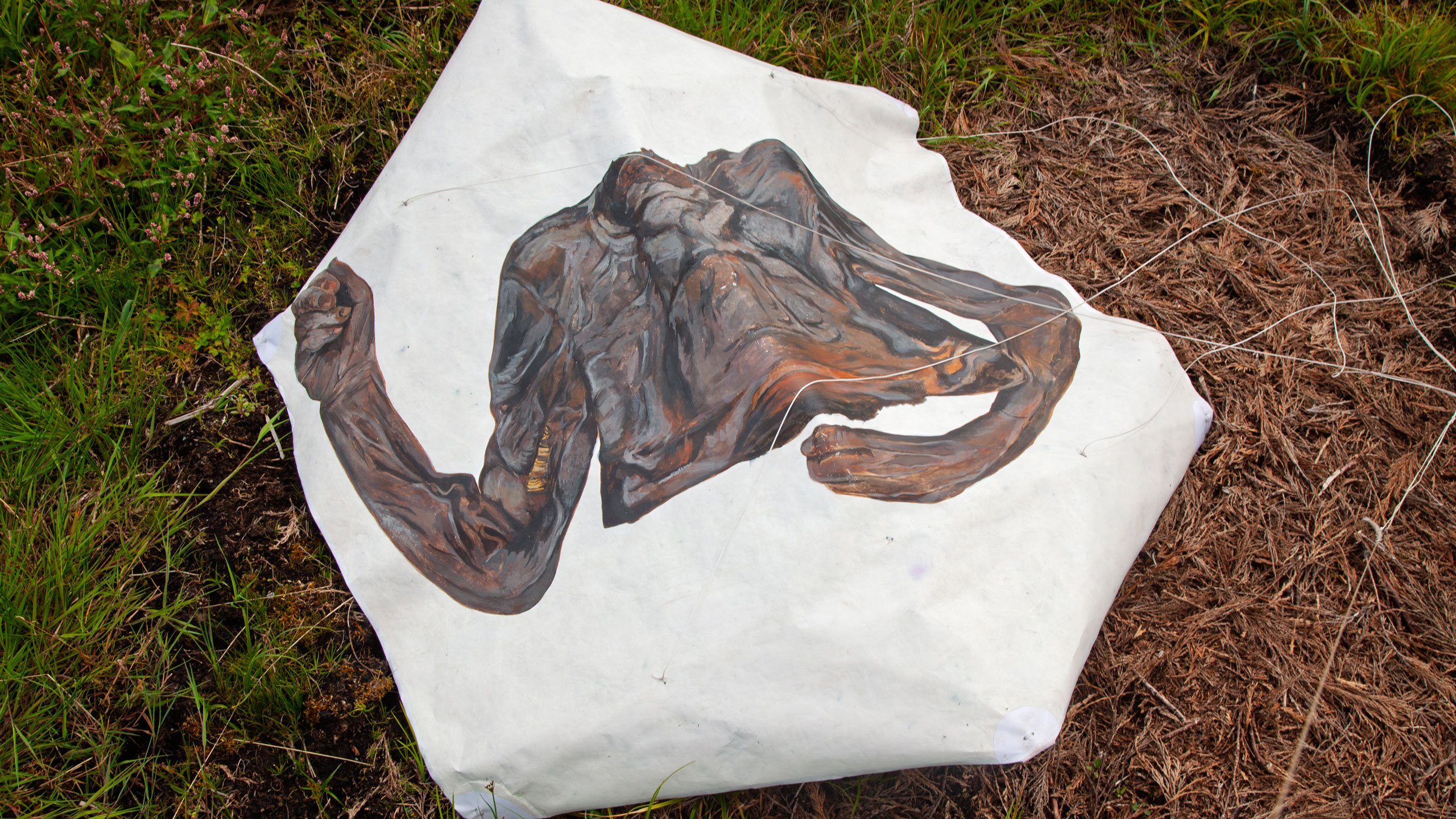
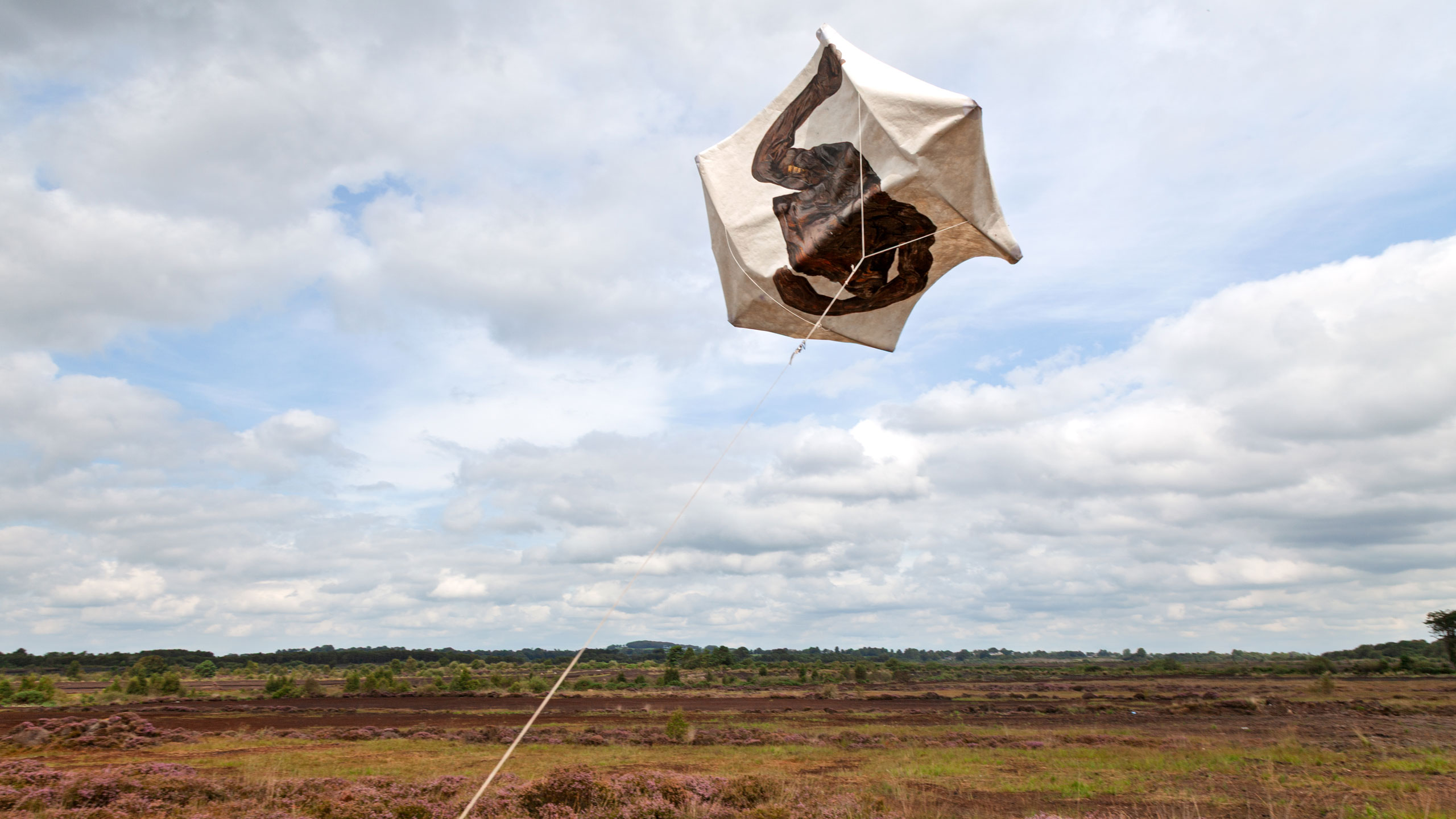
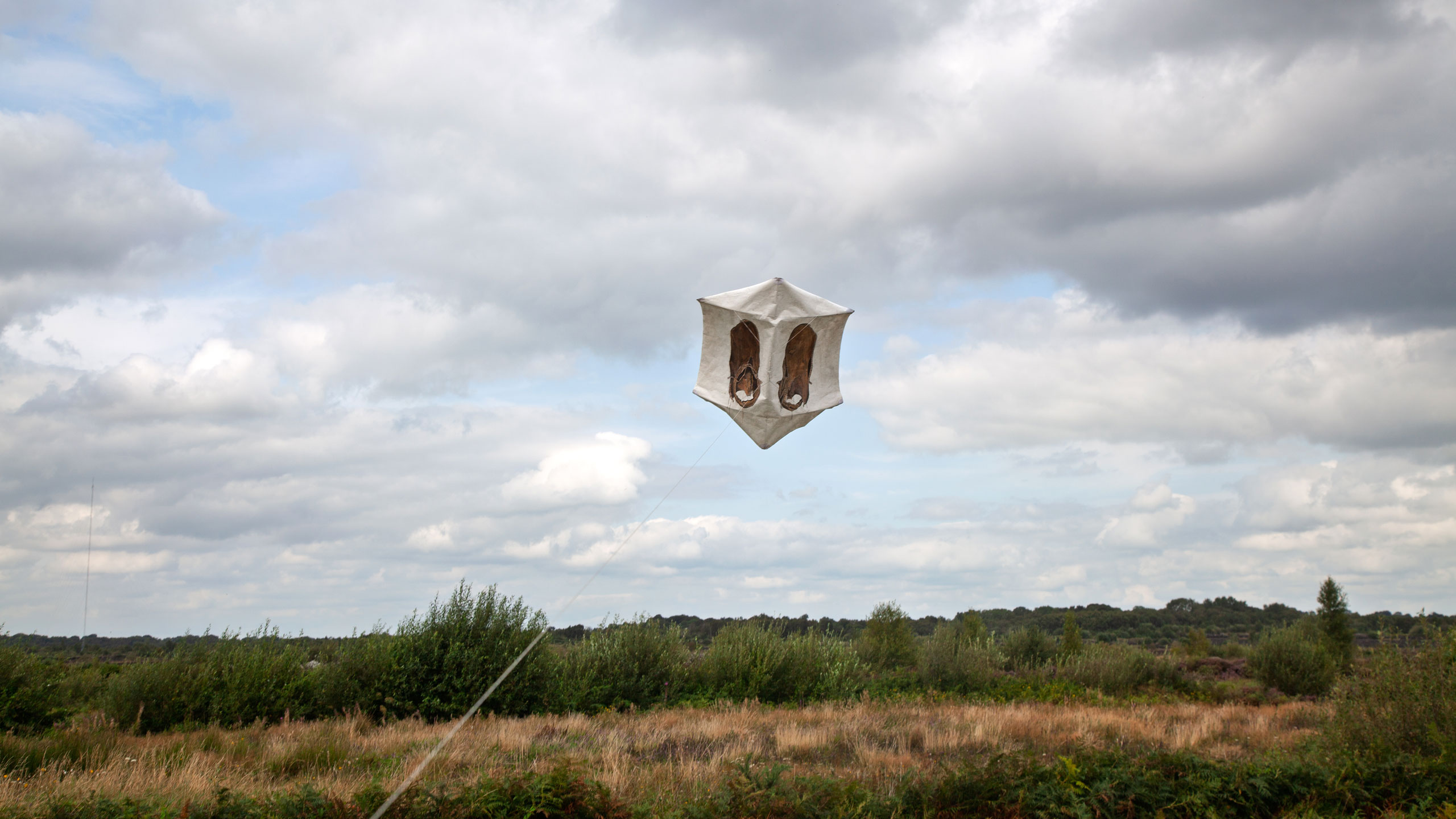
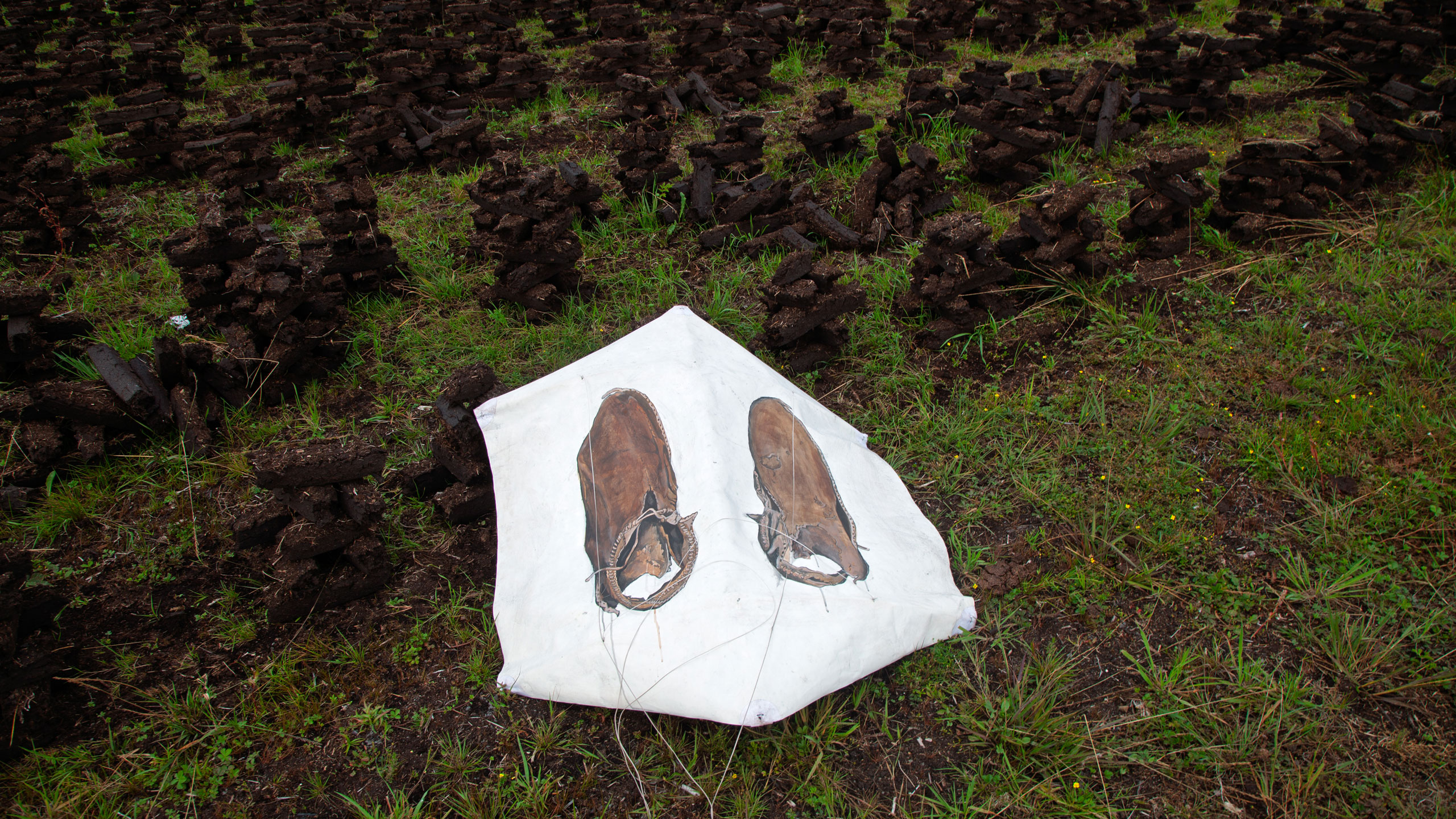
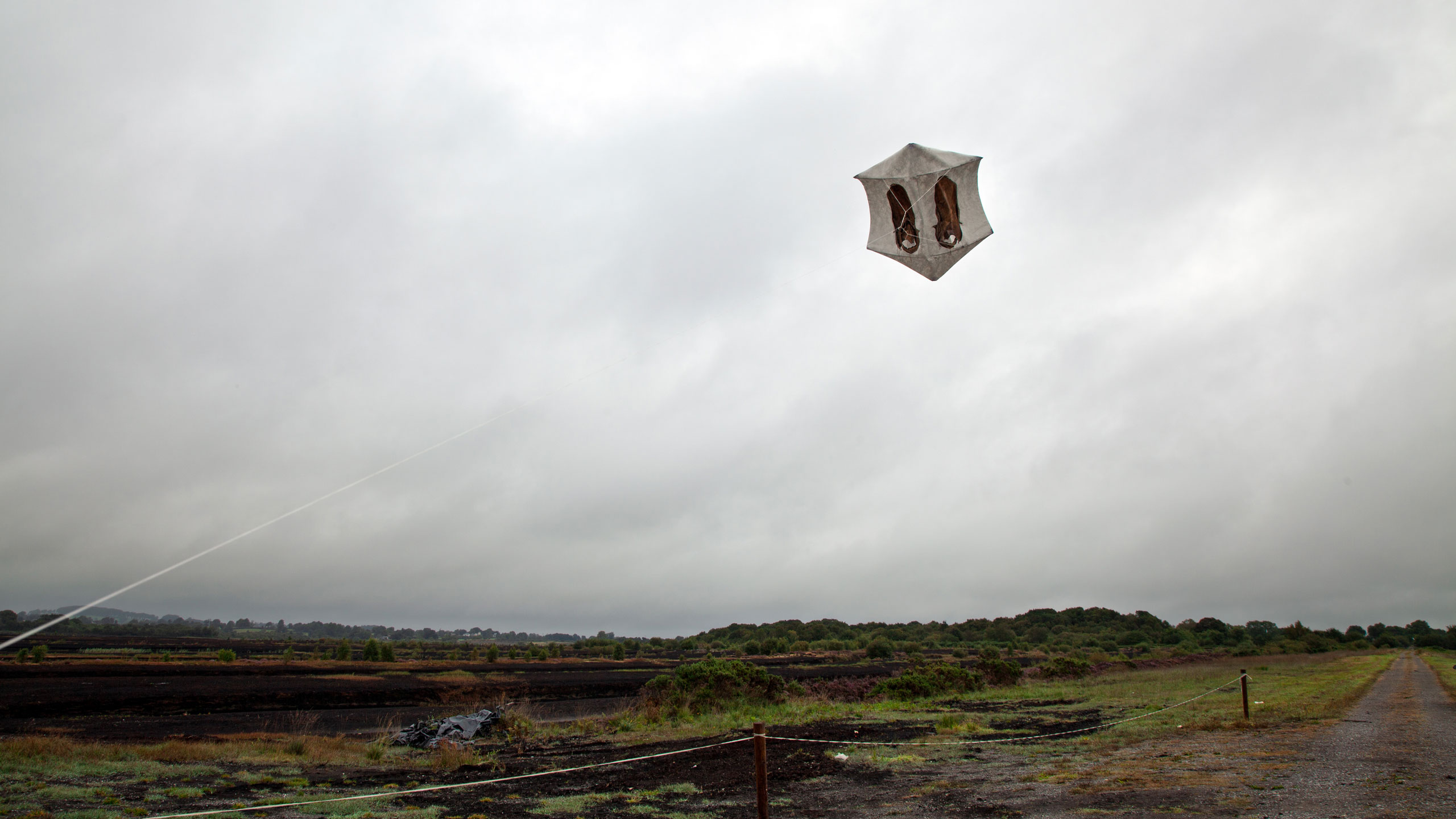
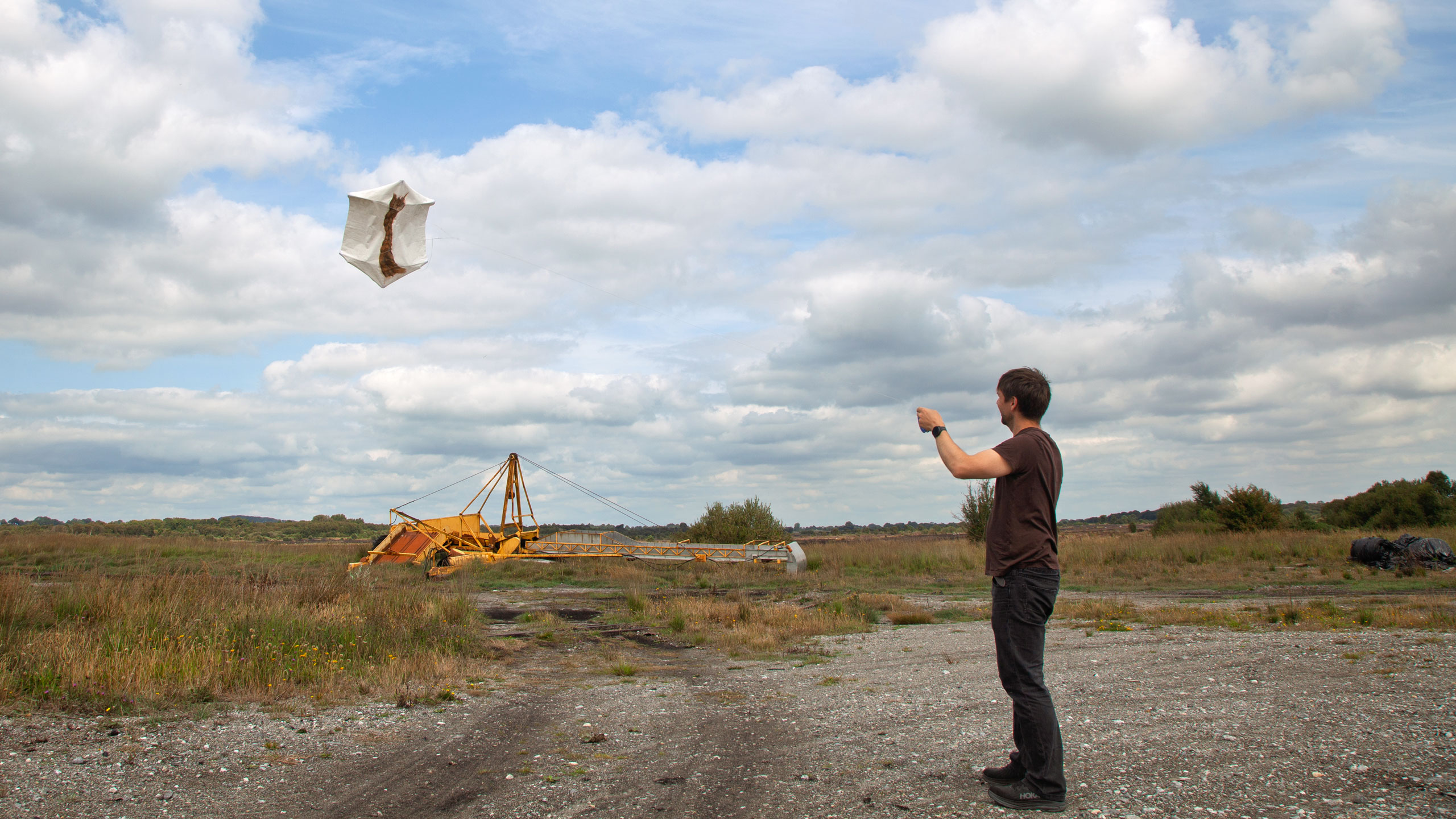

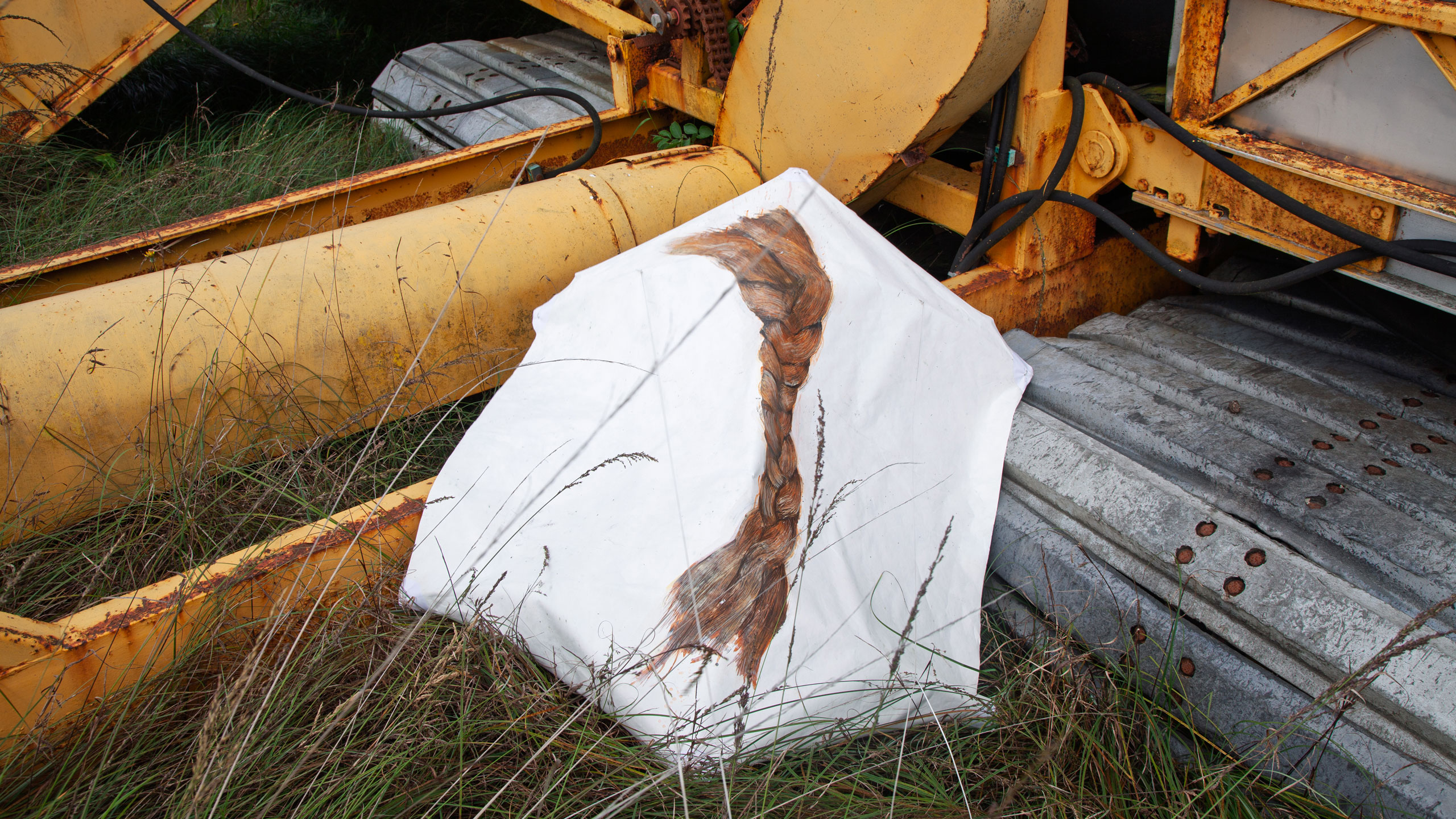
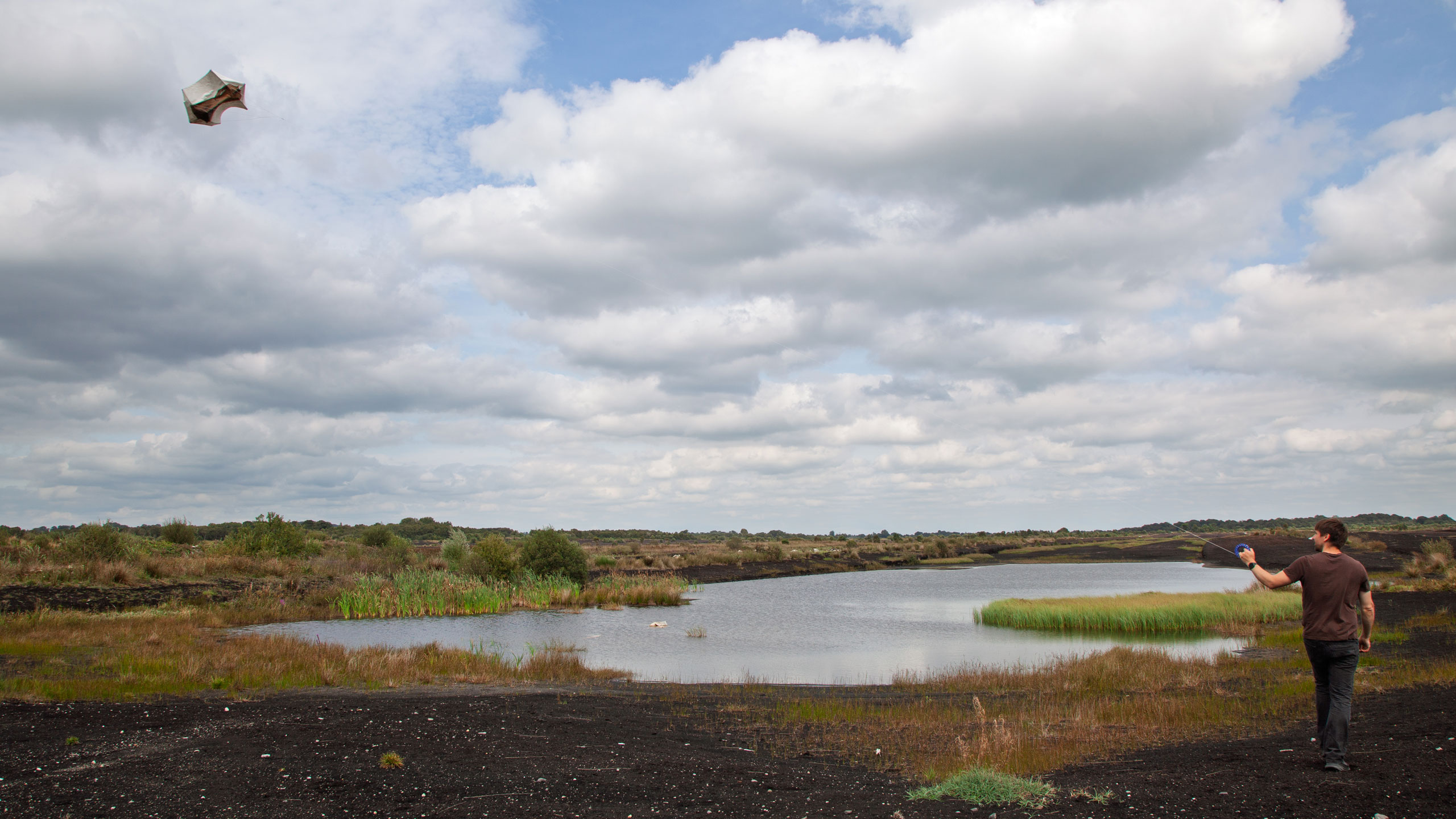
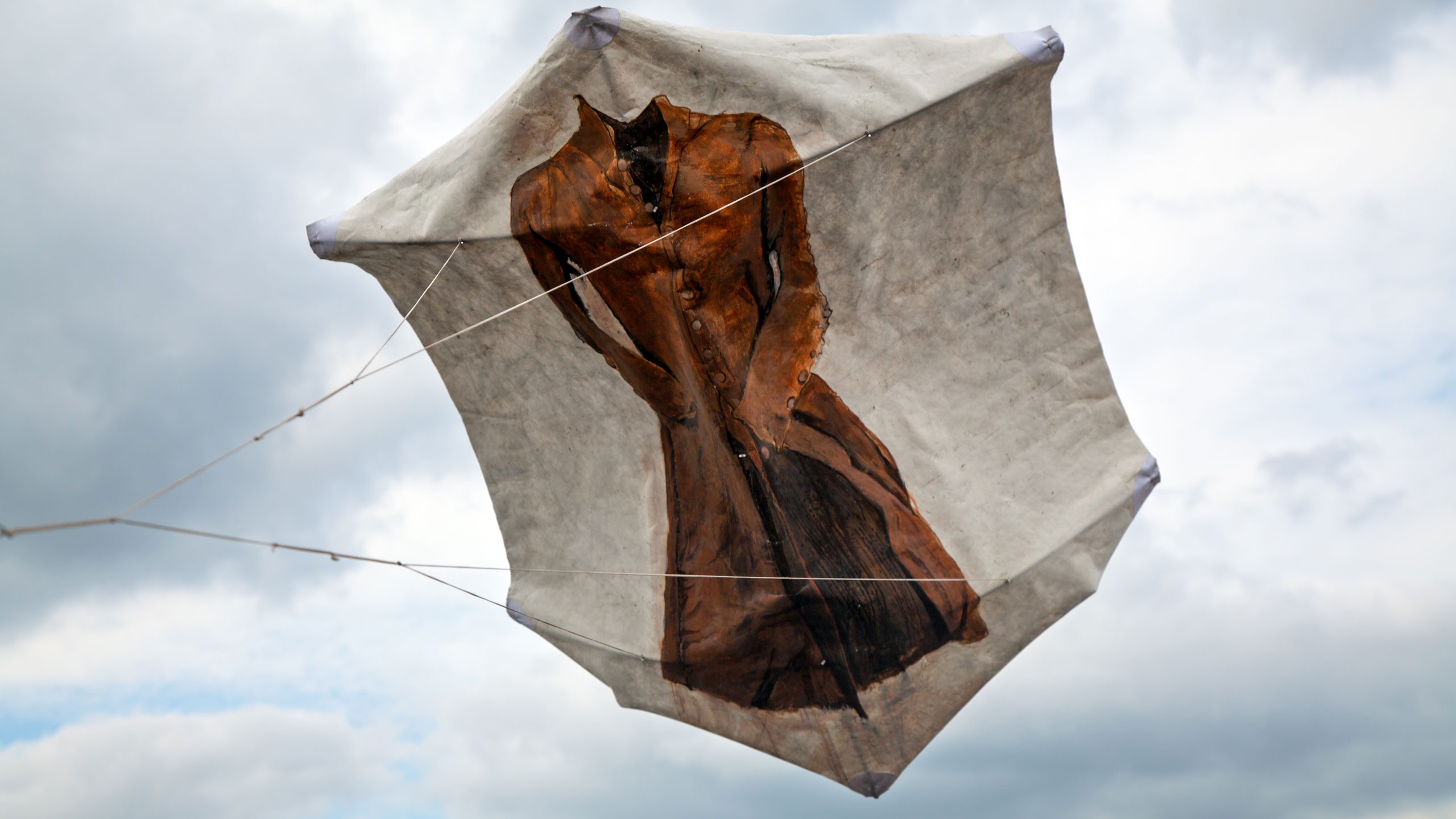
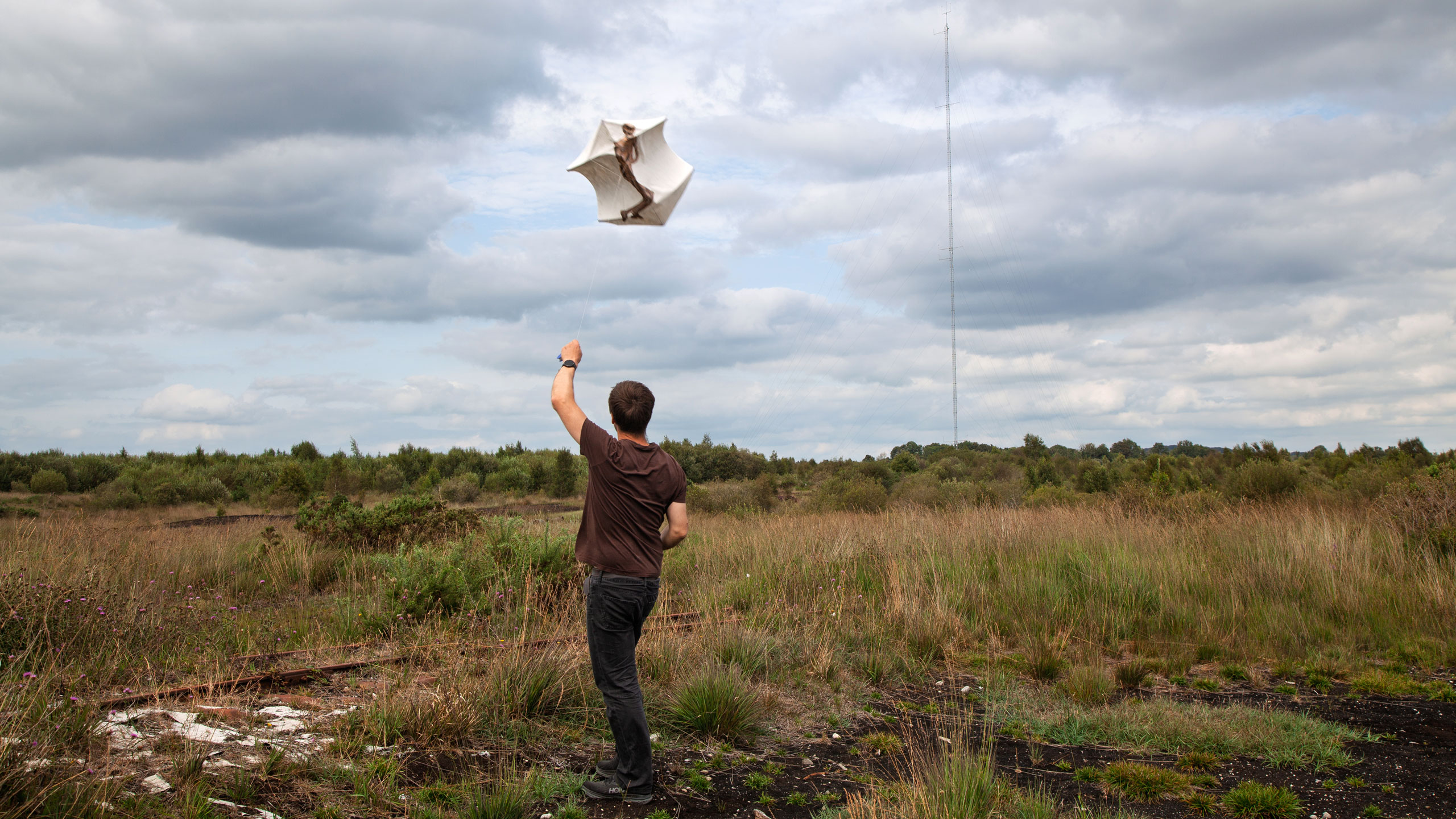
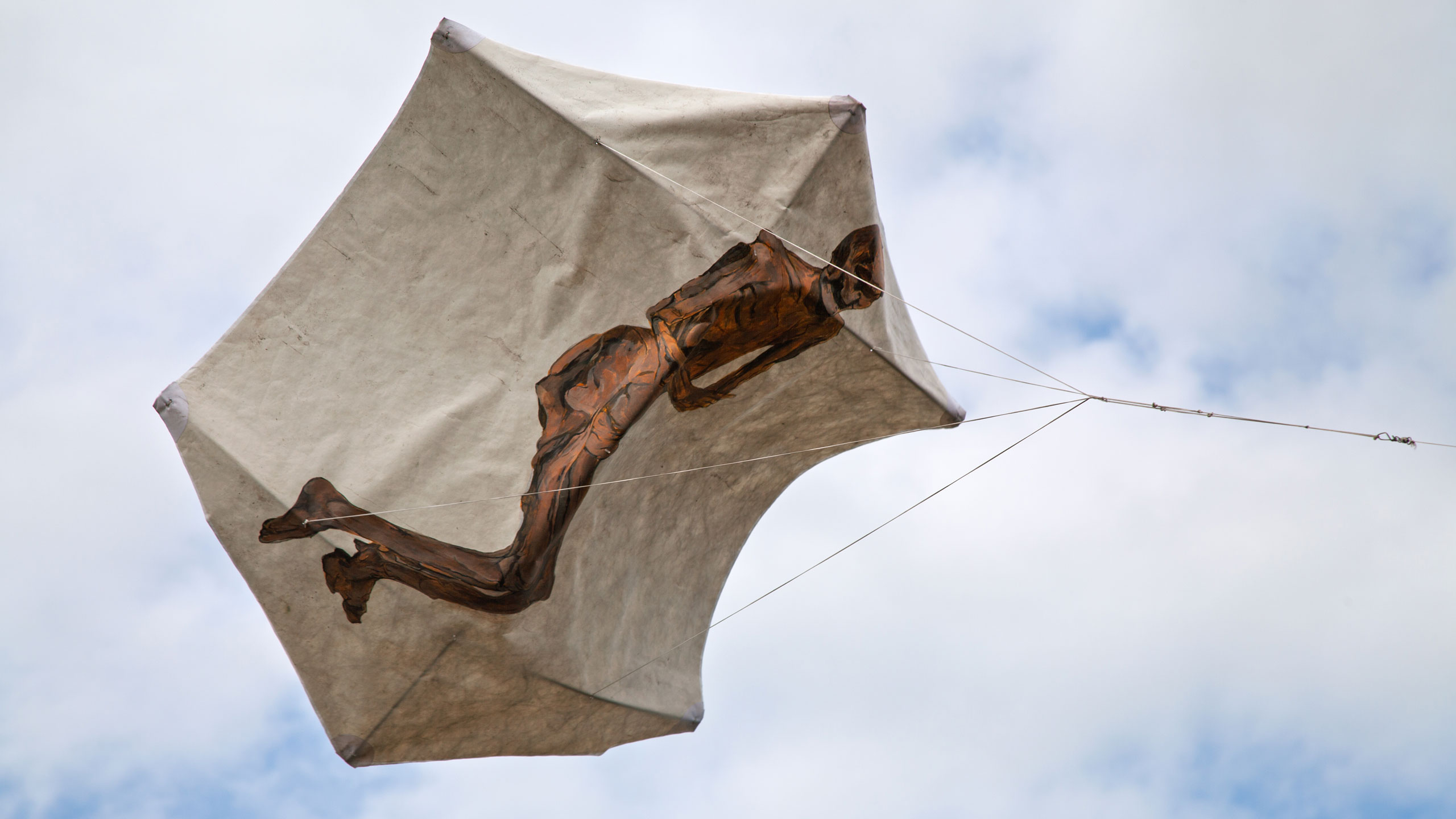
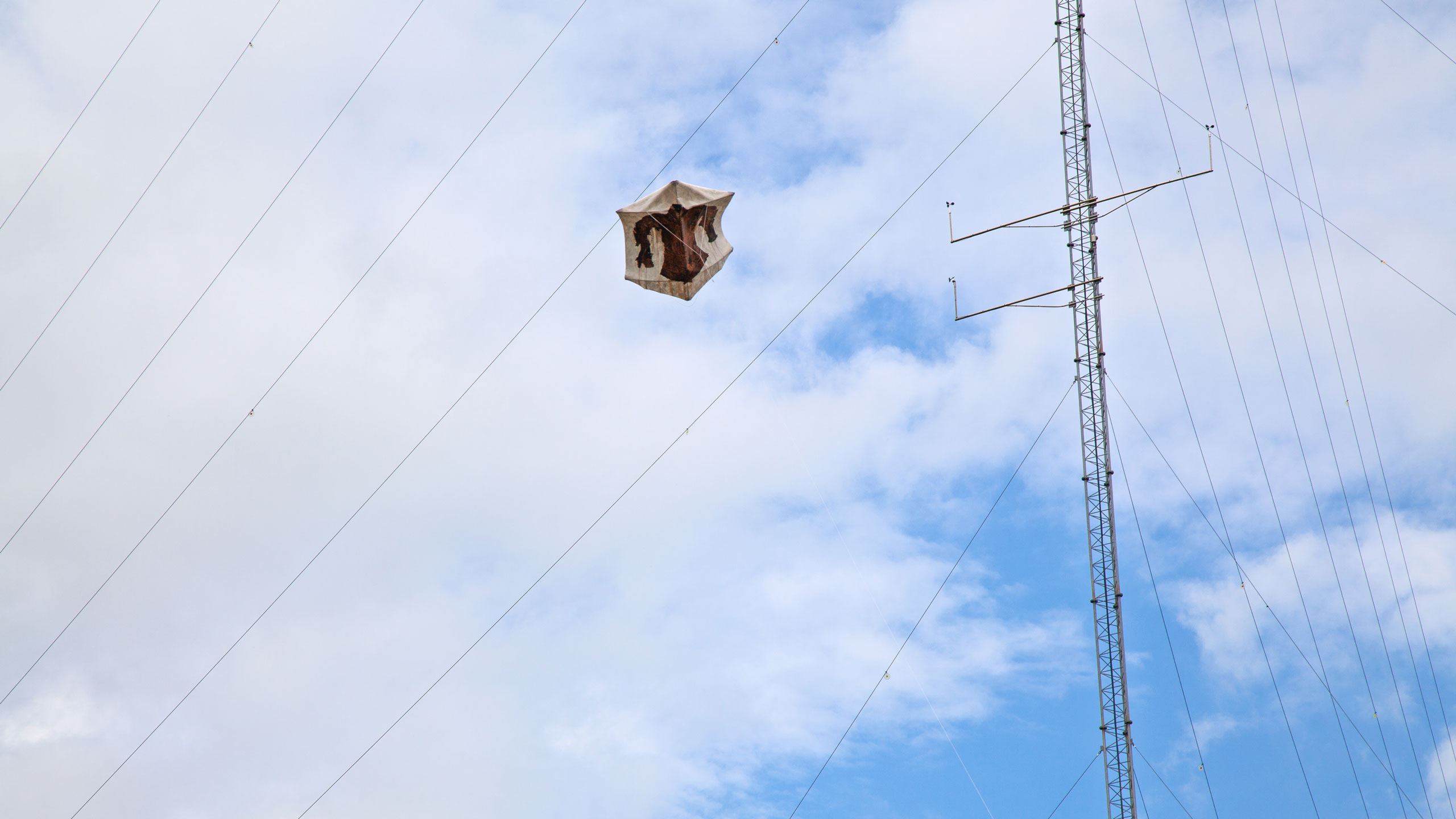
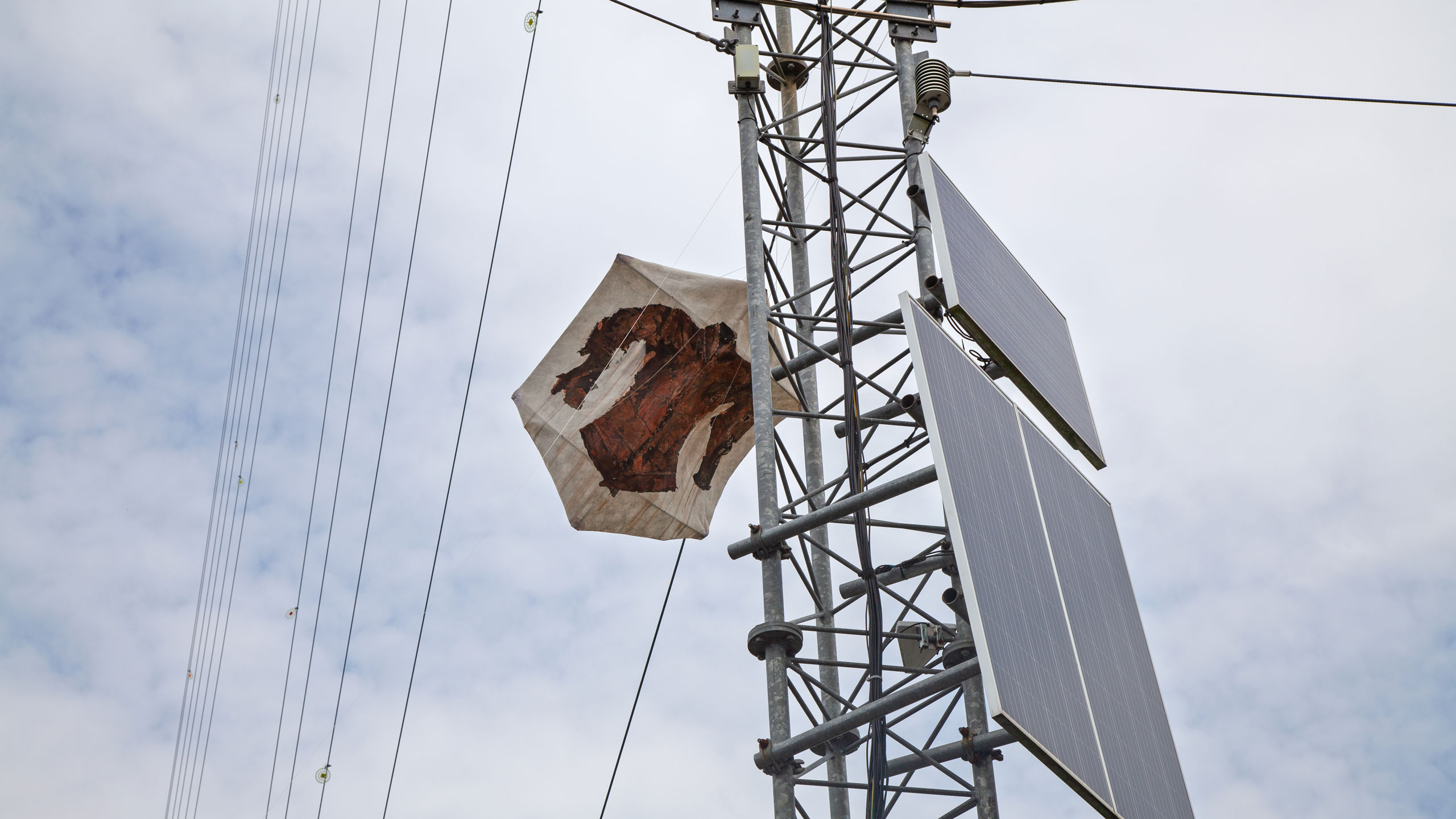
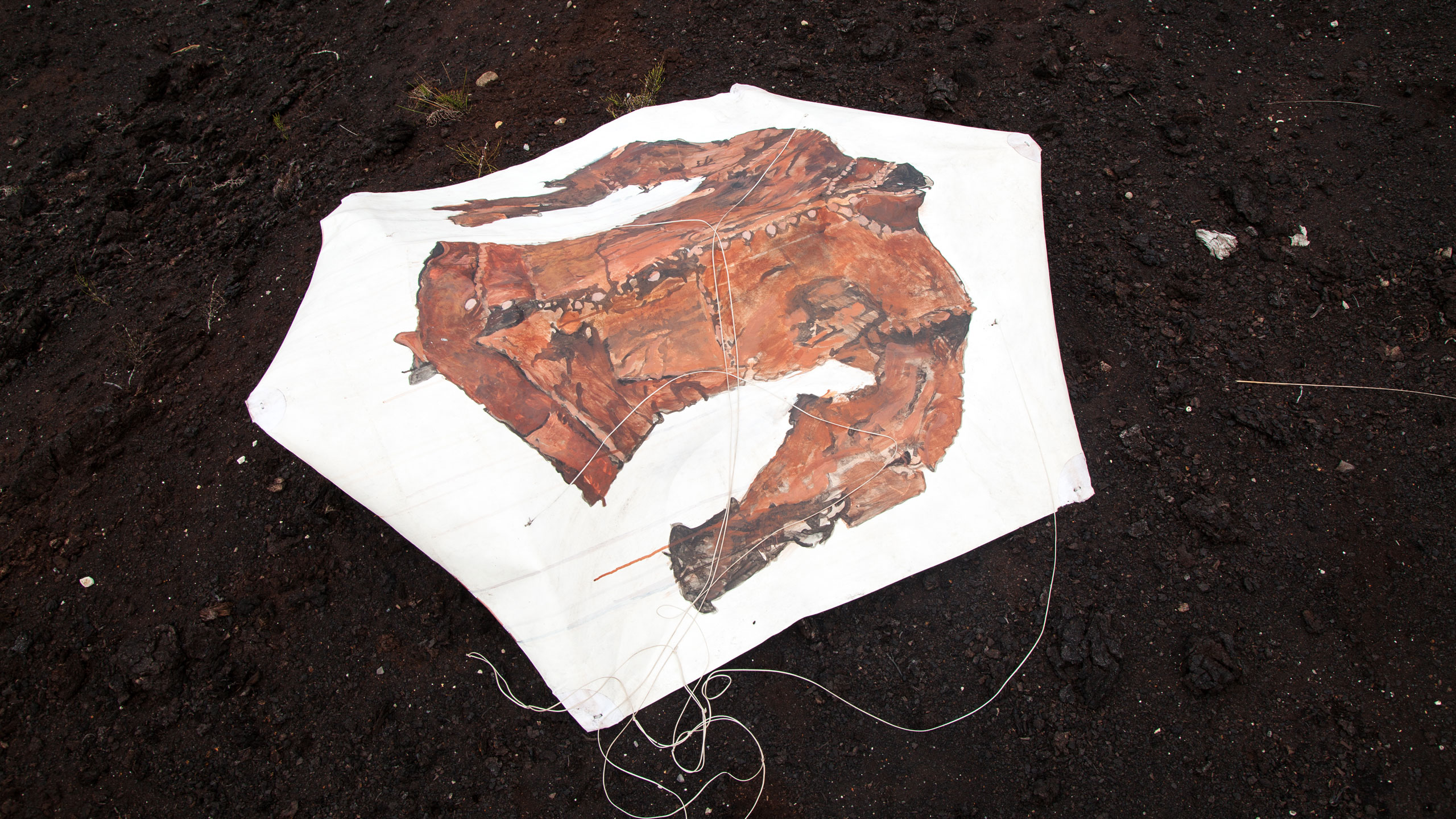
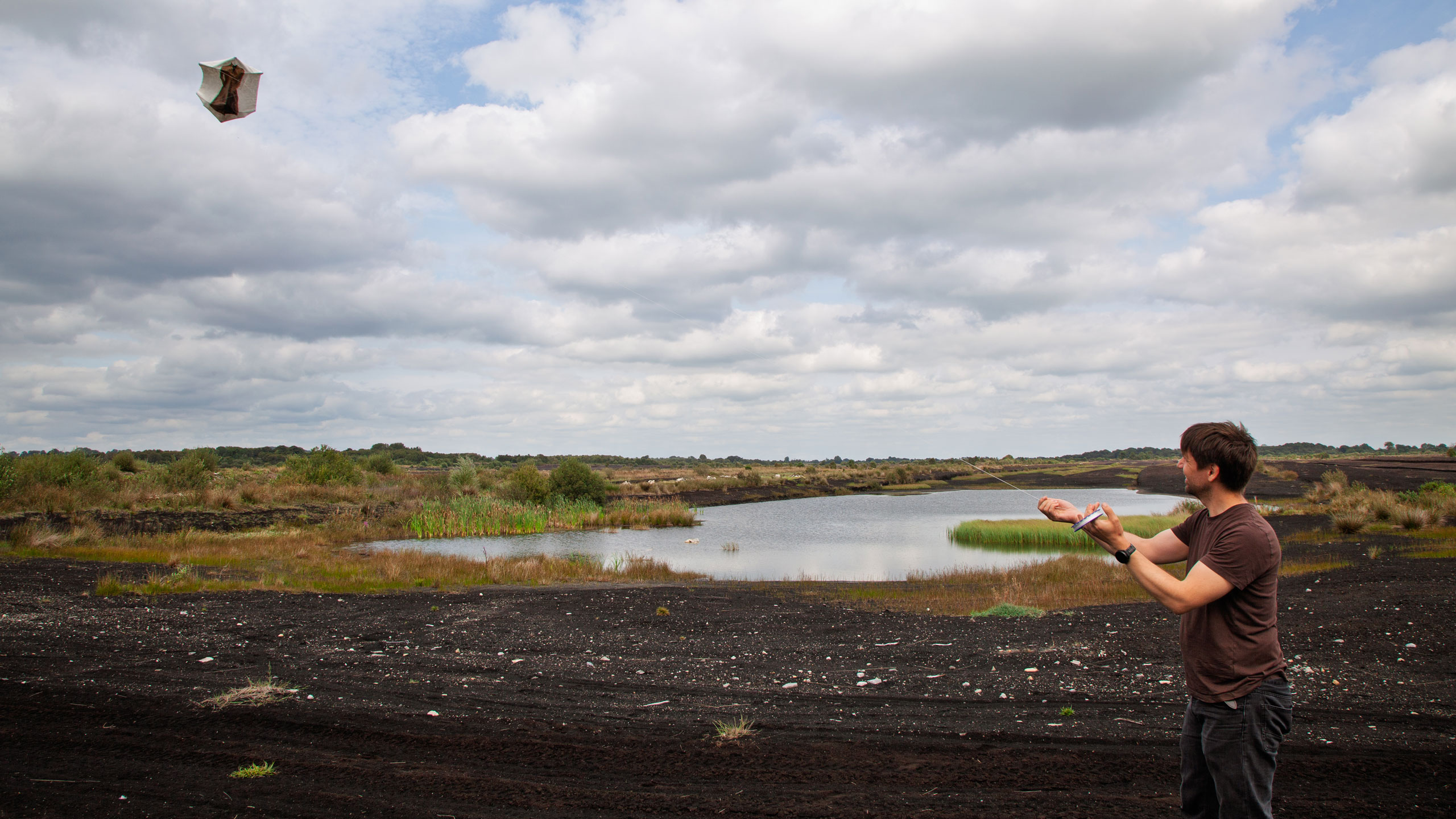
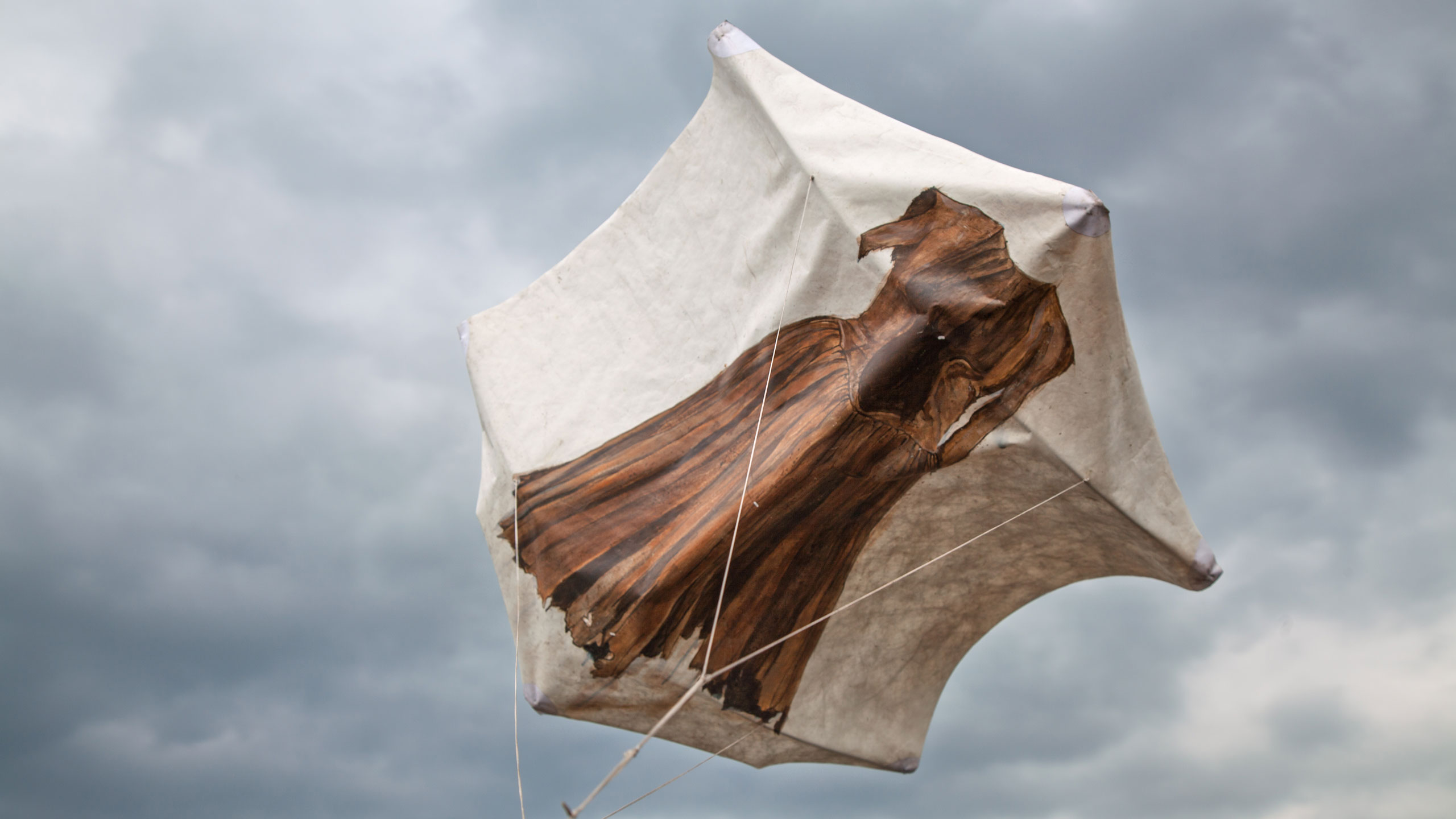
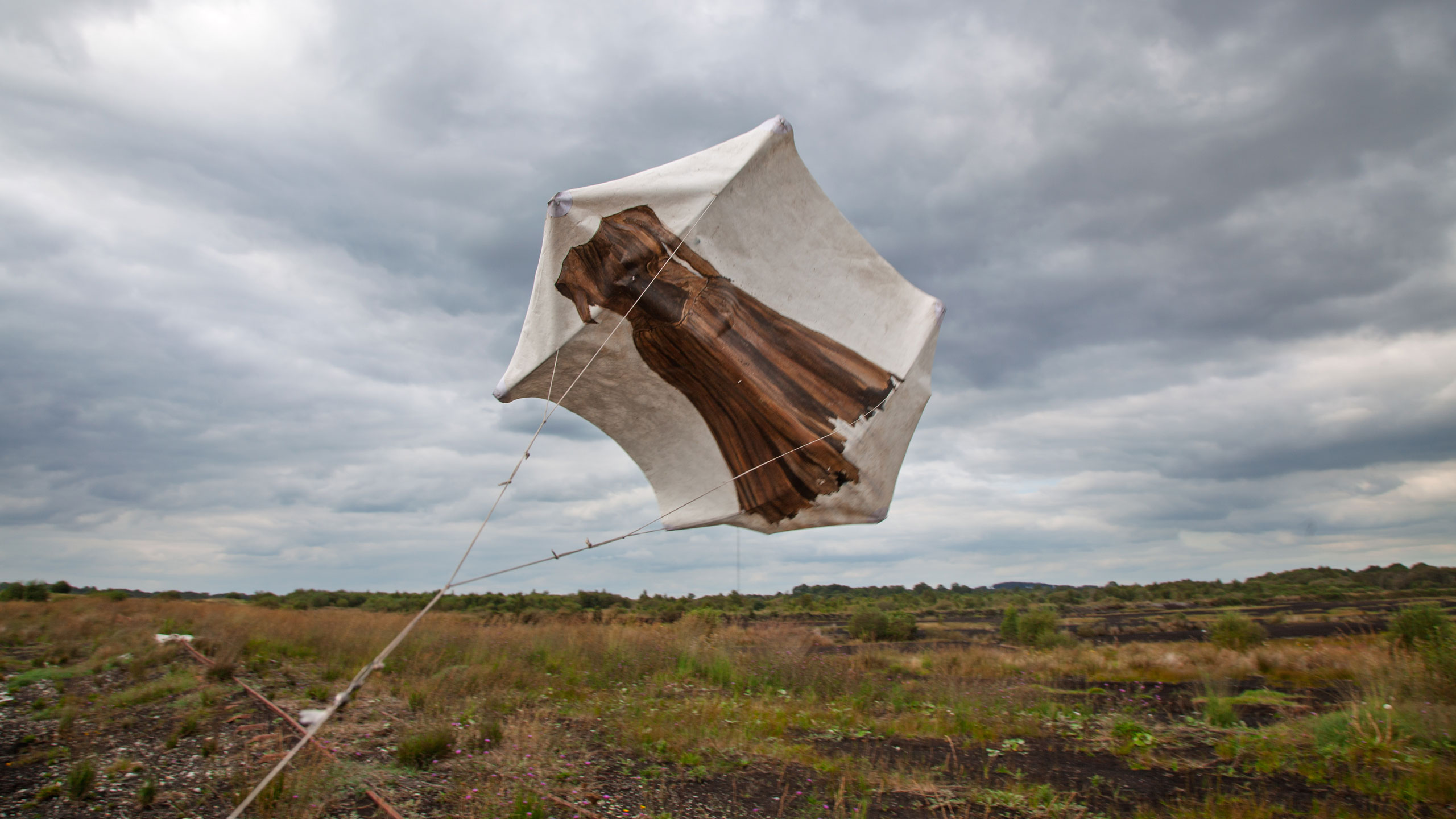
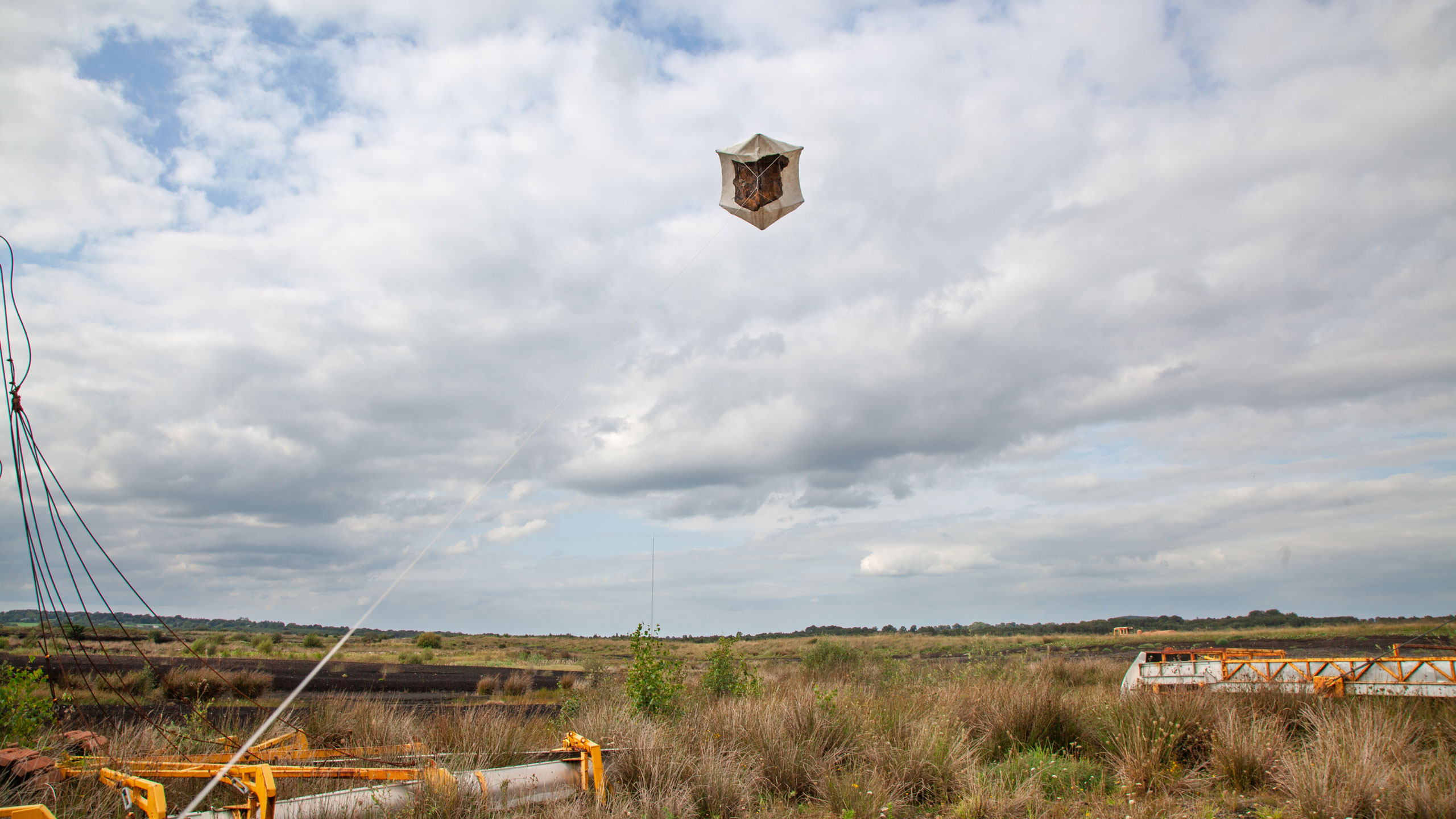
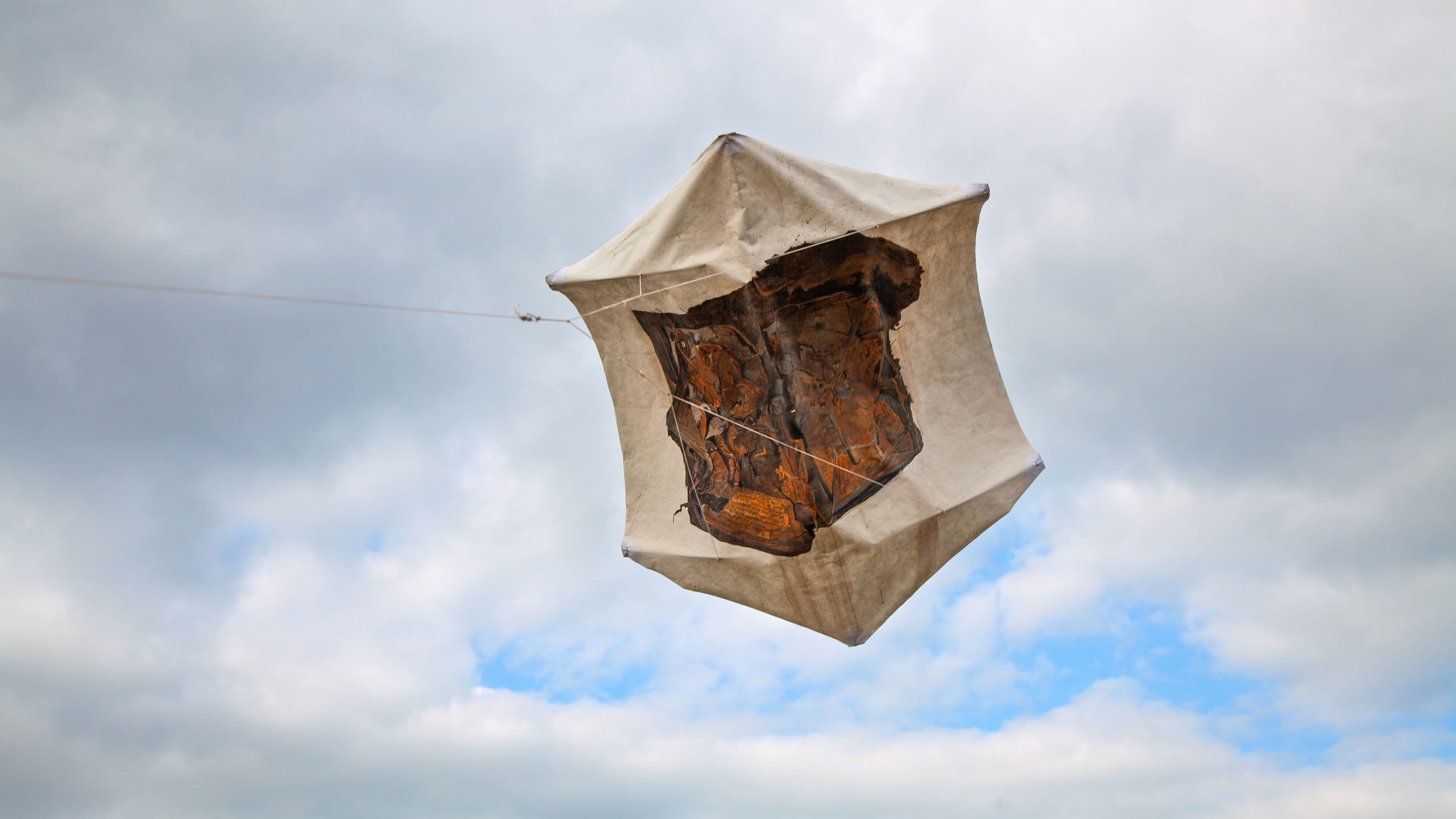
Bog Guardians took place on the Lemanaghan Bog and was initiated within the context of the iPeAAT project (Irish Peatland Archaeology Across Time) in collaboration with UCC and the Heritage week in Ireland. In response to a heated debate about a future windfarm of 15 turbines, we looked at what the past of the landscape might hold, therefore researching how peatland archaeology can help move the debate forward. We mapped both the natural as social landscape through the deployment of 15 kites, indicating the height and location of the proposed wind turbines. Together with members of the community, we then reflected on the consequences of the transformation of the local (energy) landscape, from an industrial peat bog to a large scale wind farm. The kites are painted with images of preserved corpses of humans (Bog Bodies) and other remains, such as clothes and shoes, found in Irish bogs during centuries of peat excavations. As ‘ghosts’ from the past, they are evidence of the rich archaeological record of the peatlands, symbolizing the community’s concerns about the windfarm and its potentially destructive effect on local wildlife and heritage.
The kites were painted with images of archeological objects found in Irish bogs during decades of peat excavations, partly necessitated by wind farm constructions. The painted kites depict various objects spontaneously archived by the peat and were meant to “flag” the community’s concerns about the wind turbine project and its potentially destructive effect on local wildlife, culture, and heritage.
The starting point of the Bog Guardian project was a newly proposed wind farm for the Lemanaghan bog in the County of Offaly, Ireland. The development, currently in the pre-planning stage, is executed by the former peat extraction company Bord na Móna (BnM). The company has rebranded itself as a renewable energy provider, building wind turbines and solar farms on its former peat excavation sites. For Lemanaghan, they envision the installation of 15 wind turbines total, each with a height of up to 220 meters, sufficient to power approximately 55,000 Irish homes annually. The project has faced strong opposition from local heritage and conservation groups.
The flying of kites functioned as an alternative form of protest, where the archaeological remains can be interpreted as a warning for the consequences of our relentless reliance on economic progress and unregulated hyper-capitalism, which has become a global threat in times of climate change. The kite event aimed to temporarily reclaim and repurpose the BnM’s old industrial landscape to document the concerns and ideas of the local community.